



Quartz vs Oura: Are Identity Verification Smart Rings the Future of Security?
The Rise of the Smart Ring in Cybersecurity Forget passwords. Forget OTP codes. Forget frantically hunting for your phone when a login prompt pops up at the worst moment. The wearable technology...
The Rise of the Smart Ring in Cybersecurity
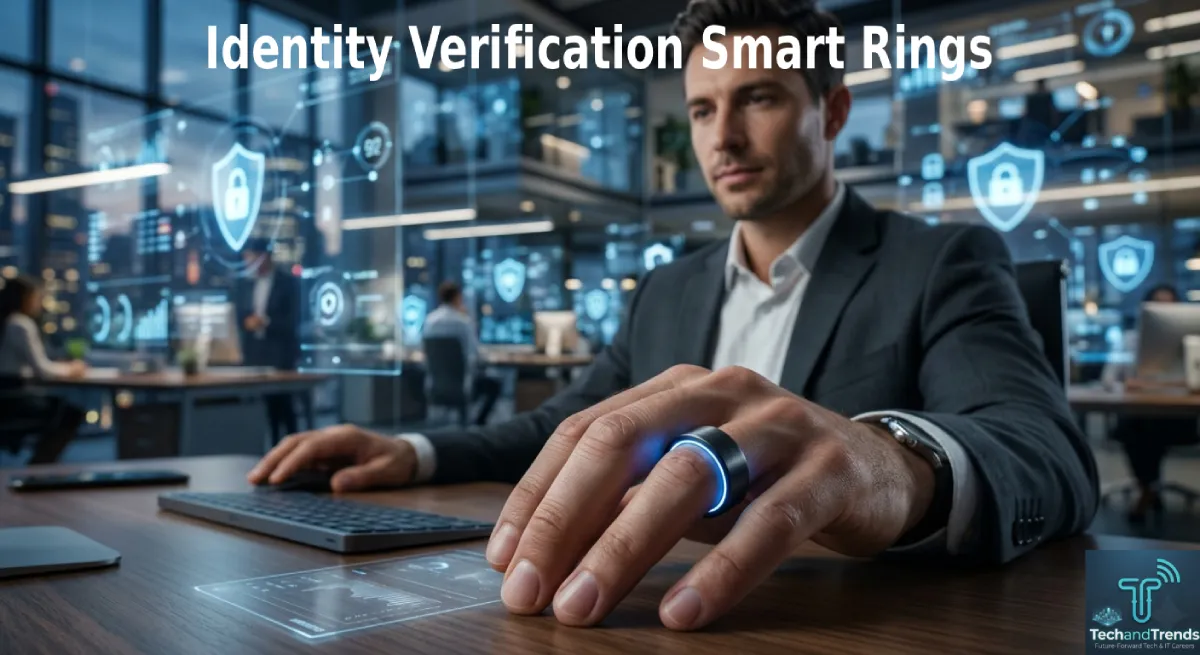
Forget passwords. Forget OTP codes. Forget frantically hunting for your phone when a login prompt pops up at the worst moment. The wearable technology revolution has quietly entered the world of identity verification — and it’s wearing a ring.
Table Of Content
- The Rise of the Smart Ring in Cybersecurity
- What Are Identity Verification Smart Rings?
- Token Ring vs Oura Ring: The Identity Verification Showdown
- 💍 Oura Ring — The Health Giant Eyeing Identity
- Token Ring vs Oura Ring for Identity Verification
- Why Traditional Security Methods Are Failing
- How Identity Verification Smart Rings Work: The Technical Layer
- The Security Architecture: What “EAL5+” Actually Means
- Real-World Use Cases: Where Smart Rings Are Winning
- Privacy Considerations: Your Biometric Data, Your Rules
- Challenges Still Facing Identity Verification Smart Rings
- The Market Verdict: Are Smart Rings the Future of Identity?
- Final Verdict: Which Smart Ring Should You Choose?
Identity verification smart rings are no longer science fiction. They are shipping today, used in enterprise environments, and backed by hundreds of millions in venture capital. In 2025, the smart ring market is on a trajectory to surpass $676 million by 2030, growing at a projected CAGR of 12.69%, fueled by consumer demand for discreet health tracking, secure payments, and innovative wearable form factors that blend seamlessly into daily life.
But here’s the critical split that most buyers miss: not all smart rings are built for security. There are two distinct categories dominating the headlines right now — health-tracking rings like Oura, which are exploring identity features, and purpose-built authentication rings like Token Ring, which were designed from the ground up for enterprise-grade identity verification.
If you’ve been searching for a comparison of “Quartz vs Oura” in the smart ring security space, it’s worth clarifying: “Quartz” isn’t a recognized smart ring brand in this sector. The leading identity-first smart ring challenger you’re likely researching is Token Ring — the biometric wearable that has emerged as Oura’s most direct rival in the security authentication category. This article compares both, breaks down how identity verification smart rings work, and answers the big question: are they the future of security?
What Are Identity Verification Smart Rings?
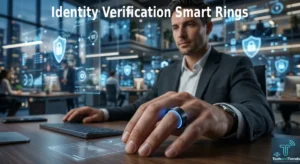
An identity verification smart ring is a wearable device worn on the finger that authenticates a person’s identity using biometrics, proximity detection, NFC (Near Field Communication), or Bluetooth — replacing or supplementing traditional passwords, PINs, and one-time codes.
Convenience is a central value proposition: instead of typing passwords or carrying keycards, users can unlock devices such as phones, laptops, or doors with a simple touch of their smart ring. This saves time and eliminates the need to remember multiple credentials.
More importantly, since the ring is worn continuously, it provides an uninterrupted identity verification process, allowing for seamless authentication in real time without requiring additional user intervention.
This is what makes smart rings fundamentally different from smartphones used for 2FA. Your phone can be left on a desk, stolen, or SIM-swapped. Your ring is on your finger — always present, always active.
Token Ring vs Oura Ring: The Identity Verification Showdown
🔐 Token Ring — Built for Security First
Token Ring is the most advanced purpose-built identity verification smart ring on the market today. While it may not track your sleep or heart rate, it does something far more critical for enterprises: it proves who you are, every single time you log in.
Token Ring offers next-generation multifactor authentication with phishing-resistant, FIDO2-compliant technology, eliminating the reliance on legacy MFA OTPs, passwords, and employees to reliably spot every phishing email — which is impossible.
Here’s what makes it genuinely impressive from a technical standpoint:
Key Token Ring Security Features:
- A FIDO2-compliant capacitive fingerprint sensor ensures only the authorized user’s fingerprint will activate the device — no one else can use it.
- An EAL5+ certified tamper-resistant secure element protects all digital credentials; no Wi-Fi or cellular connectivity is required, and upgradable firmware ensures the technology is always supported.
- Proximity-based login allows access only when the device is near the intended computer or phone, blocking man-in-the-middle attacks and ensuring secure connections.
- It supports FIDO2/WebAuthn and U2F protocols, compatible with all major Identity Access Managers and hundreds of enterprise and personal account services, including Windows, macOS, Chrome, and Edge.
The enterprise integrations are what make Token Ring particularly compelling. Token adds biometric assurance on top of platforms like Okta’s identity management — no rip-and-replace required — and integrates with security tools teams already rely on, including Microsoft and Duo deployments, eliminating push fatigue and credential-based risk.
The stakes are real. With more than 90% of successful cyberattacks starting with a phishing email (CISA 2024), Token Ring takes employees out of the security equation entirely. That’s not a small claim. That’s a paradigm shift.
💍 Oura Ring — The Health Giant Eyeing Identity
Oura is the dominant player in the broader smart ring market. According to a report in Business Insider, Oura has sold some 5.5 million devices and is on course to generate one billion dollars in revenue this year. But the Finnish company’s ambitions now stretch well beyond sleep scores and recovery metrics.
Oura is looking to expand into the area where wearables, identity, and payments intersect, pitching its rings as the next frontier in secure authentication. Oura’s CEO Tom Hale has articulated the vision plainly: “What if this is your key? What if this is your wallet? This is a biometric wearable that can identify you.”
To back up that vision with real infrastructure, in 2023, Oura acquired Proxy, a U.S. identity tech startup that had previously absorbed smart ring startup Motiv, signaling a serious interest in authentication use cases.
However, the road from health tracker to identity verifier is technically complex. There are still challenges in integrating an NFC chip into such a small body — Samsung, for one, abandoned ID and payments tech in its Galaxy Ring because of technical hurdles.
In terms of data security, Oura now supports two-factor authentication via email or TOTP codes and offers a Private AI toggle for on-device AI processing. These are welcome steps, but they represent health data protection — not enterprise identity verification at the level Token Ring offers.
Where Oura currently stands on identity: It’s a powerful health-tracking platform moving toward identity. The Oura Ring 4 starts at $349 and requires a $5.99 monthly subscription. Its identity features are promising but not yet a replacement for dedicated enterprise security hardware.
Token Ring vs Oura Ring for Identity Verification
| Feature | Token Ring | Oura Ring 4 |
|---|---|---|
| Primary Purpose | Enterprise identity & MFA | Health tracking |
| Biometric Sensor | Fingerprint (FIDO2) | PPG/heart rate sensors |
| Authentication Protocol | FIDO2, WebAuthn, U2F | Not yet enterprise-certified |
| NFC/Bluetooth | Yes — for authentication | Limited/exploratory |
| Phishing Resistance | Yes — by design | No |
| Enterprise IAM Integration | Okta, Microsoft, Duo, etc. | Not applicable |
| Secure Element | EAL5+ certified chip | Cloud-based data storage |
| Subscription Required | No | Yes ($5.99/month) |
| Sleep/Health Tracking | No | Yes |
| Best For | Enterprise security teams | Health-conscious individuals |
Why Traditional Security Methods Are Failing
To understand why identity verification smart rings matter, you have to understand what they’re replacing — and why that old system is broken.
Passwords, OTPs, and authenticator apps are still everywhere, but attackers have figured them out. The vulnerabilities of phone-based 2FA are significant:
Mobile phones are vulnerable to SIM swapping, where attackers trick the phone company into transferring a mobile number to a new SIM card, then receive all SMS messages, including OTPs. Additionally, SMS is not encrypted end-to-end, which means messages can be read by cybercriminals while in transit.
Smart rings solve this at the hardware level. The biometric credential never leaves the device. There’s no code to intercept, no password to phish, no push notification to fatigue-bomb. Token proves the human behind every login — not just the device or credential. That’s a fundamentally different security architecture.
How Identity Verification Smart Rings Work: The Technical Layer
Understanding the technology demystifies the value proposition considerably.
Step 1 — Biometric Enrollment: The user enrolls their fingerprint directly on the ring’s capacitive sensor. This data is stored locally on the secure element chip — it never reaches the cloud.
Step 2 — Authentication Trigger: When the user approaches their workstation, the ring’s Bluetooth/NFC proximity detection initiates the login sequence automatically.
Step 3 — On-Device Verification: The ring verifies the fingerprint on-device and releases a cryptographic credential to the connected system via FIDO2 protocol.
Step 4 — Access Granted: The system confirms the cryptographic handshake. No password was typed. No OTP was sent. No phishing opportunity existed at any step.
Many modern smart rings also come equipped with remote wipe and locking features — if the ring is misplaced or stolen, it can be locked or its data wiped remotely, ensuring personal information remains secure even if the device falls into the wrong hands.
The Security Architecture: What “EAL5+” Actually Means
When evaluating identity verification smart rings, certifications matter enormously. The EAL5+ (Evaluation Assurance Level 5+) certification on Token Ring’s secure element isn’t a marketing badge — it’s a rigorous international security standard (ISO/IEC 15408) used in banking smartcards, SIM cards, and government ID chips.
This means the chip has been independently tested and verified to resist:
- Physical tampering and extraction attacks
- Side-channel attacks (power analysis, timing attacks)
- Firmware manipulation
- Unauthorized credential cloning
For enterprise IT and security teams evaluating MFA solutions, this certification is a non-negotiable baseline that most software-based authentication solutions simply cannot offer.
Real-World Use Cases: Where Smart Rings Are Winning
🏥 Healthcare
Hospitals are prime candidates for smart ring authentication. Medical staff need to access patient records dozens of times per shift. Typing passwords each time introduces both friction and security risk. A biometric ring tap solves both.
🏦 Financial Services
Banking and fintech environments require the highest identity assurance. Smart rings provide cryptographic proof of presence without compromising the user experience — a balance legacy MFA has never achieved.
🏢 Enterprise IT & Remote Work
As smart rings reshape how employees access systems, the broader shift toward smart office technology is making frictionless, secure workplaces a reality.
Token verifies the authorized individual without adding credential-heavy workflow steps. Teams move through access faster, reduce support overhead, and spend less time on password recovery. For distributed workforces, this is transformative.
🔒 Physical Access Control
NFC Ring Company offers specialized smart rings for secure access, payment, and digital authentication — enabling users to unlock devices, make payments, or exchange information with a simple gesture.
Privacy Considerations: Your Biometric Data, Your Rules
One of the most common concerns with biometric authentication is data ownership. Where does your fingerprint go?
With purpose-built identity rings like Token Ring, the answer is: nowhere. The biometric is processed and stored entirely on-device. The chip never transmits raw biometric data. What gets transmitted is a cryptographic signature — mathematically derived but impossible to reverse-engineer into a fingerprint.
With health-focused rings like Oura, the privacy model is different. Oura’s data pipes biometrics to cloud infrastructure; while they publicly commit to zero third-party ad targeting, their terms often allow “service providers” to process de-identified logs.
The takeaway: For identity verification, on-device biometric processing isn’t just preferable — it’s essential. Any ring that sends raw biometric data to the cloud introduces a risk vector that enterprise security cannot tolerate.
Challenges Still Facing Identity Verification Smart Rings
It would be dishonest to paint this technology as perfect. There are real limitations to acknowledge.
Form Factor Constraints: Packing an NFC chip, fingerprint sensor, secure element, battery, and Bluetooth radio into a ring-sized device is genuinely hard engineering. Samsung discovered this the hard way when it had to abandon payment features from the Galaxy Ring.
Sizing and Comfort: Unlike a phone you can replace, a ring must fit perfectly. Most brands require a sizing kit before the actual ring ships, adding friction to the procurement process.
Battery Life: Continuous authentication use drains power. Enterprise deployments need to account for charging schedules, especially for staff on long shifts.
User Adoption: Even the most secure system fails if employees resist using it. The ring form factor has a cultural appeal advantage over USB security keys — but IT rollout still requires training and change management.
The Market Verdict: Are Smart Rings the Future of Identity?
The evidence strongly suggests: yes, with a caveat.
The global smart ring market is witnessing remarkable expansion, outpacing expectations with a projected CAGR of 12.69% to reach over $676 million by 2030. Meanwhile, cybersecurity budgets are shifting toward zero-trust architectures that require verified identity at every access point — exactly what biometric smart rings deliver.
Oura has significant backing — in October 2025, it announced raising over $900 million in funding, valuing the company at approximately $11 billion, signaling that institutional investors believe the wearable identity space is real and large.
The split market is likely to persist: health rings for consumers, identity rings for enterprises — with some convergence on the horizon as technology miniaturization improves and NFC integration becomes more reliable.
Final Verdict: Which Smart Ring Should You Choose?
Choose Token Ring if:
- You’re an IT security professional or enterprise decision-maker
- Your organization needs phishing-resistant, FIDO2-compliant MFA
- You want a solution that integrates with Okta, Microsoft, Duo, and other IAM platforms
- Preventing credential-based attacks is your top priority
Choose Oura Ring 4 if:
- You want best-in-class health and sleep tracking
- You’re interested in the future potential of identity features in a health wearable
- Consumer wellness data is more relevant to your needs than enterprise security
The bottom line: Identity verification smart rings are not just the future — they are the present for forward-thinking organizations. The password era is ending. The question is whether your organization will lead that transition or be forced into it after a breach.
A ring on your finger that proves you are you — without a password, without a code, without a phishing risk — is one of the most elegant security solutions the industry has produced in decades. The technology is here. The enterprise case is proven. The only thing left is adoption.



No Comment! Be the first one.