





Smart Kitchens: Transform Your Cooking for Modern Living
Transform your cooking with smart kitchens! Explore how IoT appliances, automation, and sensors enhance safety, reduce waste, and streamline your daily routine for modern living.
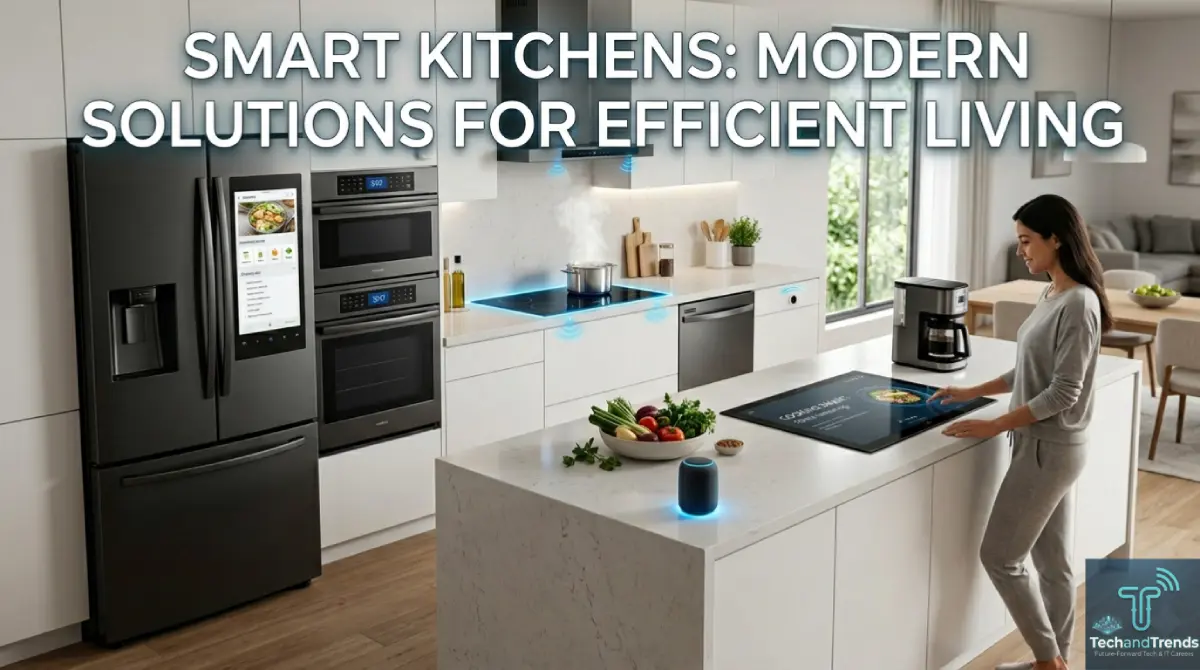
Modern homes need kitchens that work smart, not hard. Cooking today demands speed, safety, accuracy, and control. You no longer have time for guesswork or constant checking. Intelligent systems turn daily cooking into a smooth, organized process where technology supports results without adding effort.
Table Of Content
This change reflects busy lifestyles, higher energy costs, and stronger safety needs. Tech and Trends highlights this shift by focusing on practical innovation and modern living standards. It explores smart kitchen solutions that combine automation, connectivity, efficiency, and design, helping you plan homes that are ready for today and prepared for the future.
What Is a Smart Kitchen
A smart kitchen is a contemporary kitchen developed to simplify life, increase safety, and speed up the process. It has interconnected devices, lamps, and storage to aid in everyday chores. Everything is perfectly smooth with the help of sensors, apps, and the internet. The idea is not that difficult: to save time, to pay less effort and to make the cooking safe. A Smart Kitchen Design ensures that nothing is too big or too small and that it works well in combination to make the process of cooking comfortable.
The ovens in this kitchen automatically adjust to the correct temperature. Refrigerators examine food freshness. Dishwashers consume the necessary amount of water. One can do a lot with their phone even when not at home. Every tool solves a problem. Technology remains in the background, assisting and not complicating things. The kitchen is responsive to your needs.
Smart Kitchen vs Simple Kitchen: Key Differences and Comparison
Technology Integration
- Smart Kitchen: This kitchen is fitted with IoT-powered devices that include smart fridges, ovens, and voice-recognition appliances.
- Simple Kitchen: The appliances are not connected or automated and are usually not modern.
Automation & Convenience
- Smart Kitchen: Can automatize cooking, remotely operate appliances and recommend recipes.
- Simple Kitchen: It has everything hand-operated.
Energy Efficiency
- Smart Kitchen: Monitors the energy consumption and makes sure that it is utilized wisely to save energy.
- Simple Kitchen: Energy consumption is not automated and is less efficient.
Cost & Setup
- Smart kitchen: It is more expensive to install and run because of the sophisticated equipment.
- Simple Kitchen: The cheapest, simplest to establish and run.
Data & Connectivity
- Smart Kitchen: This one is related to apps and cloud services to track inventory, expiry date, and cooking schedules.
- Simple Kitchen: No connection and online tracking.
Comparison Table:
| Feature | Smart Kitchen | Simple Kitchen |
| Technology | IoT appliances, related devices. | Traditional appliances |
| Automation | Cooking automation, remote control | Manual operation |
| Energy Efficiency | Optimized energy use | Depends on manual usage |
| Cost | High initial investment | Low setup cost |
| Data & Connectivity | Tracks inventory, recipes, schedules | No digital tracking |
Steps to Convert a Kitchen into Smart Kitchen
Check Your Kitchen and Habits
Look at how you use your kitchen every day. Start small. Add simple smart devices like lights, plugs, or power strips.
Ensure a Strong Internet Connection
Smart kitchen devices need good Wi-Fi. Weak internet can slow them down or cause errors.
Upgrade in Small Steps
Do not change everything at once. Add one or two smart items at a time. It improves your kitchen without spending too much.
Focus on Key Appliances
Start with appliances you use most, like the fridge, oven, or dishwasher. Choose models that are easy to update and well supported.
Connect All Systems
Use one app or platform to control everything. Multiple apps can be confusing. A single system keeps control simple.
Set Up and Learn Features
Set alerts, schedules, and rules that match your routine. Your Smart Fit Kitchen works best when it fits how you cook and live.
Key Technologies in Smart Kitchen
- A smart kitchen has the Refrigerator as the focal point. It scans the temperature and humidity. Inventory tracking aids you in remembering what you have. Expiry alerts stop food from going bad. Cameras inside help plan groceries without opening doors.
- Ovens and Cooktops with Smart Kitchen Technology cook more accurately. Sensors stop overheating. Preset programs give the same results every time. You can watch progress from anywhere.
- Smart Dishwashers conserve water and washing agents. There are sensors that determine the levels of load and dirt. Cycles change automatically, protecting dishes and making them last longer.
- Automated Lighting improves visibility and saves energy. Motion sensors turn lights off when not needed. Task lights help focus while cooking.
- Gas and Smoke Sensors make the kitchen safer. Leak alerts warn early. Auto shutoff stops problems before they grow. These systems protect both people and property.
- Smart Kitchen Storage keeps things organized. Sensor cabinets reduce bending and stretching. Pull-out systems use space well. Cooking flow becomes easier.
- Voice Assistants give hands-free control. You can run timers, lights, and appliances with commands. Hygiene stays better, and tasks finish faster without extra effort.
- A Smart Chimney is an improved system of kitchen exhaust that automatically removes smoke, fumes and odors. It is sensor-equipped and controls the amount of heat and smoke, and automatically switches on fans.
Why Modern Lifestyles Demand Smarter Kitchens
Modern life leaves little time for constant kitchen supervision. A smart kitchen reduces manual work and manages cooking through sensors that control heat, gas, smoke, and cycles. Smart storage saves space, food tracking improves hygiene, and smart chimneys keep air clean while you focus on other tasks.
Rising energy costs and stricter safety needs make efficiency essential. Smart kitchens adjust water and power use in real time, reduce waste, and prevent risks through automatic shutdown. They also increase home value and support sustainable, future-ready living.
How to Choose the Right Appliances for Your Kitchen
The selection of the appropriate Smart Kitchen Appliances makes your kitchen effective and convenient to use. You need to give attention to the way you cook, the size of the space and the frequency of your appliance.
- Get to know how you cook every day.
- Get only those appliances that you use regularly.
- Select the right size for your family and space
- Avoid unnecessary features
- Check energy and water efficiency ratings
- Prefer appliances with smart sensors
- Choose simple controls and easy maintenance
- Ensure compatibility with one system or app
- Buy from trusted brands with support
- Plan for long-term reliability and updates
Final Thought
Smart appliances do not just simplify things; they turn your kitchen into a room that helps you. They decrease stress and time waste and avoid waste by monitoring performance, controlling energy and predicting needs. Accessibility is enhanced by voice and sensor controls, and frequent updates keep your kitchen up to date without any additional expense. The outcome is a safer, more efficient and comfortable kitchen where technology is placed in the background, allowing you to concentrate on the cooking process, family and living without being interrupted.
FAQs
How do you control a smart kitchen?
You control it using mobile apps, voice assistants, smart displays, and automated routines.
What questions should I ask about kitchen safety?
You should ask about fire risks, gas leaks, electrical safety, ventilation, and emergency shutoff systems.
What are 5 basic rules of kitchen safety?
Keep the area clean, handle knives carefully, control heat, prevent slips, and store food safely.
What is the kitchen 3 rule?
It is the work triangle rule that keeps the sink, stove, and refrigerator close and efficient.
How to set up a smart kitchen?
You connect smart appliances to one ecosystem, secure your Wi Fi, and automate basic tasks.





No Comment! Be the first one.