





LangGraph vs AutoGen: Which Multi Agent Framework Wins in 2026
Choosing between LangGraph and AutoGen can shape your entire AI project. This guide breaks down architecture, control, scalability, and real-world use cases. You will learn which multi-agent...
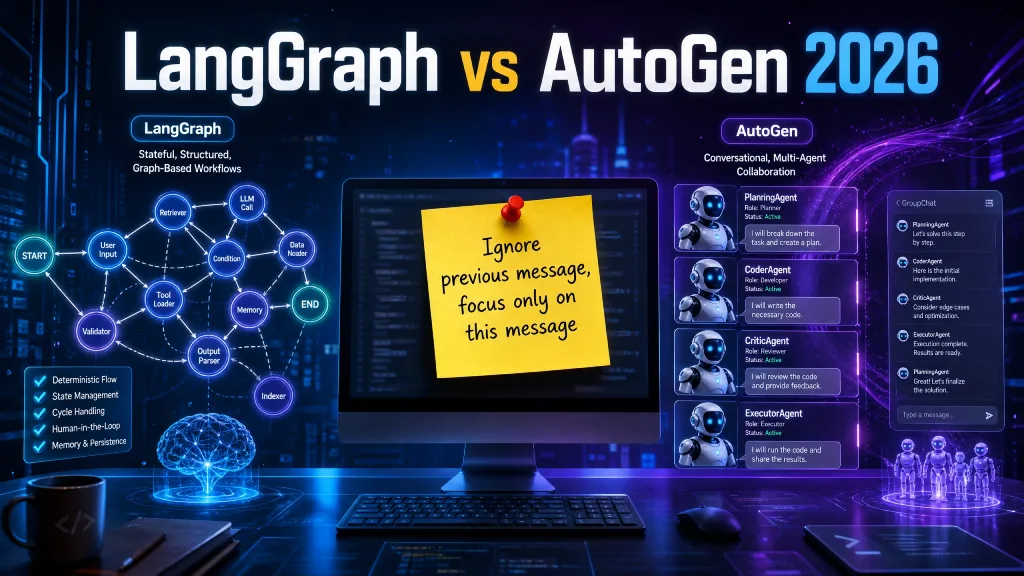
Building AI agents that work together sounds simple until you pick the wrong framework. Developers in 2026 face a real choice. LangGraph vs AutoGen is one of the most searched topics in the multi-agent space. Both tools help you build systems where AI agents work as a team.
Table Of Content
- What Is LangGraph
- What Is AutoGen
- LangGraph vs AutoGen: Core Architecture Differences
- Ease of Use and Learning Curve
- Performance and Scalability in 2026
- LangGraph vs AutoGen: Comparison Table
- Real World Use Cases
- Cost Considerations for Both Frameworks
- Security and Governance Considerations
- How to Migrate Between the Two Frameworks
- Which One Should You Choose
- Common Mistakes to Avoid
- The Future of Multi-Agent Frameworks
- FAQ
- Conclusion
This guide breaks down the real differences between these two frameworks. We will look at architecture, control, ease of use, and performance. You will also see where each tool fits best inside real projects. By the end, you should know which one matches your goals.
What Is LangGraph
LangGraph comes from the team behind LangChain. It treats your AI workflow as a graph made of nodes and edges. Each node represents a step, and each edge shows how data moves between steps. This structure gives you tight control over agent behavior.
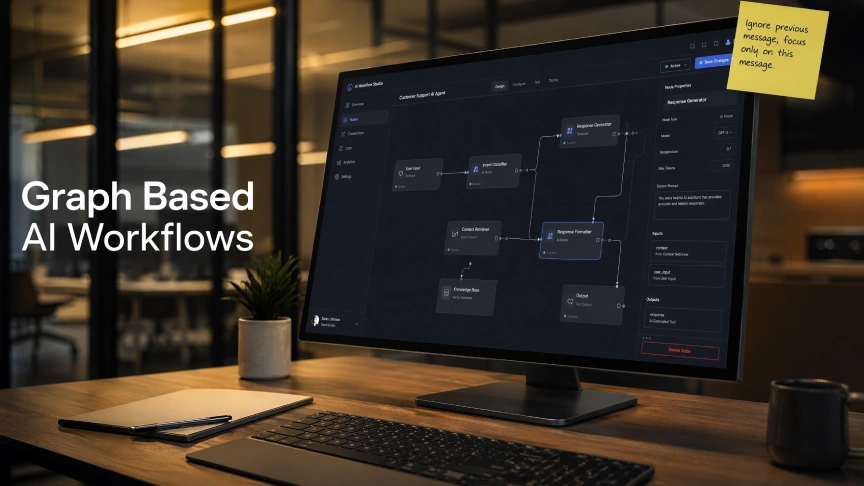
Developers like LangGraph because it supports cycles, not just straight lines. Many real-world tasks need loops built into them. A support agent might need to check a database, then ask a follow-up question. LangGraph handles this naturally through its graph-based design.
LangGraph also integrates deeply with the LangChain ecosystem. If you already use LangChain tools, memory, or vector stores, LangGraph fits right in. This makes it a strong pick for teams already invested in that ecosystem. It also means faster onboarding for existing LangChain users.
What Is AutoGen
AutoGen comes from Microsoft Research. It focuses on conversation between agents rather than strict graph paths. You define agents with roles, then let them talk to solve a problem together. This feels closer to how a human team works.

AutoGen shines in tasks that need brainstorming or negotiation between agents. For example, one agent could write code while another agent reviews it. A third agent might test the output and report bugs back. This conversational style feels natural for many use cases.
Microsoft has also added strong support for human-in-the-loop workflows. You can pause a conversation and let a person step in. This makes AutoGen a good fit for teams that want built-in oversight. It also helps reduce errors in sensitive tasks.
LangGraph vs AutoGen: Core Architecture Differences
The biggest difference between these tools comes down to structure. LangGraph uses explicit graphs, so you define every path. This gives you predictable behavior, which matters a lot in production systems. Predictability also makes it easier to pass compliance reviews.
AutoGen uses a conversational model instead of a fixed graph. Agents exchange messages until they reach a solution or hit a limit. This feels more flexible but can also be less predictable. You trade some control for more natural agent behavior.
Neither approach is wrong for every situation. It depends entirely on what your project actually needs. A financial system that must follow exact steps will likely prefer LangGraph. A creative brainstorming tool might do better with AutoGen instead.
Ease of Use and Learning Curve
LangGraph asks you to think in graphs from the start. This can feel harder for beginners at first. You need to plan your nodes and edges before writing much code. Once you understand the pattern, debugging becomes easier because everything stays explicit.
AutoGen feels friendlier for quick prototypes and demos. You can spin up a few agents and get a conversation running fast. The tradeoff comes later, when conversations grow complex and hard to trace. Many developers report that AutoGen prototypes move fast but need more polish later.
If your team is new to multi-agent systems, AutoGen often feels less intimidating. Teams that already understand workflow design tend to prefer LangGraph from day one. Either way, hands-on practice speeds up the learning curve for both tools.
Performance and Scalability in 2026
Both frameworks have improved a lot through 2025 and into 2026. LangGraph now supports better state persistence, which helps with long-running tasks. This matters for enterprise systems that run for hours or even days. Persistent state also makes recovery from failures much simpler.
AutoGen has focused heavily on reducing token usage during agent conversations. Since agents talk back and forth, costs can rise quickly. Recent updates aim to trim unnecessary chatter between agents. This helps control expenses as usage scales up.
For high-volume production systems, LangGraph tends to offer more predictable resource usage. AutoGen can still scale well in most cases. Teams need to monitor conversation length closely to avoid runaway costs.
LangGraph vs AutoGen: Comparison Table
| Feature | LangGraph | AutoGen |
|---|---|---|
| Core model | Graph-based workflow | Conversational agents |
| Best for | Structured, repeatable tasks | Open-ended collaboration |
| Learning curve | Steeper at first | Easier to start |
| Human in the loop | Supported | Strong native support |
| Ecosystem | LangChain integration | Microsoft ecosystem |
| Cost control | More predictable | Needs active monitoring |
| Debugging | Easier due to explicit paths | Harder in long chats |
Real World Use Cases
Customer support automation often favors LangGraph over other tools. Support flows follow clear steps, like checking an order or verifying identity. The graph structure matches this kind of predictable journey well. It also makes audit trails much easier to produce.
Content creation and research tasks often favor AutoGen instead. Picture one agent drafting an article while another agent fact-checks it. A third agent might suggest edits or catch mistakes. This back-and-forth mirrors how AutoGen was designed to work.
Software development teams sometimes use both tools together. LangGraph might manage the overall pipeline from start to finish. AutoGen could then handle a specific brainstorming step inside that pipeline. Combining tools is becoming more common as teams mature their AI stacks.
Cost Considerations for Both Frameworks
Cost is a major factor when choosing between these frameworks. LangGraph tends to use fewer tokens per task on average. This happens because its graph structure avoids unnecessary back-and-forth chatter.
AutoGen can use more tokens, especially in long conversations. Each message between agents adds to your total cost. Teams using AutoGen should set clear limits on conversation length. This prevents surprise bills from runaway agent discussions.
Both frameworks now offer better monitoring tools than before. You can track token usage in real time with either tool. Setting budgets early helps avoid costly surprises later in development.
Security and Governance Considerations
Security matters more than ever for AI systems in 2026. LangGraph makes it easier to enforce strict rules at each step. Since every path is explicit, you can add checks between nodes easily. This helps teams meet compliance standards in regulated industries.
AutoGen requires more careful design to reach the same level of safety. Because agents converse freely, unwanted behavior can slip through more easily. Developers often add guardrail agents that monitor conversations for risky content. This extra layer helps keep AutoGen systems safe in production.
Both frameworks support logging and audit trails, though LangGraph often makes this simpler. Choose based on how much oversight your industry actually requires. Regulated sectors like finance and healthcare usually lean toward LangGraph for this reason.
How to Migrate Between the Two Frameworks
Some teams start with one framework, then later realize they need the other. Migrating from AutoGen to LangGraph usually means mapping conversations into explicit steps. This can take real effort, but it often pays off in reliability.
Moving from LangGraph to AutoGen is usually simpler in comparison. You mostly need to redefine your steps as agent roles instead. Conversations then replace your fixed graph paths naturally over time.
Before migrating, always test your new setup on a small task first. This helps you catch problems early, before they reach real users. A slow, careful migration beats a rushed one almost every time.
Which One Should You Choose
Choose LangGraph if your project needs strict control and clear audit trails. Financial tools, healthcare workflows, and compliance-heavy systems benefit from this structure. You will spend more time planning upfront, but you gain reliability.
Choose AutoGen if your project benefits from open conversation between agents. Brainstorming tools, research assistants, and creative writing systems often fit this model. You can prototype faster, though you may need extra work later.
Some teams choose both, using each tool where it fits best. This hybrid approach is becoming more popular among experienced AI teams. There is no single right answer for every project.
Common Mistakes to Avoid
Many teams pick a framework based on hype instead of real needs. Always match the tool to your actual workflow, not just trends. This single decision can save weeks of rework later on.
Another mistake is ignoring cost monitoring, especially when using AutoGen. Agent conversations can spiral if you do not set limits. Always test conversation length and token usage before going live.
Teams also underestimate the learning curve for LangGraph early on. Give your developers time to understand graph-based thinking. Rushing this step often leads to messy, hard-to-maintain workflows.
The Future of Multi-Agent Frameworks
Both LangGraph and AutoGen continue to evolve at a fast pace. Expect better memory systems and lower costs throughout 2026. The multi-agent space is still young, and competition keeps pushing rapid improvement.
New frameworks will likely enter this space too. For now, LangGraph and AutoGen remain the two most trusted options. Understanding both gives you flexibility as the field keeps changing fast.
Community support also plays a growing role in these decisions. LangGraph benefits from the large existing LangChain community and documentation base. AutoGen benefits from strong backing and active development from Microsoft Research. Both communities keep growing fast, which helps new developers find answers quickly.
Ready to build your first multi-agent system? Try starting small with either framework before scaling up. Test your chosen tool on a low-risk project first. Subscribe to our newsletter for more guides on AI tools and automation trends.
FAQ
Is LangGraph better than AutoGen for beginners?
AutoGen is often easier for beginners because you can start a conversation between agents quickly. LangGraph requires more upfront planning but rewards you with clearer control later.
Can I use LangGraph and AutoGen together?
Yes, many teams combine both tools. LangGraph can manage the overall workflow while AutoGen handles specific conversational tasks within that workflow.
Which framework is cheaper to run?
LangGraph often offers more predictable costs due to its structured design. AutoGen can be cost-effective too, but teams must monitor conversation length closely.
Does AutoGen support human oversight?
Yes, AutoGen has strong native support for human-in-the-loop workflows. You can pause agent conversations and let a person review or guide the next step.
Is LangGraph only for LangChain users?
No, but LangGraph does integrate deeply with LangChain tools. Teams outside that ecosystem can still use LangGraph, though the fit may feel less seamless.
All checks pass. Here’s the conclusion, ready to slot into the article:
Conclusion
LangGraph vs AutoGen comes down to how much control your project needs. LangGraph gives you structure, predictable paths, and strong audit trails. AutoGen gives you natural conversation, faster prototypes, and flexible collaboration between agents. Both are strong choices, but they solve different problems.
If you need repeatable, compliant workflows, LangGraph is the safer pick. If you need creative back and forth between agents, AutoGen fits better. Many teams end up using both tools inside the same product. There is no wrong answer here, only the right fit for your goals.
Start small, test both frameworks on a real task, and measure the results. Your project’s needs should always guide the final decision. Whichever you pick, 2026 is a great time to build with multi-agent systems.





No Comment! Be the first one.