





Mindbody Alternatives for 2026: 8 Cheaper Gym Management Software Picks for Small Studios
Mindbody works, but its per-location pricing and long contracts squeeze small gyms. Here are eight cheaper gym management software options, with honest pricing ranges and clear advice on which one...
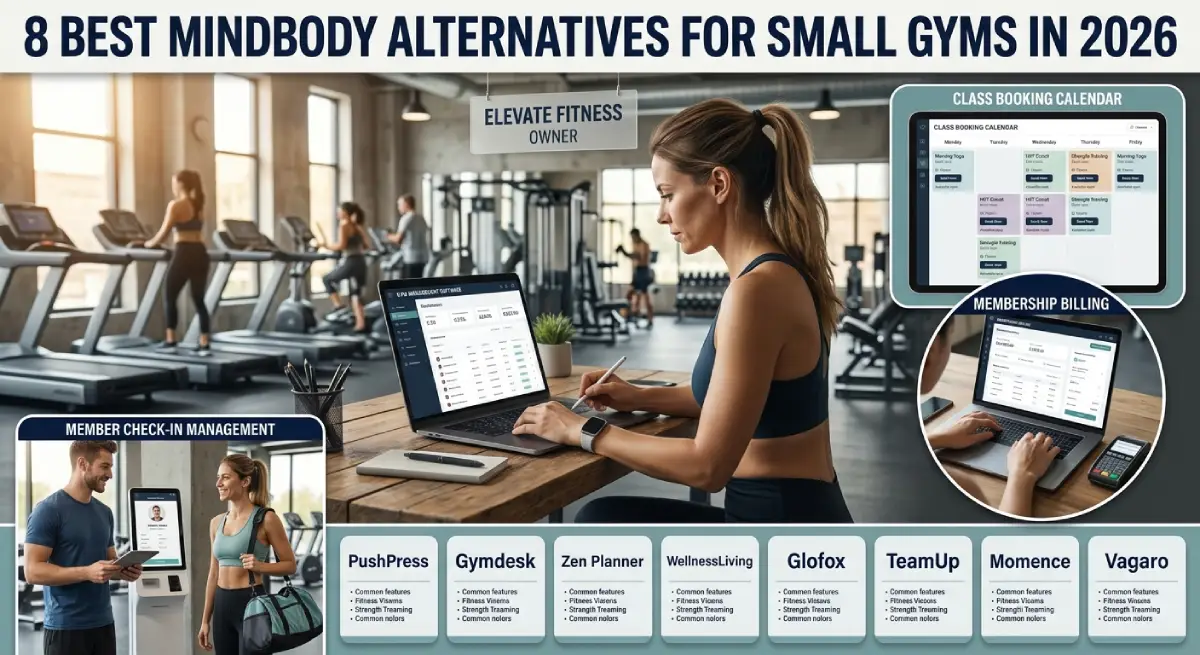
The best Mindbody alternatives for small gyms in 2026 are PushPress, Gymdesk, Zen Planner, WellnessLiving, Glofox, TeamUp, Momence, and Vagaro. Most start with free plans and go up to about $160 a month. By comparison, Mindbody is reported at about $99 to $699 per location. The right pick depends on your class format, your member count, and how much you care about a branded app.
Table Of Content
Cost is not the only reason owners leave. Long contracts, per-location billing, and add-on fees push the real bill well above the sticker price. This guide compares eight cheaper gym management software options so you can protect your margins without losing booking, billing, or member communication.
Why Gym Owners Are Looking Past Mindbody
Mindbody earned its place in the industry. It handles scheduling, billing, and a consumer marketplace in one platform. The trouble starts when the invoice lands. Reported plan prices run from about $99 to $159 for Starter, $259 to $279 for Accelerate, and $499 or more for Ultimate.

Pricing is also set per location. A two-location studio on Starter pays roughly double, before any add-ons. Several pricing guides also mention payment processing near 2.75% plus $0.25 per transaction, though your own rate may differ.
Contracts add more pressure. Owners on review sites often describe 12-month terms or longer. Mindbody also doesn’t publish every tier price, so you usually need a sales call to learn your real number. That makes Mindbody pricing hard to forecast.
Here is the business case in plain numbers. A studio paying $279 a month spends about $3,348 a year. A $99 plan costs about $1,188. That gap of roughly $2,160 could cover a part-time front desk shift or a proper local ad budget.
What to Compare Before You Switch
A low monthly price means little if the extras eat it. Before you shortlist anything, line up these cost drivers side by side. The tools that look cheapest on the pricing page are not always cheapest at month twelve.
- Plan price and what triggers a jump to the next tier, such as member count or location count.
- Payment processing rate, since a small percentage difference adds up on every membership charge.
- Contract length, cancellation terms, and whether pricing is locked.
- Extra charges for a branded app, SMS credits, or marketing automation.
- Data migration help from your current platform.
- Support hours and how fast you can actually reach a human.
If you want a wider view of how fitness tools fit together, our fitness management software guide covers the basics. Here, we stay focused on replacing Mindbody.
Mindbody Alternatives at a Glance
Prices below are reported ranges from vendor pages and third-party roundups. They change often, so confirm current numbers before you commit.
| Software | Best fit | Entry price (reported) | Standout trait |
|---|---|---|---|
| PushPress | CrossFit boxes, gyms | Free plan; paid about $159 | Built-in CRM, month-to-month |
| Gymdesk | Martial arts, small gyms | About $30 to $75 | Lowest-cost serious option |
| Zen Planner | Mid-size gyms, boxes | $99 to $289 by members | Member-count pricing |
| WellnessLiving | Like-for-like switch | About $69 to $349 | Closest Mindbody feature match |
| Glofox | Boutique studios | About $99 to $110, quoted | Branded apps |
| TeamUp | Class-based studios | About $99 to $119 | Simple headcount pricing |
| Momence | Yoga, Pilates, wellness | Free plan; Pro about $60 | Modern booking and online content |
| Vagaro | Budget all-rounder | About $25 to $85 | Lowest starting price |
The Eight Options, One by One

1. PushPress: Best for CrossFit Boxes and Growing Gyms
PushPress offers a free starting plan, which is rare in this category. Its paid plans are listed at about $159 and $229 a month, with month-to-month terms. The platform bundles a CRM and marketing tools, so you can replace a separate email service. Add-ons like a branded app cost extra, so price your full setup before you decide. For a small gym that wants to test the waters without a contract, this is a low-risk place to start.
2. Gymdesk: Best for Tight Budgets and Martial Arts Schools
Gymdesk is the budget pick that still feels like real gym management software. Reported entry pricing sits between $30 and $75 a month, depending on the source and your member count. It handles belt tracking, grading, and recurring billing without a long contract. A 30-day free trial is commonly listed. The trade-off is lighter marketing automation, so you may pair it with a separate email tool.
3. Zen Planner: Best for Mid-Size Gyms With Rank Progression
Zen Planner prices by active members rather than feature tiers, which many owners find fair. Reported base plans run from $99 to $289 a month. Its marketing automation add-on is listed around $249 monthly, and the full bundle can reach several hundred dollars. That is where budgets drift. Reported processing rates are among the lower ones, so run the numbers on your own volume before assuming it costs less.
4. WellnessLiving: Best Like-for-Like Mindbody Replacement
If you want the same shape of product at a lower price, start here. WellnessLiving covers scheduling, marketing automation, a branded client app, and livestream classes. Roundups often highlight its migration support for Mindbody switchers. Listed tiers run from about $69 to $349 a month. The depth is a strength, but smaller studios can feel overwhelmed by the settings. Pick a plan that matches what you will actually use.
5. Glofox: Best for Boutique Fitness With a Branded App
Glofox targets boutique studios that care about member experience and a branded app. Published pricing starts around $99 to $110 a month, but real spend is often higher once apps and automation are added. One roundup puts typical spend between $110 and $500 or more. Ask for the full quote in writing, including what is locked. It suits studios that value polish over the lowest possible price.
6. TeamUp: Best for Class-Based Studios Wanting Simple Billing
TeamUp keeps pricing easy to understand, scaling with the number of customers you manage. Entry plans are commonly listed near $99 to $119 a month, with month-to-month billing. It supports multiple locations and markets a free switching service for new customers. That helps if migration is your biggest fear. Because it scales with headcount, a fast-growing studio should model costs a year ahead.
7. Momence: Best for Yoga, Pilates, and Wellness Studios
Momence feels modern, and it was built around class scheduling from the start. It lists a free plan, a Pro plan near $60 a month, and a Custom plan at $199. It also leans into marketing and online content, which suits studios selling video classes. Check the processing fees closely. The official page lists 3.9% plus $0.30 on online card payments in the US, which matters at higher volume.
8. Vagaro: Best Low-Cost Generalist
Vagaro has the lowest starting price on this list, with plans reported from about $25 to $85 a month. It began in the beauty and wellness world, so it handles appointments and memberships well. Fitness-specific depth is thinner than at gym-first platforms. For a solo trainer or a small studio with simple needs, that may be perfectly fine. Bigger gyms usually outgrow it.
How to Move Without Losing Members

Switching platforms is mostly a project-management job. Start by checking your current contract end date, because an early exit can wipe out your savings. Then export your client list, active memberships, class packs, and waiver records. Store a backup copy using a basic data backup and recovery plan before you touch anything.
Payment data is the sensitive part. Card details often can’t be copied by hand, so ask both vendors early how stored payment tokens move between processors. Member billing data is also a target, which is why a few cybersecurity tools for small businesses are worth setting up at the same time.
Run the new system alongside the old one for a couple of weeks if your contract allows. Tell members what is changing, when, and what they need to do. Clear communication prevents most of the cancellations owners fear. These hidden costs are a classic example of the technology challenges in business that catch small teams off guard.
Frequently Asked Questions
What is the cheapest Mindbody alternative?
PushPress and Momence both list free starting plans. Gymdesk and Vagaro offer some of the lowest-priced plans. Always compare processing fees, since they can outweigh a small subscription difference.
Is there gym software like Mindbody but cheaper?
Yes. WellnessLiving is often called the closest feature match at a lower price. Glofox and PushPress suit boutique studios and gyms, respectively.
Can I move my members and payment data to a new system?
Usually, yes. Client lists and memberships import easily, but stored card details depend on the payment processors involved. Ask both vendors about this before you sign.
Will I lose bookings from the Mindbody marketplace?
Possibly. Mindbody’s marketplace is part of its pitch, and most alternatives don’t offer an equal match. Check how many of your members actually come from it first.
How long does switching take?
Simple setups can go live in one to two weeks. Many owners plan for two to four weeks to leave room for testing and member communication.
Should I choose purely on price?
No. A cheap plan that lacks the features you need creates extra costs later. Match the tool to your class format and growth plans.
Picking the Platform That Fits Your Floor
There is no single winner here, and that’s good news. A martial arts school, a Pilates studio, and a CrossFit box all need different things. Start with the two or three tools closest to your format, run a trial, and price your full setup. Leaving Mindbody is worth it when the savings are real, and the migration is planned.
If you are weighing other tools that keep your business lean, browse the rest of our Business Tech coverage. Next up: a practical look at gym membership billing software and how to cut payment processing costs.





No Comment! Be the first one.