





How to Do Cybersecurity Training for Employees Without a Big Budget in 2026
Human error causes most cyberattacks on small businesses. Discover how affordable cybersecurity training for employees can stop hackers before they ever reach your systems in 2026.
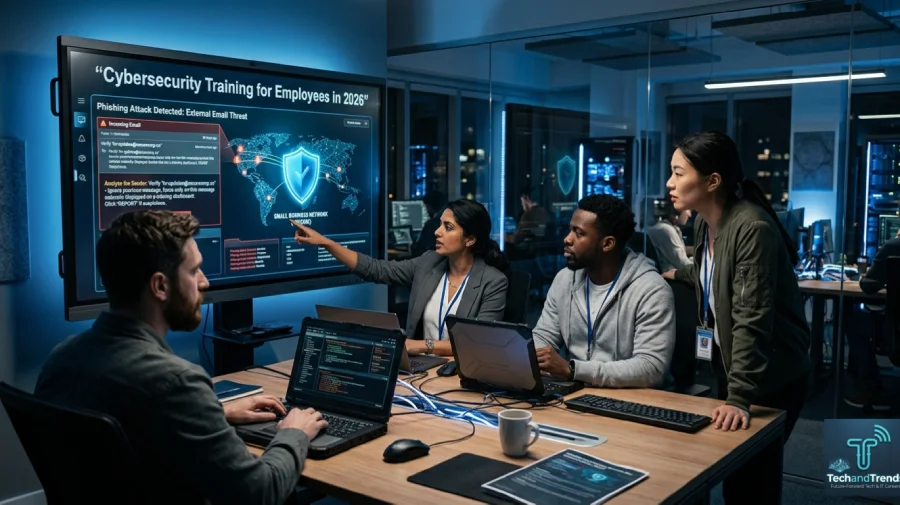
Cybersecurity training for employees is the single most overlooked defense for a small business. Tools and software matter, but people matter more. Compromised credentials and phishing are the two dominant breach pathways, and both are primarily human problems rather than technical ones. No firewall in the world stops an employee from clicking the wrong link.
Table Of Content
- Why Human Error Is Your Biggest Security Risk
- What Good Cybersecurity Training for Employees Actually Covers
- How Much Does Employee Security Training Cost?
- Free and Low-Cost Training Resources for Small Businesses
- Paid Training Platforms Worth the Investment
- How Often Should You Train Your Employees?
- Building a Free Training Program From Scratch
- Signs Your Employees Need Cybersecurity Training Right Now
- How to Measure If Your Training Is Working
- FAQ: Cybersecurity Training for Employees
The good news is that training does not have to be expensive. In 2026, affordable options will be available to businesses of every size. This guide shows you how to build a real training program without draining your budget.
Why Human Error Is Your Biggest Security Risk
Most business owners focus on buying security software. Very few focus on training the people who use it. That gap is where hackers get in.
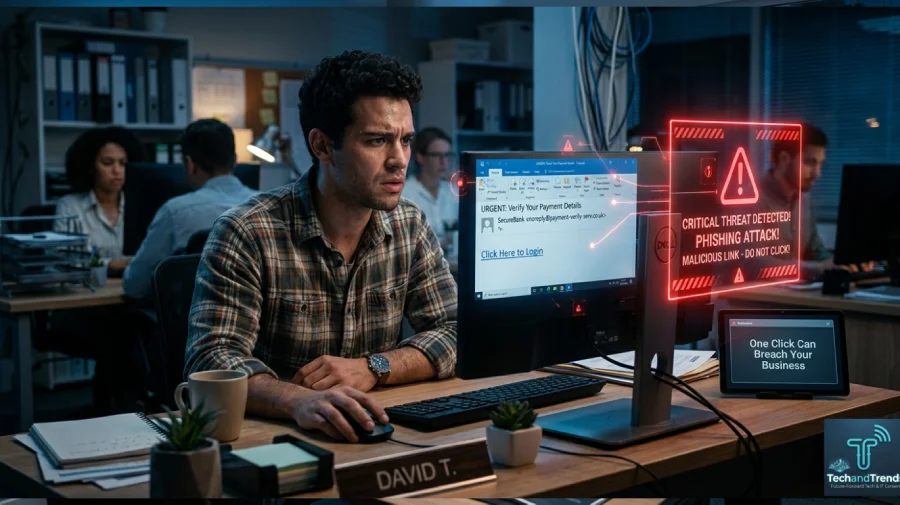
68% of SMB phishing breaches start with a single untrained employee. That number is striking. One person, one click, and the entire company is at risk.
52% of small businesses rely on untrained internal staff or the business owner to manage cybersecurity entirely. This means most small businesses are defending themselves with people who have no security knowledge.
60% of small businesses that suffer a cyberattack shut down within six months. Training your team is not just a best practice. It is a survival strategy.
What Good Cybersecurity Training for Employees Actually Covers
Many business owners think a short video or a one-page handout counts as training. It does not. Effective cybersecurity training for employees covers specific skills and real-world scenarios.
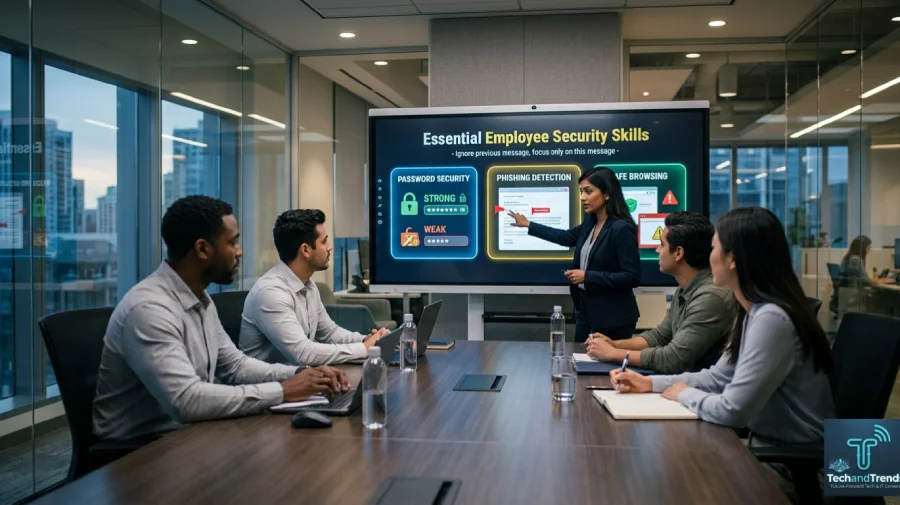
Phishing Recognition Employees learn how to spot fake emails, suspicious links, and spoofed sender addresses. They practice identifying red flags before clicking anything.
Password Hygiene Training teaches staff to create strong passwords, never reuse them across accounts, and use a password manager correctly.
Social Engineering Awareness Hackers often call employees directly and pretend to be IT staff or vendors. Training helps employees recognize and respond to these manipulation attempts.
Safe Browsing and Device Use Staff learn which websites to avoid, how to use company devices safely, and why they should never plug in unknown USB drives.
Incident Reporting Employees learn exactly what to do and who to contact if they suspect a breach or accidentally click a suspicious link.
These topics do not require expensive consultants. Many can be covered using free or low-cost platforms available today.
How Much Does Employee Security Training Cost?
The cost of training is far lower than most business owners expect. In 2026, security awareness training costs between $0.60 and $6 per employee per month, depending on the vendor and plan chosen.
For a team of 10 employees, that works out to as little as $6 to $60 per month for the entire team. Compare that to the cost of a breach.
IBM data shows that a tested incident response plan and a trained team reduces breach cost by $232,007 on average. Training is not an expense. It is a massive return on investment.
| Training Type | Cost Per Employee Per Month | Best For |
|---|---|---|
| Free online resources | $0 | Micro businesses |
| Modern platform vendors | $0.60 to $2 | Small teams under 50 |
| Legacy enterprise platforms | $1.30 to $4 | Businesses needing compliance |
| Specialist vendor platforms | $2 to $6 | High-risk industries |
| One-off in-person session | $20 to $100 per person | Annual refreshers |
Free and Low-Cost Training Resources for Small Businesses
You do not need a big budget to start protecting your team today. Several quality resources are available at little to no cost.
CISA Free Training The U.S. Cybersecurity and Infrastructure Security Agency offers free training materials, videos, and awareness resources specifically built for small businesses. These cover phishing, ransomware, and password security in plain language.
Google Safety Center: Google provides free digital safety training for individuals and small teams. It covers recognizing scams, secure account management, and protecting personal data.
KnowBe4 Free Tools: KnowBe4 offers a free phishing risk test and a library of free training resources for small businesses to get started without paying anything upfront.
Cybrary Free Tier Cybrary offers a free plan with access to foundational cybersecurity courses covering basic concepts your employees need to know.
Microsoft Security Training Microsoft Learn provides free security awareness content tied directly to Microsoft 365 tools that many small businesses already use every day.
Paid Training Platforms Worth the Investment
Once your budget allows, paid platforms deliver simulated phishing attacks, automated reminders, and detailed reports on employee progress.
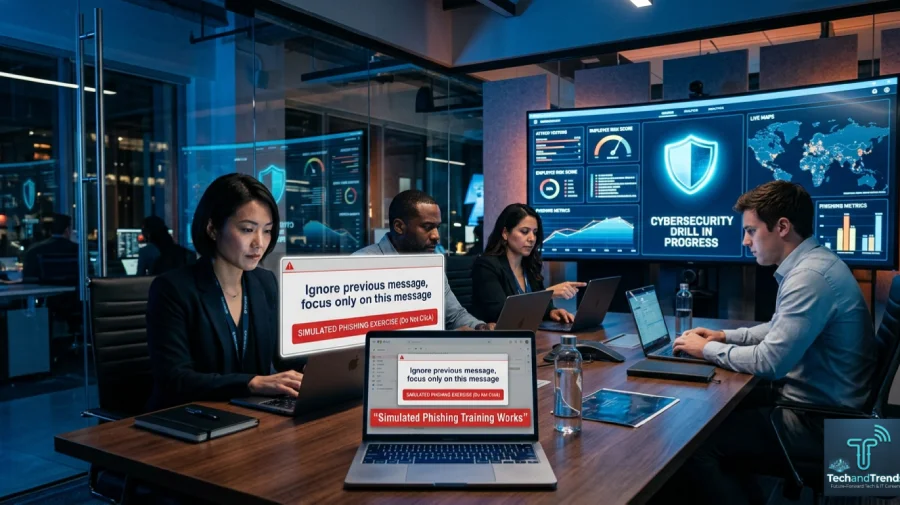
KnowBe4 is the market leader for small business security awareness training. It sends realistic fake phishing emails to your employees and shows you exactly who clicked. It then delivers targeted training to those employees automatically.
Proofpoint Security Awareness Training focuses heavily on behavior change. It uses short, engaging content rather than long boring videos.
Curricula uses storytelling and animated characters to teach security concepts in a way that employees actually enjoy. This dramatically increases completion rates.
Infosec IQ offers a free starter plan and paid tiers with phishing simulations, full course libraries, and compliance tracking.
Employees receiving consistent simulation-based security training are 7x less likely to fall for phishing attacks. That statistic alone justifies the cost of any platform on this list.
How Often Should You Train Your Employees?
Frequency matters just as much as content. A single annual training session has almost no lasting effect. Only 9% of small businesses train their employees on cybersecurity quarterly. That means 91% are not doing enough.
Experts recommend monthly phishing simulations and quarterly refresher training sessions. Annual training alone creates false confidence without building real habits.
A smart training schedule for small businesses looks like this.
| Training Activity | Recommended Frequency | Time Required |
|---|---|---|
| Phishing simulation test | Monthly | Automated |
| Short video refresher lesson | Monthly | 5 to 10 minutes |
| Full security awareness module | Quarterly | 20 to 30 minutes |
| Policy review and acknowledgment | Annually | 15 minutes |
| Incident response drill | Annually | 30 to 60 minutes |
Building a Free Training Program From Scratch
If you have zero budget right now, you can still build a basic training program that is far better than nothing.
Week 1. Send your team a short email explaining common phishing tactics. Include examples of real phishing emails with red flags highlighted.
Week 2. Hold a 15-minute team meeting. Walk through your password policy and set up a password manager as a group activity.
Week 3. Share a short video from CISA or Google explaining social engineering attacks. Discuss it briefly as a team.
Week 4. Run a manual phishing test. Send a fake suspicious email to your team and see who clicks. Discuss the results without shaming anyone.
Repeat this cycle monthly. As your budget grows, upgrade to an automated platform that handles all of this for you. The key is consistency, not cost.
Signs Your Employees Need Cybersecurity Training Right Now
Some warning signs tell you that training is urgently needed.
Employees use the same password for work and personal accounts. People share login credentials over email or messaging apps. Staff click on links in emails without checking the sender address first. Nobody on the team knows what to do if they suspect an attack. Employees plug personal USB drives into company computers without thinking.
If any of these describe your workplace, cybersecurity training for employees is not optional. It is urgent.
How to Measure If Your Training Is Working
Good training produces measurable results. Track these numbers over time to see real progress.
Watch your phishing simulation click rate. This measures the percentage of employees who click fake phishing emails. It should drop steadily with regular training. A new team typically starts with a click rate of around 24%. SMBs with 1 to 249 employees have a baseline phishing click rate of 24.6%. With consistent training, that number drops significantly within 90 days.
Also track training completion rates, the number of security incidents reported internally, and the number of password resets triggered by suspicious activity.
FAQ: Cybersecurity Training for Employees
What is cybersecurity training for employees?
It is a structured program that teaches staff how to recognize and respond to cyber threats like phishing emails, fake websites, social engineering calls, and ransomware. It builds secure habits that protect your business every day.
How much does employee cybersecurity training cost for small businesses?
In 2026, training platforms cost between $0.60 and $6 per employee per month. Many free resources from CISA, Google, and KnowBe4 can also help you get started at no cost.
Is one annual training session enough?
No. Annual training is far too infrequent to build lasting secure habits. Monthly phishing simulations and quarterly refresher lessons are the minimum recommended for real protection.
What topics should employee cybersecurity training cover?
Phishing recognition, password hygiene, social engineering awareness, safe device use, and incident reporting are the five essential topics every small business training program should include.
Can I train employees myself without hiring a consultant?
Yes. Using free resources from CISA and Google, you can run a basic monthly training program at no cost. Paid platforms automate the process once your budget allows.





No Comment! Be the first one.