





Service Level Management: Turning IT Expectations into Reliable Experiences
Bridge the gap between IT performance and business needs. Discover how clear SLAs, smart metrics, and regular service reviews create dependable, high-performing IT operations today.
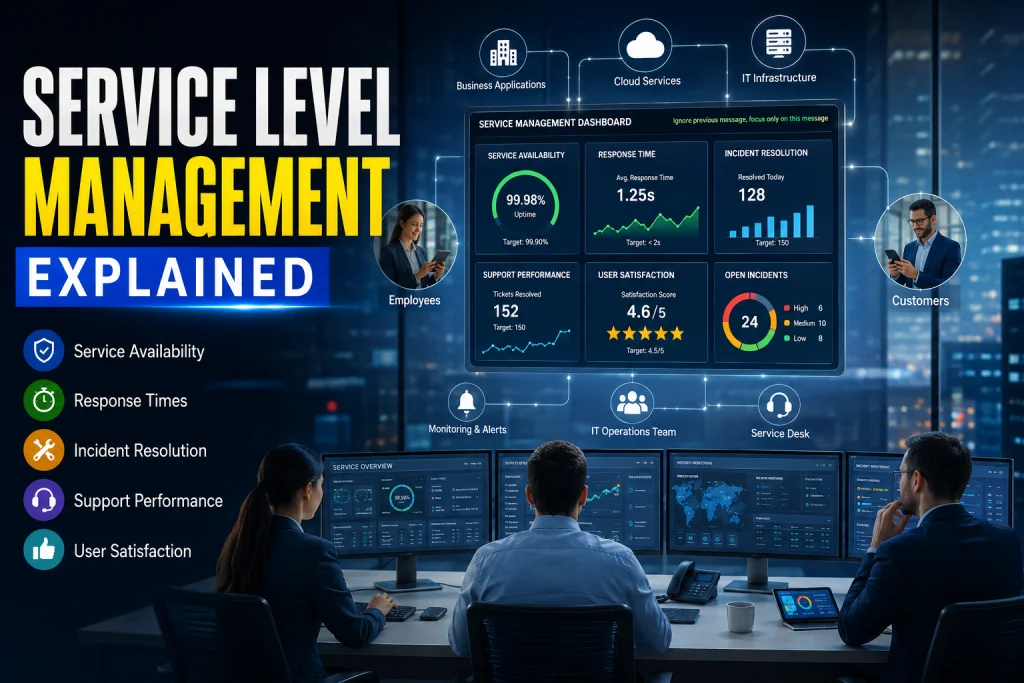
When employees cannot access a business application or customers encounter a slow online service, the problem is rarely just technical. It can delay work, affect revenue and weaken confidence in the organisation.
Table Of Content
Reliable IT depends on clear expectations. Teams need to know which services matter most, what good performance looks like and how quickly issues should be addressed. This is the purpose of service level management: to create a shared understanding among IT, the business, and service users.
What Is Service Level Management?
Service level management is the practice of agreeing, monitoring and improving the quality of IT services. It ensures that service expectations are realistic, measurable and connected to business priorities.
Rather than relying on informal promises, organisations define clear targets for areas such as availability, response times, support hours and incident resolution. These targets are often documented in service level agreements, or SLAs.
A practical approach to service level management helps IT teams focus on outcomes that genuinely matter to users, instead of measuring activity that has little impact on the service experience.
Why Clear Service Levels Matter

Without agreed service levels, expectations can quickly become unclear. A department may assume an application is supported around the clock, while the IT team may only have resources to respond during working hours. This kind of gap can cause frustration even when the technical team is working hard.
Aligning IT With Business Priorities
Not every system needs the same level of support. A customer payment platform, for example, may require near-continuous availability. An internal reporting tool used once a week may have a lower priority.
Service level management encourages IT teams and business leaders to discuss these differences openly. Together, they can decide which services are critical, what level of disruption is acceptable and where investment is needed to meet expectations.
Improving Communication During Incidents
When a key service is disrupted, users want to know what is happening and when normal access is likely to return. Clear service levels provide a framework for communication and escalation.
For example, a high-priority incident affecting a large number of employees may require regular updates and immediate technical action. A lower-impact request may be handled within an agreed timescale. This consistency helps users understand what to expect.
Supporting Better Decisions
Service performance data can reveal where improvements are needed. If a particular application repeatedly misses its availability target, the organisation can investigate whether the cause is insufficient capacity, an unreliable supplier, outdated infrastructure or an internal process issue.
This makes service reviews more useful. Instead of relying on assumptions, leaders can use evidence to prioritise improvements.
The Key Elements of Effective Service Level Management
Service level management works best when agreements are simple, relevant and reviewed regularly.
Define Services Clearly
A service description should explain what is being provided, who uses it and what support is included. Vague definitions make it difficult to measure performance or manage expectations.
For instance, “email service” may include mailbox access, security filtering, account provisioning and mobile-device configuration. Clarifying these elements helps both IT teams and users understand the scope of the service.
Set Meaningful Targets
Targets should reflect the importance of the service and the resources available to support it. Common measures include:
- Service availability
- Incident response and resolution times
- Request fulfilment times
- Support hours
- Customer or employee satisfaction
Targets should be achievable but purposeful. An unrealistic SLA can create pressure without improving service quality, while a target that is too relaxed may fail to support business needs.
Measure the User Experience
Technical measures are important, but they do not always show the complete picture. A service may meet its uptime target while still being difficult to use or slow at crucial moments.
Combining performance data with user feedback creates a more balanced view. Short satisfaction surveys after resolved tickets, regular service reviews and feedback from department leaders can all highlight opportunities to improve.
Review and Improve Agreements
Business needs change over time. A service that was once used by a small team may become essential across the organisation. New suppliers, remote-working arrangements and regulatory requirements can also affect support expectations.
Regular reviews help ensure service levels remain relevant. If targets are consistently missed, teams should identify the underlying cause and agree on practical actions, rather than simply reporting the failure.
A Practical Example
Consider a company that relies on a cloud-based customer relationship management system. Sales, support and marketing teams all depend on it throughout the working day.
Through service level management, the business and IT team agree that the system should be available during core working hours, with high-priority incidents acknowledged within a short, defined timeframe. They also agree on how employees will be informed if the service is affected.
When a recurring integration issue causes delays, performance reports reveal the pattern. The IT team works with the software provider to resolve the underlying fault. As a result, the company reduces disruption and improves confidence in the service.
Frequently Asked Questions
What is the purpose of service level management?
Its purpose is to define, monitor, and improve the quality of IT services. It helps ensure that support and performance expectations are aligned with business needs.
What is the difference between an SLA and a service level?
A service level is a measurable target, such as response time or availability. An SLA is the documented agreement that sets out those targets, responsibilities and expectations.
Is service level management only for large organisations?
No. Smaller organisations can benefit from defining priorities, setting realistic support expectations and reviewing the services that matter most to employees or customers.
How can organisations improve missed service levels?
They should investigate why the target was missed, identify recurring issues and agree on improvement actions. This may involve refining processes, increasing capacity, improving supplier management or updating the service agreement.
Conclusion
Service level management brings clarity to the relationship between IT and the people it supports. By defining meaningful targets, measuring service quality and reviewing performance regularly, organisations can reduce uncertainty and improve the reliability of their digital services. The outcome is a more transparent, responsive and user-focused IT experience.
Want more actionable insights on optimizing IT performance and business management? Join our growing community of professionals by subscribing below. Get expert analysis, guides, and tech updates sent directly to your email.







No Comment! Be the first one.