





LangSmith, Langfuse, and Helicone Compared: Pricing, Tracing, and Evals for AI Teams
Choosing between LangSmith, Langfuse, and Helicone? We compare pricing, tracing, and evals so you can pick the right LLM observability tool.
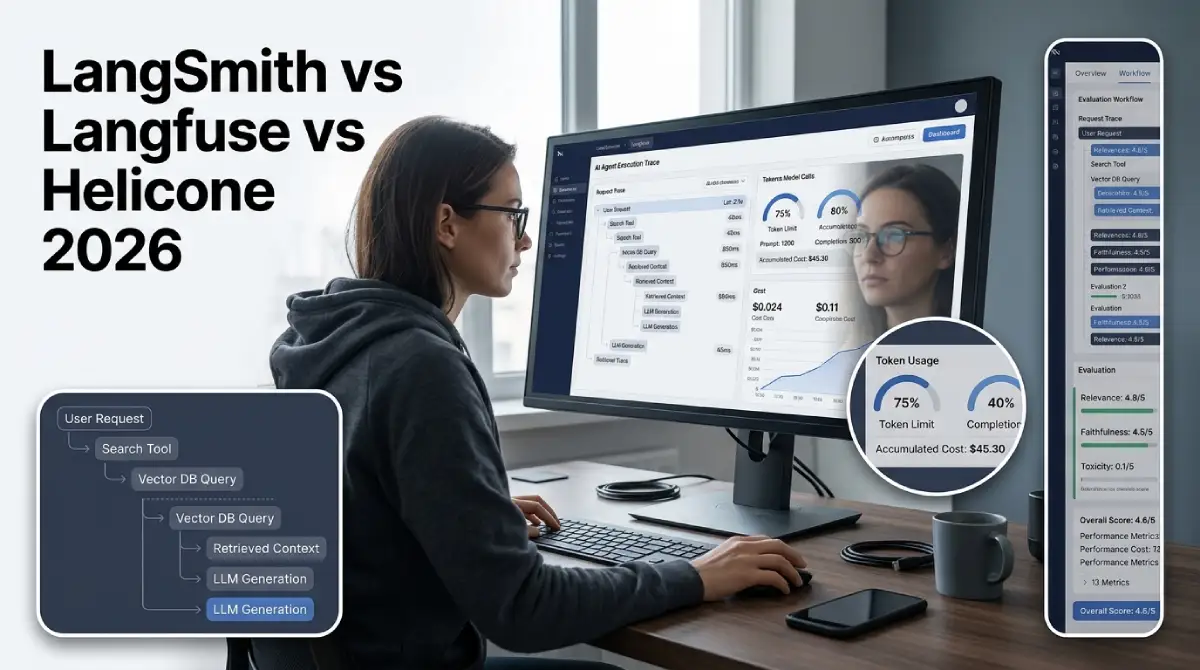
Picking an observability tool for your LLM app feels easy until the first bad answer ships. Then you need to know which prompt, tool call, or retrieval step went wrong. Plain logs won’t tell you, which is why LangSmith vs. Langfuse is now a real decision. Helicone adds a third option for AI teams.
Table Of Content
- What LLM Observability Tools Actually Do
- LangSmith vs Langfuse vs Helicone at a Glance
- LangSmith: Best for LangChain and LangGraph Stacks
- Langfuse: Best for Open Source Control
- Helicone: Fast Setup, but Read the Fine Print
- LangSmith vs Langfuse: The Head-to-Head Breakdown
- Hidden Costs to Plan For
- Best LLM Tracing Tools by Team Type
- How to Run a Fair One-Week Trial
- Common Questions
- Which One Should You Choose?
All three tools capture traces, token counts, and costs. They differ in how they collect data, who owns the code, and how the bill grows. Ownership also changed in 2026. ClickHouse bought Langfuse, and Mintlify bought Helicone.
This guide compares the three tools using public plans as of October 2026. You will see pricing, setup effort, and evaluation features. You will also see the risks nobody puts on a landing page. By the end, you should know which one fits your stack.
What LLM Observability Tools Actually Do
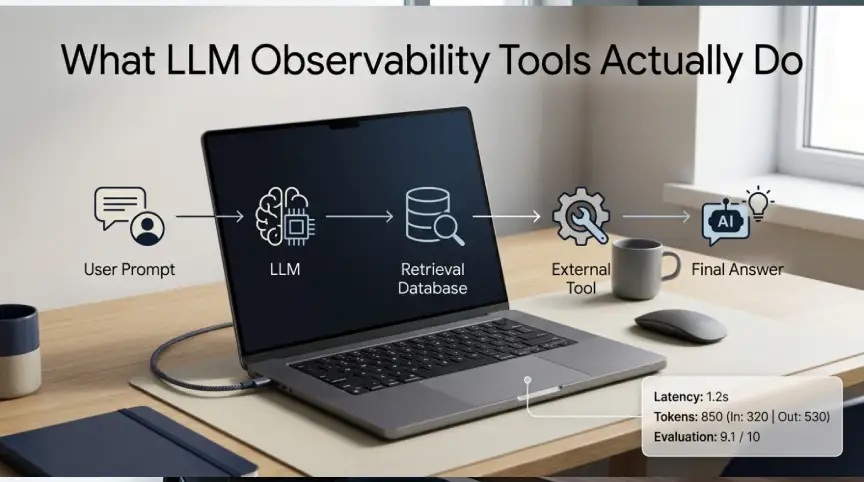
A normal app fails loudly. An LLM app often fails quietly. The answer looks fine, but it is wrong, slow, or far too expensive. LLM observability tools record each step so you can find the cause.
The core feature is LLM tracing. A trace is the full path of one request, from user input to final answer. It includes model calls, retrieval steps, and tool calls. For agent debugging, this tree view saves hours of guessing.
Most platforms add prompt monitoring and token usage analytics on top. You can see which prompt version costs more or runs slower. Many also add eval metrics, which score answers using rules, humans, or another model. The best LLM observability tools tie all of this together in one place.
LangSmith vs Langfuse vs Helicone at a Glance
Here is the short version of LangSmith vs Langfuse vs Helicone before we go deeper. Each row comes from the vendor plans as of October 2026.
| Tool | License | Free plan | First paid plan | Setup style | Best for |
| LangSmith | Closed source | 5,000 base traces, 1 seat | $39 per seat monthly | SDK or OpenTelemetry | LangChain and LangGraph teams |
| Langfuse | Open source, mostly MIT | 50,000 units, 2 users | $29 monthly | SDK or OpenTelemetry | Teams that want self-hosting |
| Helicone | Open source, Apache 2.0 | 10,000 requests, 1 seat | $79 monthly | Proxy with a base URL change | Fast cost tracking |
Treat these numbers as a snapshot. Vendors change plans often. Check each pricing page before you commit any budget.
LangSmith: Best for LangChain and LangGraph Stacks
LangSmith comes from the team behind LangChain. It records every model call and tool use as a run tree you can inspect. If you build with LangGraph, setup is close to flipping one environment variable. That tight fit is its biggest strength.
It also has strong evaluation tools. You can run LLM judges with yes or no, category, or score feedback. Built-in templates cover safety and quality checks. Many teams also like its polished interface and prompt playground.
The catch is cost and control. LangSmith is closed source, and self-hosting needs an Enterprise deal. Plus, it costs $39 per seat each month and includes only 10,000 base traces. Extra base traces cost $2.50 per 1,000.
Watch the retention rules too. Base traces last 14 days, and longer storage costs more. Online evaluators can upgrade traces to extended retention by default, which quietly lifts the bill. Public pages disagree on the exact extended window, so confirm it before you rely on it.
Langfuse: Best for Open Source Control
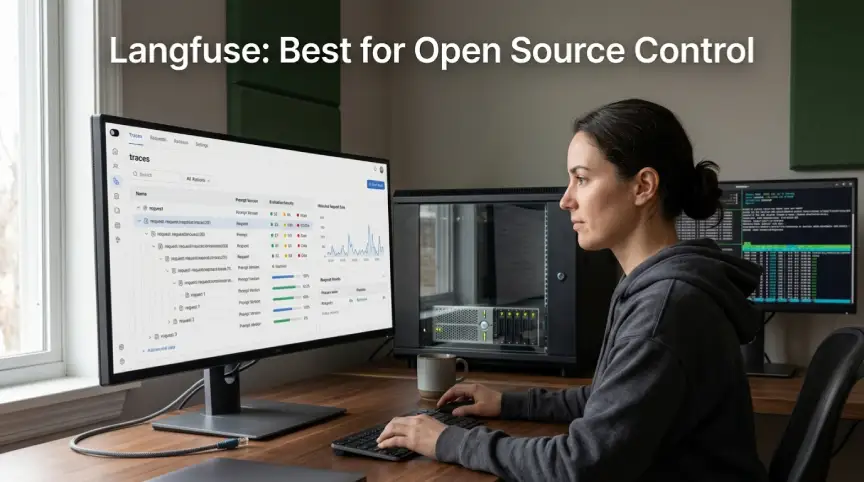
Langfuse is an open-source platform that launched in 2023. It covers tracing, prompt management, and evaluation in one workspace. It works with any framework and supports OpenTelemetry. You can also run it yourself for free.
ClickHouse acquired Langfuse in January 2026. Pricing trackers report no change to pricing or licensing after the deal. The backend already ran on ClickHouse, so the match makes sense. Still, any acquisition deserves a watchful eye over time.
Langfuse Pricing Explained
Let’s break down Langfuse pricing in plain terms. Hobby is free with 50,000 units each month and 30 days of data. Core costs $29 monthly and includes 100,000 units, 90 days of data, and unlimited users. Pro costs $199 monthly and adds three years of retention plus compliance features.
Langfuse counts units, not traces. Spans and scores both count as units, so a deep agent run uses many. Extra units cost $8 per 100,000, and the rate drops at higher volume. At 1 million units, Core lands near $101 a month.
The tradeoffs are real. The dashboard is solid but less polished than LangSmith. It has fewer ready-made evaluator templates. Self-hosting also means you handle upgrades, storage, and uptime yourself.
Helicone: Fast Setup, but Read the Fine Print
Helicone works as a proxy. You change your base URL, and it logs each request. That means almost no code changes across many services. For quick token usage analytics, that is hard to beat.
The big news is ownership. Mintlify acquired Helicone on March 3, 2026. The hosted product now runs in maintenance mode. Security fixes, bug fixes, and new model support continue, but active feature work has ended.
Pricing looks simple at first. Hobby is free with 10,000 requests and seven days of retention. Pro costs $79 monthly with unlimited seats and one month of retention. Team costs $799 and adds compliance features.
Pro and Team also meter extra usage, so $79 is only a start. Evaluation tooling is lighter than the other two tools. If you need deep eval metrics, Helicone alone won’t cover you. It stays open source under Apache 2.0, so self-hosting remains possible.
LangSmith vs Langfuse: The Head-to-Head Breakdown
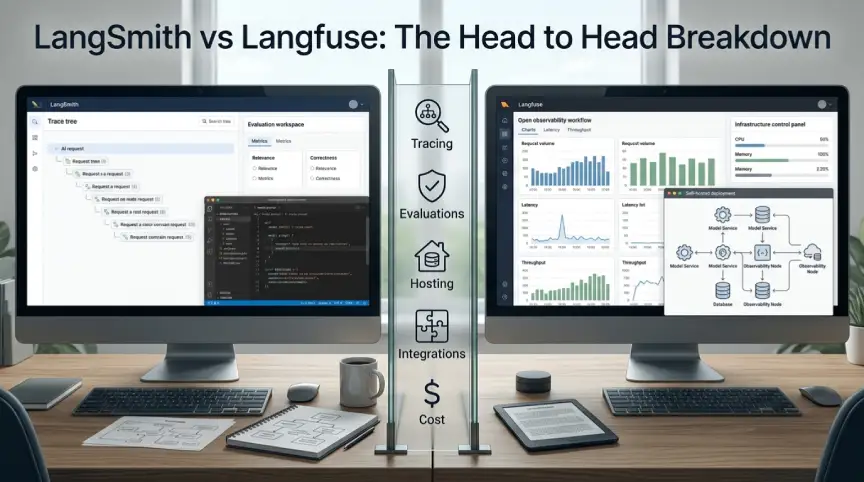
Both tools solve the same core problem. The details decide the winner. Let’s compare them on five things that matter in production.
Tracing and Agent Debugging
Both tools build nested traces for model calls, tools, and retrieval. LangSmith feels more turnkey inside the LangChain family. Langfuse works with any framework and fits into existing OpenTelemetry setups. For mixed stacks, that flexibility matters.
Evaluation
LangSmith ships more ready-made judge templates. Langfuse supports LLM judges, human review, and code checks, though setup is more manual. In May 2026, Langfuse added a GitHub Actions workflow. It fails a build when eval scores drop below your limit.
Self-Hosting and Data Control
Langfuse wins this round. You can run it on your own servers without a license fee. LangSmith offers self-hosting only on Enterprise. Teams with strict data rules often choose Langfuse for this reason.
Setup and Integrations
Setup effort differs more than most people expect. LangSmith needs an SDK and a few environment variables. Langfuse needs an SDK or an OpenTelemetry exporter. Helicone needs only a new base URL.
That makes Helicone the fastest to start. It also sees only the calls that pass through its proxy. Retrieval steps and custom tool logic stay invisible unless you add more code. LangSmith and Langfuse capture the full workflow, which matters once agents get complex.
Cost at Scale
Say one engineer logs 50,000 traces a month. On LangSmith Plus, that is $39 plus about $100 for 40,000 extra traces. The total is near $139. Add four teammates, and seats alone add another $156.
Now run the same load on Langfuse. If each trace holds ten units, you use 500,000 units. Core would cost about $61, and the whole team shares one plan. Your trace depth will change these numbers, so test with real traffic.
Hidden Costs to Plan For
Sticker prices rarely match the final bill. Trace depth is the biggest surprise. A simple chatbot might create one trace per chat. An agent might create dozens of steps, and every step can count toward your limits.
Evaluation adds more. On LangSmith, eval runs bill as traces, so big test sets cost real money. Langfuse counts scores as units, so heavy scoring also adds up. Start with small test sets.
People cost matters too. Self-hosting Langfuse is free on paper. Someone still has to patch it, back it up, and watch it. For a tiny team, the $29 Core plan may be cheaper than an engineer’s time.
Best LLM Tracing Tools by Team Type
Raw features rarely settle LangSmith vs Langfuse. Your stack and team size do. Here is how I’d match the best LLM tracing tools to common situations.
- Solo builder on LangGraph: Start with the free LangSmith Developer plan.
- Startup mixing several frameworks: Langfuse Core gives you shared access and flexible pricing.
- Regulated or privacy-focused team: Self-host Langfuse, or move to Pro for longer retention.
- Many services, quick cost view: Helicone works, but plan for its maintenance mode.
- Growing team with many seats: Langfuse avoids per-seat fees, which keeps costs steadier.
Other names are worth a look too. Braintrust, Arize Phoenix, Opik, and Portkey all serve parts of this market. Braintrust leans toward evaluation, while Portkey leans toward gateway control.
How to Run a Fair One-Week Trial
A short trial beats weeks of reading. Pick one real workflow, such as a support agent or a document search bot. Send the same traffic to each tool for seven days. A LangSmith vs. Langfuse test works best this way, because both tools see identical requests.
Track four things during the week. Note how long setup took, and how fast you found a bad answer. Compare the projected monthly bill for each plan. Ask your team which dashboard they actually opened.
Keep notes in a simple sheet. Include one failed request per day and the time to fix it. After seven days, the pattern is usually clear. The tool that cut your debugging time is often the right pick.
Common Questions
Is Langfuse better than LangSmith?
It depends on your stack. Langfuse is better for open-source needs and mixed frameworks. LangSmith is better for LangChain projects and built-in eval templates. In the LangSmith vs Langfuse choice, neither wins everywhere.
Is Helicone still safe to use in 2026?
It still works, and updates for security and new models continue. The risk is the missing roadmap. Treat it as a good logging layer, not a long-term bet on new features.
Can I use Langfuse for free?
Yes. The Hobby plan is free, and the open-source version is free to self-host. Hobby has 50,000 units and 30 days of data. Self-hosting removes those caps but adds your own server costs.
Which One Should You Choose?
There is no single winner. LangSmith wins on polish and LangChain fit. Langfuse wins on openness, flexible Langfuse pricing, and unlimited users. Helicone wins on setup speed, but its future feels uncertain.
For a new mixed stack today, I’d start with Langfuse. Run a one-week trial with real traffic. Then compare bills and debugging time instead of feature lists. That test will tell you more than any comparison post, this one included.




No Comment! Be the first one.