





Internal Developer Platforms and DevOps: Where Each Approach Fits in Modern Software Teams
Platform engineering and DevOps are partners, not rivals. Learn how they differ, what an internal developer platform does, and how to start small.
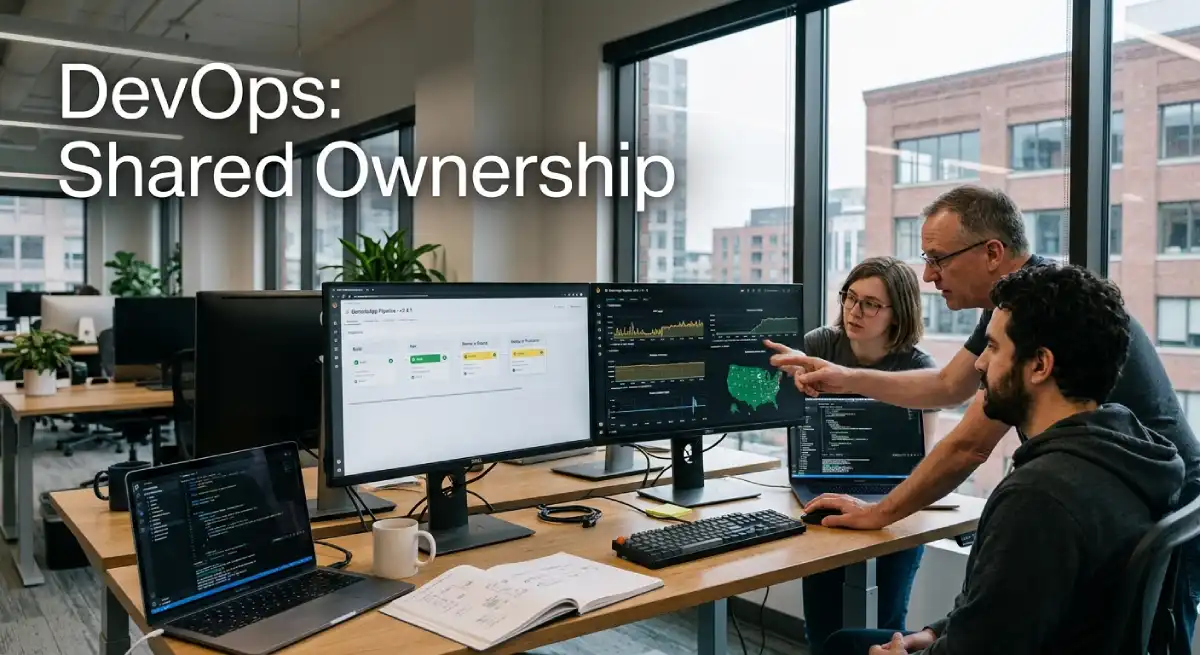
Many teams feel stuck between fast releases and growing complexity. DevOps promised to fix this problem, and it helped a lot. Yet many teams still wait days for a test environment. Others drown in scripts that nobody fully understands.
Table Of Content
- What Is DevOps?
- What Is Platform Engineering?
- Platform Engineering vs DevOps: The Core Difference
- Why DevOps Alone Starts to Struggle at Scale
- Inside an Internal Developer Platform
- A Real Example: Launching a New Service
- Benefits of Platform Engineering
- Risks and Common Mistakes
- Myths About Platform Engineering and DevOps
- How to Decide: Platform Engineering vs DevOps for Your Team
- Skills and Roles: DevOps Engineer vs Platform Engineer
- How to Start a Platform Effort
- Frequently Asked Questions
- Final Thoughts on Platform Engineering and DevOps
That is why leaders now ask about platform engineering vs DevOps. Some wonder if one replaces the other. The short answer is no. This guide explains how they differ, where they overlap, and how to choose.
You will learn what each term means and how an internal developer platform works. You will also see common mistakes and a simple five-step plan to start. No deep background is needed.
What Is DevOps?
DevOps is a way of working that brings developers and operations people together. Before DevOps, one group wrote code and another group ran it. Handoffs were slow, and blame flew when things broke. DevOps replaced those walls with shared goals and shared ownership.
The idea grew in the late 2000s and spread with cloud computing. Teams adopted automation, continuous integration, and continuous delivery. Many also adopted the motto, you build it, you run it. Teams that did this well saw faster releases and fewer outages.
But DevOps is a culture, not a product. It tells you how to collaborate, but not what tools to build. Each team often invents its own pipelines and scripts. That is where trouble starts at scale.
What Is Platform Engineering?

Platform engineering is the practice of building shared tools for internal developers. The result is called an internal developer platform, or IDP. Think of it as a paved road inside your company. Developers can travel it without building their own road.
A good platform offers self-service. A developer can create a new service, a database, or a test environment in minutes. No ticket queue is needed. Security and compliance checks are already built in.
These paved roads are often called golden paths. A golden path is the recommended way to do a common task. Developers can leave the path, but most do not need to. The platform team treats developers as customers and treats the platform as a product.
The book Team Topologies helped shape this thinking. Its authors are Matthew Skelton and Manuel Pais. They describe platform teams that lower the mental load on other teams. That idea of cognitive load now guides many platform roadmaps.
Platform Engineering vs DevOps: The Core Difference
The easiest way to see platform engineering vs DevOps is to compare their focus. DevOps is a mindset about how teams work together. Platform engineering is a discipline about what tools those teams use. One shapes culture, and the other builds the system.
- Goal: DevOps speeds up delivery, while platform engineering removes daily friction for developers.
- Focus: DevOps focuses on people and process, while platform engineering focuses on products and tools.
- Ownership: DevOps shares ownership across teams, while a platform team owns the shared toolset.
- Customers: DevOps has no formal customer, while a platform team serves internal developers.
- Output: DevOps produces habits and pipelines, while platform engineering produces a usable platform.
So platform engineering vs DevOps is not a fight. Platform engineering grew out of DevOps and builds on its ideas. It answers a problem DevOps left open, which is scale. Many experts call it the next step, not a replacement.
Why DevOps Alone Starts to Struggle at Scale
Small teams thrive on DevOps freedom. Each team picks tools, writes scripts, and moves fast. Then the company grows to thirty teams. Suddenly there are thirty ways to deploy, monitor, and secure services.
This creates cognitive load. Developers must learn Kubernetes, cloud networking, CI systems, and security rules. Work slows down because people spend time on plumbing. New hires need weeks to ship their first change.
Cost and risk grow too. Every custom pipeline is one more thing to patch. Security gaps hide in the differences between teams. Our guide on why Kubernetes broke traditional monitoring shows the same pattern in observability.
Inside an Internal Developer Platform
An internal developer platform is not one tool. It is a layer that ties many tools together. Developers see one simple front door. Behind it, the platform team connects the hard parts.
- Developer portal: A single place to find services, docs, and templates, such as Backstage.
- Service templates: Starter code with logging, security, and deployment already set up.
- CI and CD pipelines: Standard build and release flows that teams reuse.
- Infrastructure automation: Tools like Terraform that create cloud resources on demand.
- Observability: Default metrics, traces, and logs for every new service.
- Guardrails: Policies that block risky changes before they reach production.
Spotify created Backstage and later gave it to the Cloud Native Computing Foundation. Many companies now use it as their developer portal. You do not have to use it, though. A simple set of templates and docs can be enough at first.
Observability should be a default, not an extra. Our guide on what OpenTelemetry is shows how to bake tracing into every template. Then each new service arrives with traces already flowing.
A Real Example: Launching a New Service
Imagine a developer named Sam who needs a new payments service. In a DevOps-only setup, Sam copies an old repo and edits scripts. Then Sam asks another team for a database and waits for a reply. The first deploy takes two weeks.
With a platform, Sam opens the portal and picks a service template. The platform creates the repo, pipeline, database, and dashboards. Security checks run on every commit. Sam ships the first version the same day.
Sam still follows DevOps values. Sam owns the code, watches the alerts, and fixes problems. The platform only removes the boring setup work. That is how the two ideas fit together.
Benefits of Platform Engineering
The first benefit is speed. New services start in hours, not weeks. Developers spend more time on features and less on setup. That lifts morale as well as output.
The second benefit is consistency. Every service follows the same security and logging rules. Audits become easier because the paths are standard. Incidents get solved faster when every service looks familiar.
The third benefit is lower cost. Shared tools mean fewer duplicate scripts and fewer surprise cloud bills. Teams also reuse proven designs instead of reinventing them. Over time, this saves real money and effort.
Teams often track results with DORA metrics. These include deployment frequency, lead time, change failure rate, and recovery time. A healthy platform should move each number in the right direction.
Risks and Common Mistakes
Platform engineering can fail, and the causes are usually human. The most common mistake is building without asking developers. A platform nobody wants becomes an expensive museum. Talk to your users before you write code.
Another mistake is forcing everyone onto the platform on day one. Forced adoption breeds anger and clever workarounds. Earn trust with a small win, then let word spread. A platform should be the easiest path, not the only path.
Teams also try to build everything at once. They spend a year on a giant portal while real pain stays unsolved. Start with the top three complaints from developers. Fix those, then grow.
Finally, do not let the platform team become a new ticket queue. If developers must file requests for everything, you rebuilt the old wall. Self-service is the whole point.
Myths About Platform Engineering and DevOps
Myth one says platform engineering kills DevOps. In truth, the platform depends on DevOps habits like automation and shared ownership. Without those habits, the platform would just be another silo.
Myth two says only big tech firms need a platform. Smaller companies feel the same pain when setup work repeats. They just solve it with lighter tools, such as shared templates and a wiki.
Myth three says a platform means buying one big product. Most platforms are built from many open-source and paid parts. The real value comes from how well those parts fit together for your developers.
How to Decide: Platform Engineering vs DevOps for Your Team
You do not really pick one and drop the other. In the platform engineering vs DevOps debate, timing matters most. The better question is whether you need a dedicated platform team yet. Size and pain level decide the answer.
- Small teams: Focus on DevOps habits, good CI, and a few shared templates.
- Growing teams: Add a part-time platform group when setup work keeps repeating.
- Large teams: Fund a full platform team with a clear product owner and roadmap.
Watch for warning signs. Long onboarding times, many custom pipelines, and constant ticket requests all point to platform needs. Our guide to the best DevOps tools for small teams helps you build the base.
Some companies split the work in a simple way. Product teams own their services and on-call duty. The platform team owns the paved road and its support. This split keeps ownership clear without new silos.
Skills and Roles: DevOps Engineer vs Platform Engineer
A DevOps engineer often works inside a product team or across a few teams. They automate deployments, fix pipelines, and help with incidents. Their daily work is close to running services.
A platform engineer works more like a product builder. They design tools, write code, and gather feedback from developer users. Their success is measured by how happy and fast developers become.
Both roles need cloud, Linux, and automation skills. Platform engineers add product thinking and strong communication. Many DevOps engineers grow into platform roles with a little practice.
How to Start a Platform Effort
Start small and prove value fast. Pick one painful workflow, such as creating a new service. Build the smoothest path you can for that single task.
- Interview developers and list their top three daily frustrations.
- Choose one problem that many teams share and that you can fix quickly.
- Build a simple golden path with templates, a pipeline, and clear docs.
- Release it to one friendly team and collect honest feedback.
- Measure time saved, then improve the path before you expand.
Name a product owner for the platform early. Publish a short roadmap so developers see what is coming. Share small wins often. Trust grows when people see steady progress.
Measure the right things from day one. Track onboarding time, deploy time, and developer satisfaction in a short survey. Numbers help you defend the budget when leaders ask questions.
Frequently Asked Questions
Is platform engineering replacing DevOps?
No, platform engineering builds on DevOps rather than replacing it. DevOps values still guide how teams work. The platform simply makes those values easier to practice at scale.
What is the main difference between platform engineering and DevOps?
DevOps is a culture of shared ownership between developers and operations. Platform engineering builds the internal tools that make that culture easy. One is a way of working, and the other is a product.
Do small startups need platform engineering?
Usually not a full team. A few shared templates and a good pipeline are enough early on. Add more structure when repeated setup work starts to slow people down.
Does platform engineering need Kubernetes?
Not always. Many platforms run on Kubernetes because it offers a common base. Still, you can build a useful platform on plain virtual machines or managed services. Choose the base that fits your team’s skills.
What tools do platform teams use?
Common picks include Kubernetes, Terraform, Backstage, and CI tools like GitHub Actions. The right mix depends on your cloud and team skills. Start with what your team already knows. Our comparison of GitHub Actions vs GitLab CI can help you pick.
Final Thoughts on Platform Engineering and DevOps
The debate over platform engineering vs DevOps often misses the point. DevOps gave us the culture of shared ownership. Platform engineering gives that culture better tools and clear paths. Together, they help teams ship faster with less stress.
Your next step is simple. Ask developers where they lose time each week. Fix the biggest pain first, and let the platform grow from real needs.


No Comment! Be the first one.