





Future Technology at Home Is No Longer Science Fiction and Here Is Proof
Smart homes in 2026 are smarter than ever. Future technology at home includes AI systems, health monitors, and energy tools that change everything. Here is what is happening right now.
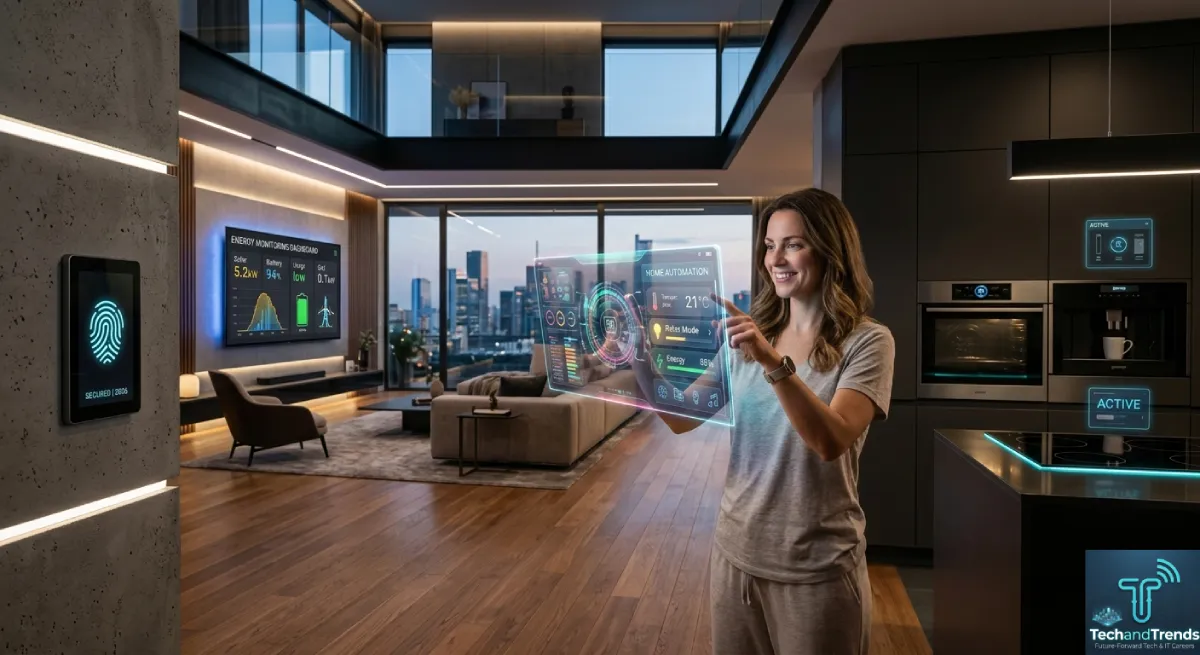
Your home is getting smarter every single day. The global smart home market reached $164.13 billion in 2026, growing steadily from $147.52 billion in 2025. This is no longer a distant dream. Future technology at home is arriving faster than most people realize. Millions of households are already living inside it.
Table Of Content
- Why Future Technology at Home Is Growing So Fast
- AI Systems Are Now Running the Modern Home
- Smart Devices Working Together Seamlessly
- Energy Management Is the Biggest Financial Win
- Your Home Is Becoming a Health Guardian
- Smart Security Is More Reliable Than Ever
- Technology That Blends Into Your Home Design
- How to Start Bringing Future Technology Into Your Home
- Frequently Asked Questions About Future Technology at Home
- The Bottom Line on Future Technology at Home
Why Future Technology at Home Is Growing So Fast
People want comfort, safety, and savings. These three needs are fueling the entire smart home revolution. Smart home adoption among US and Canadian households jumped from 49 percent in 2024 to 59 percent in 2025. That is a massive leap in just one year. Gen Z leads this adoption wave with 96 percent ownership of at least one smart device, followed by Millennials at 93 percent.
Technology costs are dropping fast. Devices are easier to install. More people can now afford a connected home without spending a fortune. This shift is turning future home technology from a luxury into a standard.
AI Systems Are Now Running the Modern Home
Artificial intelligence is the brain behind every smart home today. AI-powered systems in 2026 can anticipate your needs with 94 percent accuracy while processing 47 data points simultaneously. This level of intelligence was unimaginable five years ago.
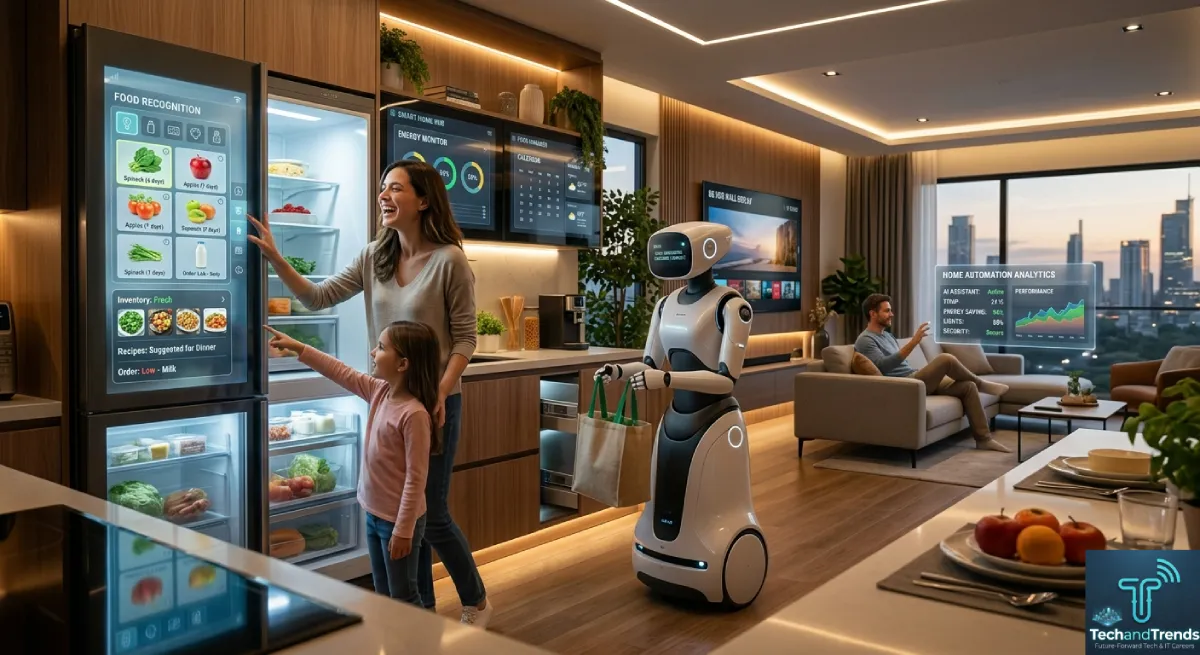
At CES 2026, Samsung showcased its “Your Companion to AI Living” vision through AI-powered appliances and seamless SmartThings integration. Their system included smart refrigerators with food recognition and an AI companion robot for daily chores. This shows how future technology at home is moving toward full household automation.
AI does not just respond to commands now. It learns your habits, predicts your schedule, and acts before you even ask. That is a game-changing shift in how people interact with their living spaces.
Smart Devices Working Together Seamlessly
One of the biggest past frustrations was incompatibility between brands. That problem is now largely solved. The Matter protocol has improved device compatibility from 34 percent to 89 percent, with setup times down to just 47 seconds.
Matter 1.5, announced in November 2025, expanded support for cameras, closures, and enhanced energy management features. This means your lights, locks, thermostat, and appliances can finally talk to each other. No complicated setups. No frustrating mismatches.
The Nice ecosystem alone supports compatibility with more than 3,000 third-party devices. This kind of flexibility makes it easier to build a personalized smart home step by step.
| Feature | Old Smart Homes | Future Smart Homes 2026 |
|---|---|---|
| Device Compatibility | 34% | 89% |
| Setup Time | 10 to 30 minutes | 47 seconds |
| AI Accuracy | Limited | 94% |
| Energy Savings | 5 to 10% | 25 to 40% |
| Health Monitoring | Wearable only | Contactless sensors |
Energy Management Is the Biggest Financial Win
Smart homes are saving homeowners serious money. Future home technology now cuts energy costs by 25 to 40 percent and reduces carbon emissions by up to 60 percent. Smart thermostats, automated lighting, and solar battery systems work together as a team.
Energy management is the fastest-growing segment by revenue, projected to grow 77 percent from 2023 to 2028 in the United States alone. Homeowners are realizing that smart energy tools pay for themselves quickly. They also add measurable value to the property.
Smart home technology can reduce energy bills by up to 20 percent through automated lighting, smart thermostats, and IoT energy sensors. These systems track usage and reduce waste without changing your daily habits at all.
Your Home Is Becoming a Health Guardian
This is where future technology at home gets truly remarkable. Smart homes in 2026 include ambient sensing technologies that monitor health discreetly and provide proactive wellness support. You do not need to wear anything for this to work.
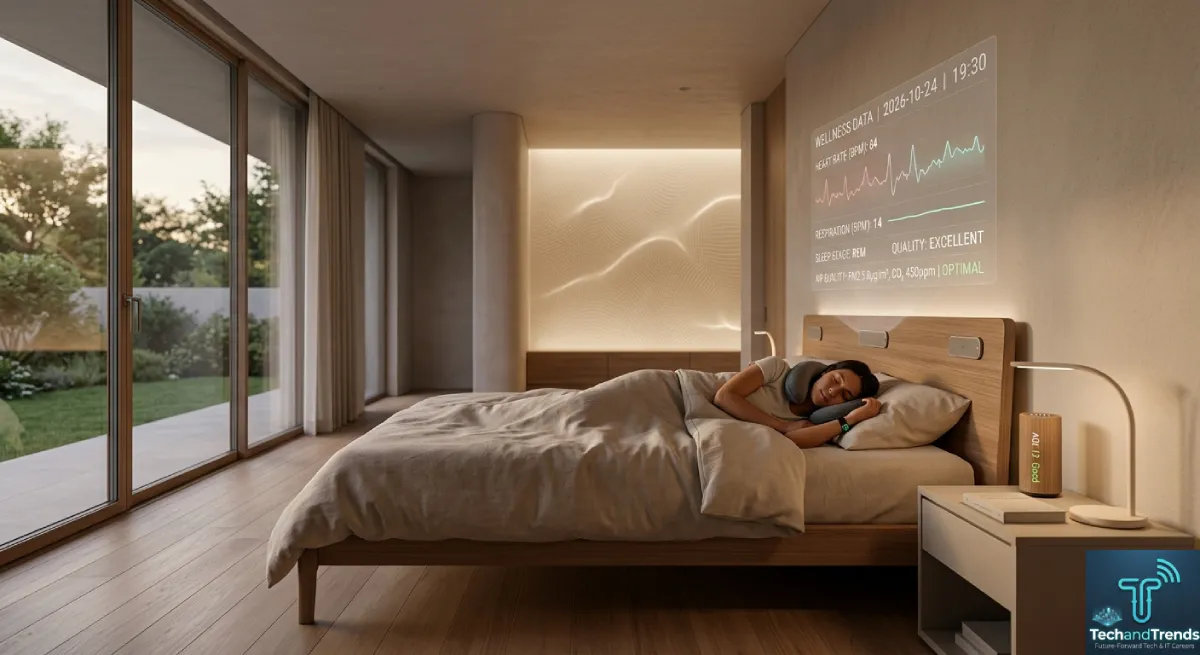
Radar-based bedroom sensors track sleep patterns, breathing rate, and heart rate without any physical contact. They map your circadian rhythm and alert you to irregularities. Predictive maintenance systems can also identify equipment failures 72 hours before they happen.
Air quality monitors now detect particulate matter, carbon dioxide, formaldehyde, and volatile organic compounds in real time. Indoor air pollution can be up to five times worse than outdoor air, so these sensors are no longer optional. They are essential health tools for modern families.
Smart Security Is More Reliable Than Ever
Home security has taken a giant leap forward. Biometric security systems in 2026 now achieve 99.7 percent accuracy. That includes face recognition, fingerprint scanning, and voice authentication working together.
Smart security cameras are the fastest-growing individual product category globally, forecast to grow at an 18.32 percent CAGR through 2031. People want to feel safe. These devices deliver that feeling with real data and remote access.
AI-powered cameras can now distinguish between a family member, a delivery person, and a stranger in real time. They send instant alerts without false alarms. That kind of precision makes future technology at home a genuine safety upgrade.
Technology That Blends Into Your Home Design
Smart technology used to look clunky. That has completely changed. Homeowners increasingly want products that blend into modern interiors rather than dominate them.
Motionblinds operates up to 15 dB quieter than standard blinds, blending cutting-edge technology with subtle luxury. Smart speakers are getting smaller. Smart panels are becoming wall art. The goal is for future technology at home to feel invisible but always present.
Design awards are now being given to smart home products. Nice’s Premium Toolless Architectural Speakers won a Red Dot Award in 2025 for combining design and technical performance. This proves that form and function are finally equal priorities in home technology.
How to Start Bringing Future Technology Into Your Home
You do not need to renovate everything at once. Start with one problem you want to solve. Want lower energy bills? Start with a smart thermostat. Want better sleep? Try a bedroom sensor. Want more security? Add a smart camera system.
Here are the smartest starting points for 2026:
- Smart thermostat for energy savings and comfort control
- AI-powered security camera with facial recognition
- A matter-compatible smart hub to connect all your devices
- Air quality monitor for indoor health protection
- Smart lighting system with schedule and mood presets
- Contactless sleep sensor for bedroom health tracking
Smart home features can increase property value by up to 10 percent. Every device you add is an investment in both your daily comfort and your home’s long term market value.
Frequently Asked Questions About Future Technology at Home
What is the best future home technology to start with in 2026?
A smart thermostat or Matter-compatible hub is the best starting point. They connect easily to other devices and deliver instant savings.
Is future home technology safe from hackers?
Modern systems use biometric authentication, encrypted local processing, and decentralized identity protocols. Security has improved massively compared to early smart home systems.
Does future home technology work in rented homes?
68 percent of landlords now approve smart tech upgrades that improve security and energy efficiency. Renters can use plug in devices and wireless sensors without damaging property.
How much can smart home technology save on energy bills?
Smart homes now cut energy costs by 25 to 40 percent through predictive automation. Savings depend on your devices and usage patterns.
Will AI control my home without my permission?
No. AI systems suggest and automate based on your preferences. You always have full override control through apps and voice commands.
Does future home technology increase property value?
Smart home features increase resale value by up to 10 percent, making them a smart long term investment.
The Bottom Line on Future Technology at Home
The smart home is not coming. It is already here. Around 77.05 million US households are actively using smart home devices right now in 2026. AI, health sensors, energy tools, and invisible design are reshaping what home means. Every technology trend points toward homes that think, protect, heal, and save.
The smartest move you can make today is starting small and building forward. Your home can work harder for you than it ever has before. Future technology at home is the most practical upgrade you will ever make.



No Comment! Be the first one.