





5 Game-Changing Proactive AI Tools That Will Transform Your Daily Routine
Stop reacting to your day. These 5 proactive AI tools automate scheduling, emails, tasks, and meetings so you can focus on work that truly matters.
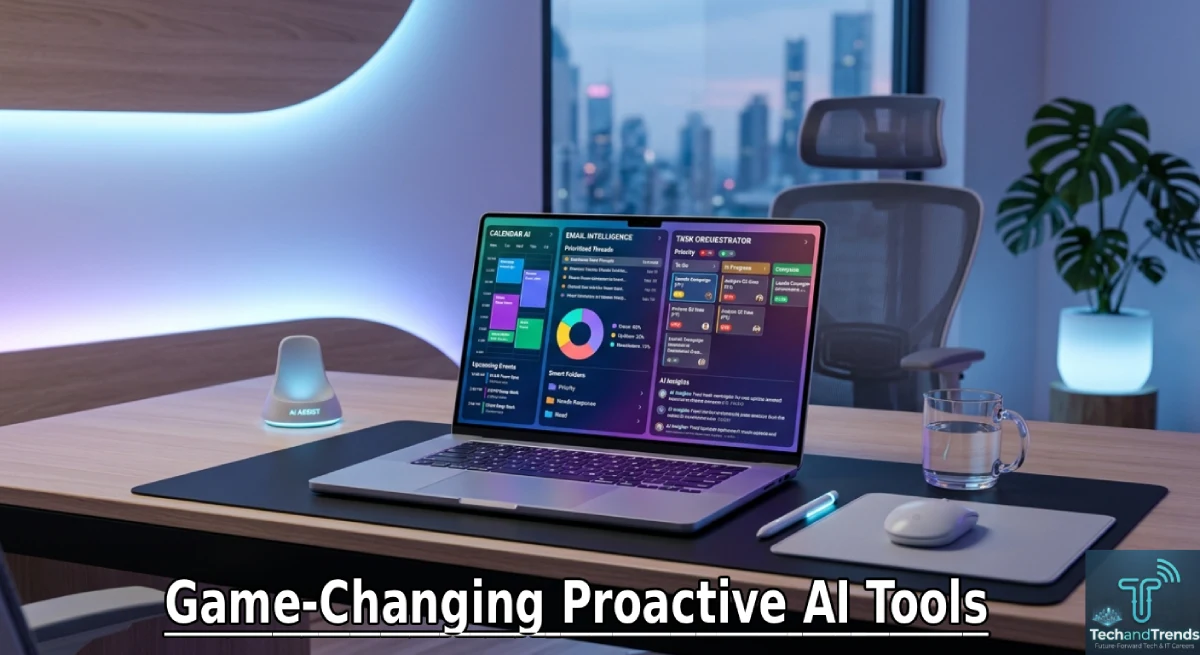
Remember when AI just answered questions? Those days are over.
Table Of Content
- Why Proactive AI Tools Are the Future of Productivity
- 1. Autonomous Calendar Management: Scheduling Without the Back-and-Forth
- 2. Predictive Inbox Intelligence: Clearing the Noise
- 3. Intelligent Research Assistants: Curating Your Knowledge Base
- 4. Proactive Task Orchestrators: The End of the To-Do List
- 5. Smart Meeting Room Solutions: Capturing Insights Automatically
- How to Integrate Proactive AI Tools into Your Workflow
- Conclusion
AI used to wait for you to ask something. Now it watches your habits and acts before you even think about it. That shift changes everything about how we work.
Most people waste hours every week on scheduling, sorting emails, and taking notes. These tasks feel small. But they drain your brain more than you realize. That mental energy could go toward real, creative work.
Proactive AI tools fix this problem. They learn your patterns and handle the boring stuff automatically. The result feels like having a personal assistant who never sleeps. You stop reacting to your day and start flowing through it.
This article covers five tools that can transform your daily routine. Each one targets a different area of your life. Together, they create more focus, less stress, and way more free time.
Why Proactive AI Tools Are the Future of Productivity
Old automation was simple. It followed rules like “if this happens, do that.” It never learned anything new about you.
Modern proactive AI is completely different. It studies your behavior over time. Then it makes smart decisions based on what it finds.
Think of it like a new employee who pays close attention. After one week, they start handling things without being asked. That is exactly how these tools work.
They also fight notification fatigue. Your phone buzzes constantly with low-priority alerts. Proactive AI filters out the noise and shows you only what matters right now.
The result is a calmer, more focused workday. You stop switching between tasks every few minutes. Your brain finally gets the space it needs to do deep, meaningful work.
1. Autonomous Calendar Management: Scheduling Without the Back-and-Forth
The Tool Category: Intelligent schedulers like Reclaim.ai or Motion.
Scheduling meetings used to mean endless emails back and forth. Someone suggests a time. It conflicts. You suggest another. It takes forever.
Intelligent calendar tools completely remove that process. They see your availability in real time. Then they book meetings automatically based on your preferences.
Key Features:
These tools block time for deep work every single day. They track your habits, like morning focus sessions or afternoon gym time. When a meeting runs long, they reschedule everything else automatically.
You set your priorities once. The AI protects them forever. No more letting urgent tasks push out the important ones.
Routine Transformation:
Imagine waking up with your whole day already organized. Your focus hours are blocked. Your meetings are spaced perfectly. You just open your calendar and start working.
That is not a fantasy. Tools like Motion make it your daily reality. You save 30 to 60 minutes every single week just on scheduling alone.
2. Predictive Inbox Intelligence: Clearing the Noise
The Tool Category: Smart email assistants like SaneBox or Shortwave.
The average professional gets over 120 emails every day. Most of them do not need your attention right now. But sorting through them still eats up your time.
Smart email tools solve this by learning what matters to you. They watch which emails you open first. They notice which ones you delete without reading.
Key Features:
These tools automatically sort newsletters into a separate folder. They summarize long email threads in just a few lines. They also snooze low-priority emails until a better time.
SaneBox, for example, gets smarter every week. The more you use it, the more accurate its sorting becomes. It feels like training a very attentive assistant.
Routine Transformation:
Reaching Inbox Zero sounds impossible for most people. With predictive email tools, it becomes a daily habit. You open your inbox and see only what truly needs your response.
You stop feeling overwhelmed by emails first thing in the morning. Instead, you handle the important ones quickly. Then you move on to work that actually moves the needle.
3. Intelligent Research Assistants: Curating Your Knowledge Base
The Tool Category: Discovery engines like Readwise Reader or Perplexity Pages.
Staying current in your industry takes real effort. You follow dozens of newsletters, blogs, and podcasts. But reading everything yourself is simply not realistic anymore.
Intelligent research tools do the heavy lifting for you. They track topics you care about and find the best content automatically. Then they deliver it to you in a clean, organized format.
Key Features:
These tools auto-tag articles based on your interests and past reading. They resurface old highlights right when they become relevant again. Every morning, you get a personalized briefing for your specific industry.
Readwise Reader connects your highlights from books, articles, and podcasts. It shows you the right insight at exactly the right moment. Your knowledge compounds over time without extra effort.
Routine Transformation:
You stop spending an hour searching for good content every week. Instead, insights arrive directly in your feed every single morning. You go from hunting for information to receiving curated knowledge daily.
This shift makes you noticeably sharper in meetings and conversations. You always have something relevant and insightful to contribute. People start seeing you as the most informed person in the room.
4. Proactive Task Orchestrators: The End of the To-Do List
The Tool Category: Autonomous workflow managers like Zapier Central or Lindy.
Moving data between apps is one of the most boring jobs in modern work. You copy a lead from an email into a spreadsheet. Then you send a Slack notification to your team. It repeats every single day.
Proactive task orchestrators eliminate this “glue work” completely. They connect your apps and handle transfers automatically. You describe what you want, and they make it happen.
Key Features:
These tools trigger actions based on real-world events. A new lead arrives in Gmail and automatically appears in your CRM. A missed deadline in Asana instantly sends an alert to your Slack channel.
Lindy even lets you build AI agents in plain English. You do not need any coding knowledge at all. Just describe your workflow and the agent handles the rest.
Routine Transformation:
Think about every repetitive task you do between different apps each week. Now imagine never doing any of those tasks again. That time goes back to you, permanently.
Users report saving several hours every single week with these tools. That adds up to entire days reclaimed over the course of a month. Your to-do list shrinks dramatically without any extra effort from you.
5. Smart Meeting Room Solutions: Capturing Insights Automatically
The Tool Category: AI meeting companions like Otter.ai or Fireflies.
Meetings are expensive in terms of time and energy. But the real cost comes after the meeting ends. Someone has to write up notes and send out action items.
That follow-up work often falls through the cracks. People forget what they promised. Important decisions get lost in someone’s notebook. Progress slows down because of poor documentation.
Key Features:
AI meeting tools join your calls and transcribe everything in real time. They automatically pull out action items and decisions. Some tools even perform sentiment analysis to measure team alignment and morale.
Fireflies integrates with Zoom, Teams, and Google Meet instantly. After every call, it sends a clean summary directly to your inbox. You never have to ask “can someone send the notes?” ever again.
Routine Transformation:
You stop splitting your attention between listening and note-taking during meetings. You become a fully present participant in every conversation. The AI handles documentation so you can focus on the actual discussion.
Your team also benefits enormously from this change. Everyone receives the same accurate summary after every call. Follow-up tasks get completed because they are clearly assigned and documented.
How to Integrate Proactive AI Tools into Your Workflow
Start Small:
Do not try to adopt all five tools in the same week. Pick your biggest daily bottleneck first. If scheduling drains you most, start with a calendar tool. Master one tool before adding the next.
The Feedback Loop:
Every AI tool needs training in the first week of use. Correct its mistakes quickly and consistently. The more feedback you give early on, the smarter and more accurate it becomes over time.
Do not get frustrated if it makes errors at first. That is completely normal and expected behavior. Your corrections teach it exactly what you need.
Privacy Considerations:
These tools need access to your calendar, email, and files to work properly. Always read the privacy policy before connecting sensitive accounts. Choose tools that offer end-to-end encryption and clear data policies.
Check whether your company allows third-party app integrations. Some organizations have strict rules about what tools can access work accounts. Confirm compliance before giving any tool read or write access.
Conclusion
Each tool on this list saves roughly 15 to 30 minutes every single day. Multiply that across five tools and five workdays. You are looking at several hours of reclaimed time every single week.
That time does not just disappear into extra tasks. It becomes available for creative thinking, strategic planning, and genuine rest. Those are the activities that actually grow your career and improve your quality of life.
The smartest professionals are not working harder than everyone else. They are delegating smarter. They use proactive AI tools to handle the routine so they can focus on the exceptional.
The future belongs to people who treat AI like a true partner. Not just a search engine or a chatbot, but an active collaborator in daily life. That mindset shift is the most important upgrade you can make.
So here is the real question: which of these five tools will you test first?
Pick one. Try it for just one week. You will be genuinely surprised by how much lighter your workday feels.






No Comment! Be the first one.