





The 10 Best AI Mental Health Apps in 2026
We tested 10 AI mental health apps for therapy support, mood tracking and anxiety relief — here are the ones actually worth downloading in 2026.
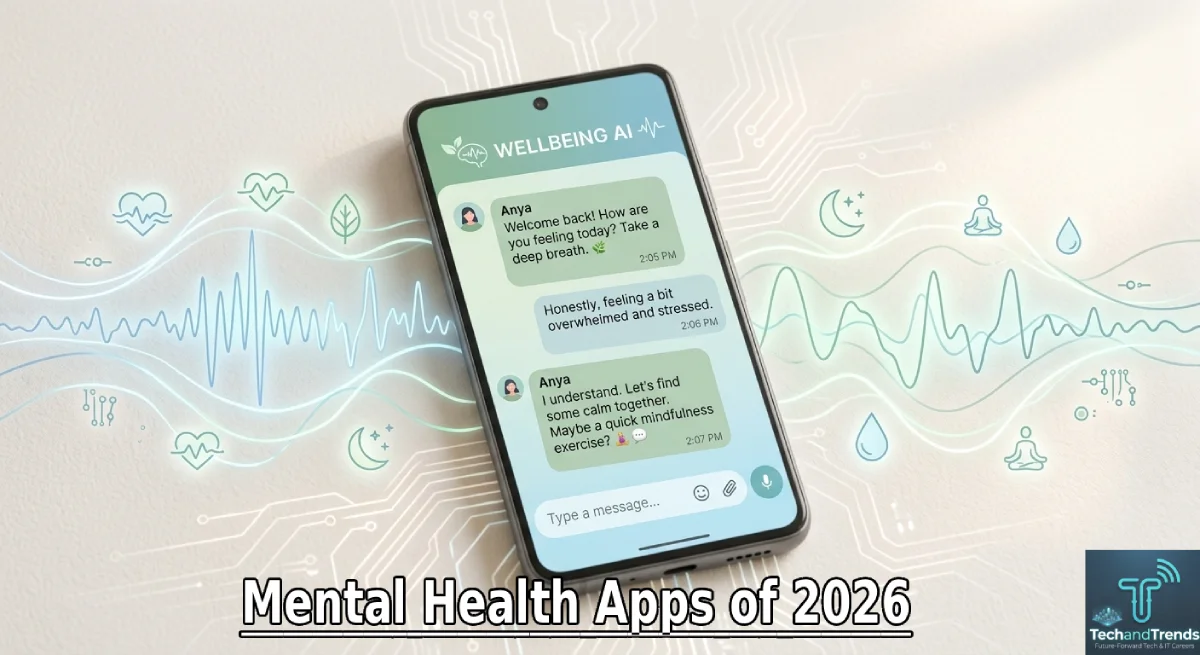
What are AI mental health apps? AI mental health apps are smartphone tools that use artificial intelligence to give emotional support. They use methods like Cognitive Behavioral Therapy (CBT) to help users manage stress, anxiety, and low mood. They are available 24/7 and cost far less than traditional therapy.
Table Of Content
- 1. The Mental Health Crisis No One Is Talking About
- 2. Why AI Mental Health Apps Are the New Normal
- 3. The 10 Best AI Mental Health Apps of 2026
- 4. Comparison Table: Top AI Mental Health Apps at a Glance
- 5. How AI Actually Understands Your Emotions
- 6. Wearables + AI: The New Power Couple
- 7. Privacy and Safety: What You Need to Know
- 8. When AI Is Not Enough
- 9. FAQs: Your Top Questions Answered
- 10. The Future: AI as a Bridge, Not a Replacement
- Comparison Table: App Strengths at a Glance
Do AI mental health apps actually work? Yes, for mild to moderate conditions. A landmark 2017 randomized controlled trial tested the CBT chatbot Woebot on college students and found significant reductions in depression symptoms in just two weeks. AI apps work best as a support tool alongside — not instead of — professional care.
Are these apps safe and private? The best apps use end-to-end encryption and let you delete your data. Not all AI mental health tools are created equal — choosing the wrong tool can lead to privacy risks and even potential harm. Always check if an app has clinical involvement before trusting it with personal information.
1. The Mental Health Crisis No One Is Talking About
Right now, getting a therapy appointment is harder than ever. In the United States, the average wait time for a new therapy appointment ranges from six to eight weeks in urban areas. In rural areas, the wait is even longer — sometimes months.
The cost is another wall most people hit. A single therapy session without insurance runs $150 to $250, and even with coverage, copays and session limits create real barriers. This is why millions of people are turning to AI instead.
The numbers tell a clear story. In 2026, nearly 85% of people with mental health conditions remain untreated due to a shortage of providers, high costs, and accessibility barriers. AI mental health apps are stepping in to fill that gap.
The global AI in mental health market will grow from $2 billion in 2025 to $2.7 billion in 2026 at a compound annual growth rate of 34.7%. That kind of growth only happens when something is genuinely needed.
2. Why AI Mental Health Apps Are the New Normal
The idea of telling a machine your deepest worries once seemed strange. Today, it is completely normal. 22% of U.S. adults currently use AI therapy, with over 50% regularly using ChatGPT for mental health support as the top generative AI use case.
There are real reasons why people prefer AI in certain moments. Many people with mental health issues struggle to suppress emotions — chatbots have provided them with a safe place to go for validation and immediate support.
Stigma is also a factor. Studies show that many people, particularly men and younger demographics, are more willing to engage with an AI about mental health than with a human therapist.
“Having an AI to talk to makes me feel like I’m not overburdening my friends or family. I can check in 20 times a day and the AI will help me track my mood or suggest a mindfulness or CBT program.” — Real Wysa user review
3. The 10 Best AI Mental Health Apps of 2026
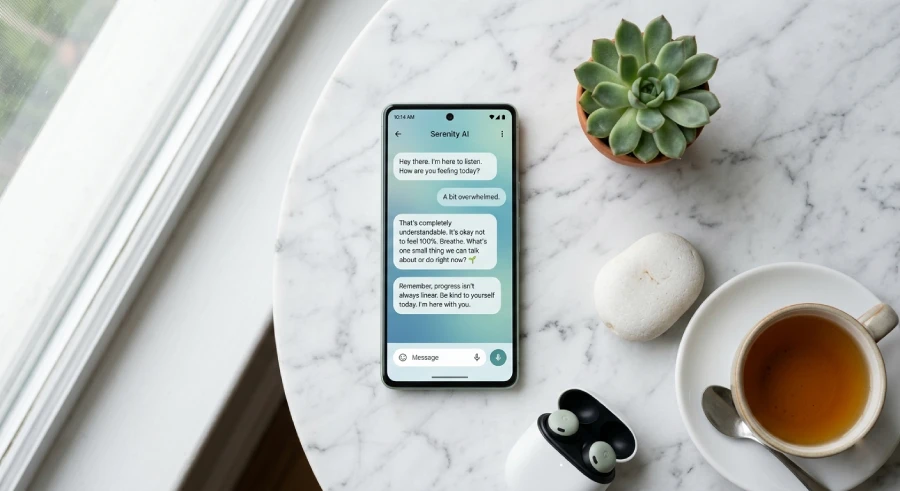
🥇 1. Wysa — Best Overall for CBT Support
Wysa is the most clinically validated AI mental health app available right now. Having already helped over 5 million users in 90+ countries, Wysa blends AI-driven emotional support with optional access to real human therapists.
Wysa has received the FDA’s Breakthrough Device Designation in the U.S., a title reserved for tools that show potential to improve treatment options faster than traditional methods. That is a serious stamp of approval.
A peer-reviewed study of 1,213 Wysa users found that access to AI-powered support between coaching sessions makes users nearly three times more likely to complete their coaching programme. The data really speaks for itself here.
Best for: Anxiety, depression, CBT exercises, hybrid care Pricing: Free basic; Premium ~$19.99/month
🥈 2. Woebot — Best for Science-Backed CBT
Woebot was created by clinical psychologists from Stanford and uses CBT to help you reframe negative thoughts daily. It checks in with you every day in a lighthearted, low-pressure way.
Woebot is one of the few AI therapy tools that has been through rigorous randomized controlled trials. Its science foundation is stronger than most apps on this list. It is structured, safe, and easy to use even when you are not feeling well.
Best for: Daily CBT practice, thought reframing, structured support Pricing: Free with premium options
🥉 3. Flourish — Best All-Around Wellness Platform
Flourish is built by psychologists and behavioral scientists and is a category leader in evidence-based, safety-first AI-powered well-being support. Its effectiveness has been clinically tested in two large randomized controlled trials.
The gamified mobile app combines emotional support, practical coping tools, and a joyful user experience, helping people build resilience, reduce stress, and cultivate a calmer mind through meaningful daily actions. It is one of the most enjoyable wellness apps to use regularly.
Best for: Positive psychology, habit building, gamified wellness Pricing: Freemium model; Premium ~$12.99/month
4. Youper — Best for Mood Tracking
Youper uses empathetic AI to help you understand your emotional patterns over time. It combines mood tracking with short, guided CBT conversations that feel natural and easy. The app learns from your responses and gets smarter with each check-in you complete.
Best for: Mood tracking, emotional awareness, quick daily support Pricing: Free basic; Premium ~$9.99/month
5. Headspace Ebb — Best for Mindfulness + AI
Headspace acquired and integrated AI therapy capabilities into its platform through its Ebb feature. It combines Headspace’s known meditation and mindfulness content with AI-driven emotional support conversations.
This app is perfect if you already meditate or want to start. Calm and Headspace remain the leading picks for sleep quality and daily stress management in 2026. The AI layer adds a personal touch that makes the experience feel less generic.
Best for: Sleep, stress, meditation beginners, mindfulness habits Pricing: ~$12.99/month or $69.99/year
6. Calm — Best for Sleep and Relaxation
Calm has become one of the most recognized names in digital wellness for good reason. Its sleep stories, breathing tools, and guided meditations are all genuinely effective. The sleep stories are legitimately soothing, and Calm’s reputation in this space is earned.
In 2026, Calm added smarter AI personalization that adjusts content to your usage patterns and mood history. This makes the experience feel less like a library and more like a personal wellness coach.
Best for: Sleep issues, relaxation, everyday stress management Pricing: Free trial; ~$14.99/month or $69.99/year
7. Finch — Best for Self-Care Gamification
Finch turns your mental health journey into a gentle game. You care for a cute virtual bird that grows as you complete daily self-care goals. It sounds simple, but the emotional attachment users develop is surprisingly powerful for building habits.
The app uses AI to suggest personalized goals based on your mood and past behavior. It is especially popular with teens and young adults who respond well to game-style motivation.
Best for: Habit building, younger users, self-care routines Pricing: Free with in-app purchases; Pro ~$7.99/month
8. Ash by Slingshot AI — Best for Personalized Emotional Coaching
Ash is a specialist AI in human psychology, trained on a large-scale dataset of proprietary expert data. Ash is designed by experts in emotional wellbeing who adapt mental health practices specifically for AI.
Ash learns from everything you say and creates the perfect program to help you reach your goals. Users report that it feels unusually personal and insightful compared to most chatbot apps.
Best for: Deep self-reflection, personalized coaching, goal setting Pricing: Free to start; subscription pricing varies
9. Earkick — Best Free Option for Stress Tracking
Earkick is a free app that tracks mood and stress using text and voice inputs. It is one of the most accessible options for anyone who wants to start without spending money. The voice input feature makes logging how you feel surprisingly quick.
There is no paywall blocking the core features, which is rare and valuable. It is not as deep as Wysa or Woebot, but it is an excellent starting point for beginners.
Best for: Beginners, free users, quick daily stress check-ins Pricing: Free
10. MindDoc — Best for Long-Term Symptom Tracking
MindDoc is an app focused on symptom tracking and emotional monitoring over time. It asks you short questions throughout the day and builds a picture of your mental health patterns over weeks and months.
MindDoc is developed in collaboration with clinical experts and gives you data-driven insights into your emotional health. It is ideal for people who want to track progress or share patterns with a real therapist.
Best for: Tracking progress, working alongside therapy, pattern awareness Pricing: Free basic; Premium ~$9.99/month
4. Comparison Table: Top AI Mental Health Apps at a Glance
| App | Best For | CBT-Based | Free Plan | Monthly Cost |
|---|---|---|---|---|
| Wysa | Overall + hybrid care | ✅ Yes | ✅ Yes | ~$19.99 |
| Woebot | Science-backed CBT | ✅ Yes | ✅ Yes | Free |
| Flourish | Positive psychology | ✅ Yes | ✅ Yes | ~$12.99 |
| Youper | Mood tracking | ✅ Yes | ✅ Yes | ~$9.99 |
| Headspace Ebb | Mindfulness + AI | Partially | ❌ No | ~$12.99 |
| Calm | Sleep + relaxation | ❌ No | Limited | ~$14.99 |
| Finch | Habit gamification | ❌ No | ✅ Yes | ~$7.99 |
| Earkick | Free tracking | ❌ No | ✅ Yes | Free |
5. How AI Actually Understands Your Emotions
It is not magic — it is Natural Language Processing (NLP). When you type “I feel completely overwhelmed today,” the AI does not just read the words. NLP algorithms analyze text and speech to detect emotions and sentiments, enabling AI to understand users’ emotional states through communication.
NLP captured 44.02% of the AI-powered mental health solutions market share in 2025 and remains the leading technology driving these apps. Machine learning works behind it, building a model of your unique patterns over time.
In 2026, AI therapy apps can detect emotional tone from your voice, adapt therapeutic techniques in real time, and maintain long-term memory of your treatment history. This is a massive leap from the basic chatbots of just three years ago.
6. Wearables + AI: The New Power Couple
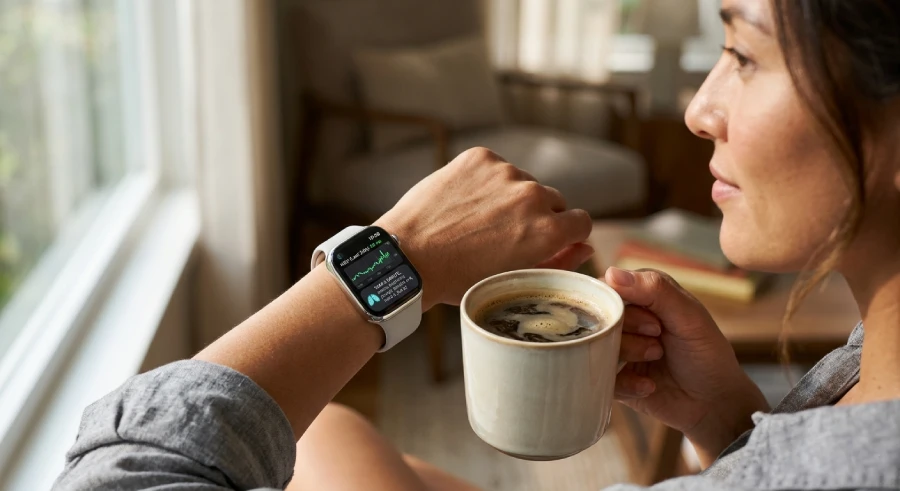
Your smartwatch is no longer just counting steps. In 2026, it talks to your mental health app. Multimodal emotional-AI sensors inside wearables can detect crises up to 7.2 days before human recognition with 89.3% accuracy. That is genuinely remarkable preventive care.
Heart rate variability (HRV) is the key signal these systems use. When your HRV drops, it signals rising stress — and your app can prompt a breathing exercise before you even notice you are tense. The experience feels like having a wellness coach watching over you all day.
The AI in mental health market is expected to grow significantly, driven by integration of AI with wearable and VR devices. Expect this connection between wearables and mental wellness apps to get much tighter in the next two years.
7. Privacy and Safety: What You Need to Know
Mental health data is among the most sensitive data you own. You need to know how your app handles it before you share anything personal. The best apps offer end-to-end encryption, anonymous accounts, and a clear right to delete your data permanently.
There are real risks to be aware of. Media reports have linked a CharacterAI chatbot to a teenager’s suicide, and OpenAI has acknowledged that its chatbot worsened delusional thinking in a user with autism. Always choose apps that have clinical oversight and safety guardrails.
The American Psychological Association has urged the Federal Trade Commission (FTC) to oversee mental health–related chatbots that lack clinical validation or strong ethical safeguards. Before you download any app, check if real clinicians were involved in building it.
Key privacy checklist before downloading:
- Does it use end-to-end encryption?
- Can you delete your data permanently?
- Were licensed clinicians involved in development?
- Does it have a clear crisis escalation protocol?
8. When AI Is Not Enough
AI apps are powerful tools. But they have real limits that are important to understand. AI therapy apps are a legitimate tool for mild mental health support, psychoeducation, and between-session practice — but they are not a replacement for human therapy for moderate to severe conditions, crisis intervention, or complex mental health needs.
If you are experiencing thoughts of suicide, severe depression, trauma, or psychosis, please reach out to a licensed professional or crisis line immediately. No app replaces that level of care.
AI mental health apps create a private space for expression — for people already in therapy, AI tools provide support between sessions, help track patterns, and practice skills learned with a therapist. That hybrid model is the smartest way to use these tools.
9. FAQs: Your Top Questions Answered
Can an AI mental health app replace a licensed therapist?
No. AI apps are excellent for daily support, skill-building, and catching early warning signs. But for serious conditions, trauma, or crisis situations, a human therapist is essential. Think of AI as a bridge — not a destination.
Are these apps suitable for teenagers?
Some are, especially Finch and Earkick, which use lighter, gamified approaches. However, parents should review any app before a teen uses it and check the minimum age requirements carefully.
Which app is best for anxiety specifically?
MindShift CBT is the strongest fully free option for structured anxiety management in 2026. Wysa and Woebot are also excellent, clinically validated options for anxiety.
How much do these apps cost in 2026?
Most apps offer a free tier. Premium subscriptions typically run around $10–15/month or $40–50/year after a free trial. That is a fraction of what one therapy session costs.
Can AI detect depression by listening to me speak?
Early voice biomarker technology is improving fast. In 2026, AI therapy apps can detect emotional tone from voice and adapt therapeutic techniques in real time. Full clinical diagnosis via voice alone is not yet ready, but detection of mood patterns is increasingly accurate.
Is my mental health data private?
It depends on the app. Always read the privacy policy. Look for end-to-end encryption, HIPAA compliance (for U.S. users), and a data deletion option. Avoid apps that train their models on your identifiable data without clear consent.
10. The Future: AI as a Bridge, Not a Replacement
The best outcome for mental health in 2026 is not AI replacing therapists — it is AI making support available to people who currently have nothing. The best approach for most people is a hybrid one: use AI tools for daily support, skill-building, and self-awareness, while maintaining access to human professionals for clinical-level care.
By 2031, the AI-powered mental health solutions market is projected to reach nearly $10 billion. That growth reflects millions of real people getting real support that was previously out of reach for them.
The conversation around mental health is changing. Asking for help — even from an app — is a sign of self-awareness and strength. These tools are not perfect, but for millions of people, they are a lifeline that fits in your pocket and is ready at 3 AM when nobody else is.
Comparison Table: App Strengths at a Glance
| Feature | Wysa | Woebot | Flourish | Calm | Earkick |
|---|---|---|---|---|---|
| Clinical Validation | ✅ Strong | ✅ Strong | ✅ Strong | Partial | ❌ Limited |
| Voice Input | ❌ No | ❌ No | ❌ No | ❌ No | ✅ Yes |
| Wearable Sync | Partial | ❌ No | ❌ No | ✅ Yes | ❌ No |
| Human Therapist Access | ✅ Yes | ❌ No | ❌ No | ❌ No | ❌ No |
| Crisis Protocol | ✅ Yes | ✅ Yes | ✅ Yes | ❌ No | ❌ No |
| Completely Free Option | ✅ Yes | ✅ Yes | ✅ Yes | ❌ No | ✅ Yes |
⚠️ Disclaimer: AI mental health apps are not a substitute for professional mental health care. If you or someone you know is in crisis, please contact a licensed mental health professional or your local crisis hotline immediately.





No Comment! Be the first one.