





SaaS Contract Negotiation for Small Business: How to Stop Renewals From Quietly Raising Your Software Bill
Software renewals keep getting pricier, and default terms favor the vendor. Here is how SaaS contract negotiation for small business works, with six steps, seven clauses to fix, and a worked savings...
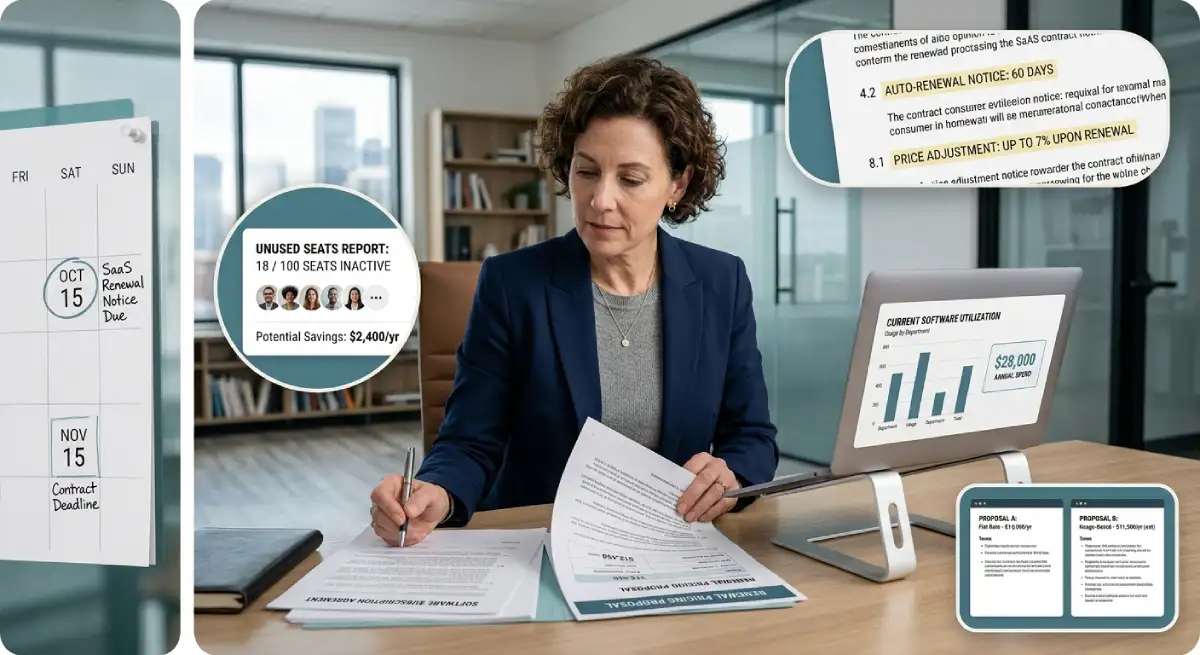
SaaS contract negotiation for small business starts with one uncomfortable fact. Renewal prices usually rise, and the default terms tend to favor the vendor. Zylo’s 2026 survey found 79 percent of IT leaders saw a renewal price increase. You can’t stop every hike, but you can blunt most of them.
Table Of Content
- SaaS Contract Negotiation for Small Business: Why Renewals Cost More
- Step 1: Know Your Leverage and Your Timeline
- Step 2: Pull Your Numbers Before You Talk
- Step 3: Fix the Seven Clauses That Raise Your Bill
- Step 4: Trade, Don’t Just Ask
- Step 5: Get Every Promise in Writing
- Step 6: Calendar the Dates and Own the Process
- Frequently Asked Questions
- A Cheaper Renewal Starts Months Early
This guide walks through six steps, from timing to paperwork, plus seven clauses worth changing. One caution: most renewal data comes from software-management vendors, often surveying larger firms. Treat the percentages as direction rather than promises. None of this is legal advice, so have a lawyer review contracts involving real money.
SaaS Contract Negotiation for Small Business: Why Renewals Cost More
The sticker price is rarely the whole story. Zylo also found 78 percent of IT leaders hit surprise charges from usage or AI features. And 77 percent met costs that only surfaced after signing. Surprises hide in the fine print.
Auto-renewal makes it worse. Vertice’s clause guide says 52 percent of software contracts include one. Its data shows prices rising about 9 percent on average when contracts auto-renew. Silence costs money.
Small accounts can still push back. Vendors generally negotiate on price and renewal terms, though nothing’s guaranteed. They rarely rewrite the master agreement for a ten-person customer. Aim your effort where vendors actually flex.
Step 1: Know Your Leverage and Your Timeline

Small accounts have less leverage than big ones, but not none. Vendors like predictable revenue, longer terms, and happy references. They also want to keep you from shopping around. That’s your starting hand.
Timing is your biggest lever. Renewal guides suggest starting 90 to 120 days before the contract ends. Many auto-renewal clauses lock you in 30 to 90 days out. Miss that window, and you’re negotiating from nowhere.
Ask your rep when their fiscal quarter ends. Sellers often have more room near the finish line. It costs nothing to find out. Then schedule your renewal talks around it.
Step 2: Pull Your Numbers Before You Talk
Walk in with four figures. Seats you pay for, seats people actually use, price per seat, and the notice deadline. Most admin dashboards show the first two. If yours doesn’t, ask the vendor for a usage report.
Unused seats are the easiest savings. Vertice data cited in trade press puts unused licenses at 36 percent on average. Zylo estimates the average company overspends about 25 percent on licenses. Both firms sell software-management tools, so verify with your own count.
Here’s an illustration. Say you pay for 20 seats at 30 dollars a month. That’s 7,200 dollars a year, so a 15 percent renewal increase adds 1,080. Dropping four unused seats saves 1,440 dollars, more than the whole increase.
That’s the order of operations. Right-size first, then argue about price. A smaller bill gives you less to lose on any increase.
Compare cost to output, not just seats. Judge a tool that bills per document or customer against the revenue it helps produce. FinOps practitioners call this unit economics.
Step 3: Fix the Seven Clauses That Raise Your Bill
Every SaaS agreement hides a few terms that quietly decide your costs. These seven are the ones worth asking about. Vendors won’t always say yes, but they’ll often move on some of them.
| Clause | What to ask for | Why it matters |
|---|---|---|
| Auto-renewal | Renewal by mutual agreement, or a longer notice window | Silent renewals lock in the next term and price |
| Renewal price | A cap, such as 5 to 7 percent or tied to inflation | “Current list price” wording leaves the number open |
| Usage and overages | Written overage rates, usage caps, and alerts | Surprise charges from usage or AI features are common |
| Seat flexibility | The right to reduce seats at renewal | You stop paying for people who left |
| Data export | Standard-format export and written deletion confirmation | You can leave without losing your records |
| Service levels | Uptime targets and credits for missed ones | Downtime costs you, so the contract should say what they owe |
| Billing and term | Monthly or quarterly billing, or a shorter first term | Less cash is tied up if the vendor stumbles |
Start with auto-renewal. Ask to remove the clause. If the vendor refuses, lengthen the notice window and request a reminder email. Either change keeps a forgotten date from costing you a full year.
Next, cap the increase. Renewal guides commonly suggest 5 to 7 percent, or inflation, whichever is lower. Try to freeze your price for the whole term, and name the first renewal rate too. Without a cap, a “current list price” clause lets the vendor set the number.
Finally, look at billing and term. Monthly or quarterly billing keeps cash free, though some vendors charge more per seat. A shorter first term lets you test the tool before locking in. Trade a bit of price for flexibility when you’re unsure.
Usage terms deserve extra attention now. Ask for written overage rates and spending alerts. If the tool bills by credits or tokens, cap them. A cheap seat price means little when the usage meter runs freely.
Don’t skip the exit. You should be able to export your data in a standard format, with written deletion confirmation. That protects you if the vendor changes course or shuts down. Our guide to a data backup and recovery plan explains how to keep your own copies.
For service levels, ask what happens when the vendor misses its uptime promise. Credits are common but small. Our guide to service level management explains how to read those promises. If the tool runs your business, push for clearer terms.
Step 4: Trade, Don’t Just Ask

Vendors give more when they get something. In SaaS contract negotiation for small business, trades beat demands. Offer a longer term, annual prepayment, or a short case study. Ask for a price lock or a cap in return.
Be careful with prepayment and long terms. Paying twelve months upfront to a young startup puts your cash at risk if it folds. A multi-year deal helps only if the price lock is real. When in doubt, take the shorter term.
A real competing quote is your best bargaining chip. Get one even if you’d rather stay. Vendors respond to credible alternatives. You don’t have to switch, just look willing.
Step 5: Get Every Promise in Writing
A verbal yes from a sales rep means little later. Put each change in the order form or a contract amendment. Email promises can conflict with the main agreement. When documents disagree, the signed contract usually wins.
Read the whole agreement once, including linked terms and policies. Look for clauses that let the vendor change terms by posting an update. If a contract carries serious money or sensitive data, pay a lawyer to review it. An hour of legal review often costs less than one bad renewal.
Good SaaS contract negotiation for small business ends with signatures, not good intentions. Keep the final version somewhere your whole team can find it. Note every date that matters. That brings us to the last step.
Step 6: Calendar the Dates and Own the Process
Negotiation fails when nobody remembers the deadline. Put every renewal date and notice deadline in a shared calendar. Set reminders at 120, 90, and 60 days. Name one person who owns each tool.
Keep a simple sheet with tool, owner, cost, seats, renewal date, and notice deadline. It takes an afternoon, and overlapping tools show up fast. Our overview of communication and collaboration tools is a good place to spot duplicates. Cancel the extras before they renew.
Watch for tools staff bought on their own. Those never get negotiated at all. Our guide to shadow AI risks for small businesses explains how they pile up.
Frequently Asked Questions
Is SaaS contract negotiation for small business worth the effort?
Usually yes for tools that cost thousands a year. A price cap and a seat cut often repay the effort. Tiny tools under a few hundred dollars may not be worth the hours.
How early should I start a SaaS renewal negotiation?
Renewal guides suggest 90 to 120 days before the term ends. Check your notice deadline first, since it can fall 30 to 90 days out.
Is a price increase at renewal normal?
Yes. Zylo found 79 percent of IT leaders saw one. That doesn’t mean you must accept the first number.
Should I sign a multi-year SaaS contract?
Only if the price lock is written in and the vendor looks stable. Otherwise, a shorter term keeps your options open.
What if the vendor refuses to negotiate?
Ask for smaller wins, like a longer notice window or better export terms. If it still won’t budge, get a competing quote and be willing to switch.
A Cheaper Renewal Starts Months Early
SaaS contract negotiation for small business isn’t about hardball. It’s about timing, a clean usage count, and a handful of clauses. Do those three things, and most renewals get cheaper or at least more predictable.
Pick your biggest subscription this week and look up its renewal date. If it’s within four months, start now. You’ll thank yourself when the notice email arrives. A fifteen-minute calendar entry today can save a lot later.
For more owner-first money decisions like this one, keep exploring Business Tech. Next up: a Tech News breakdown of the latest AI rules landing on small employers.





No Comment! Be the first one.