




Best Wearables for Tracking Stress and Recovery in 2026: Rings, Watches, and Bands Compared
A practical guide to the best wearables for tracking stress and recovery in 2026. Compare rings, watches, and bands on accuracy, comfort, battery life, and price.
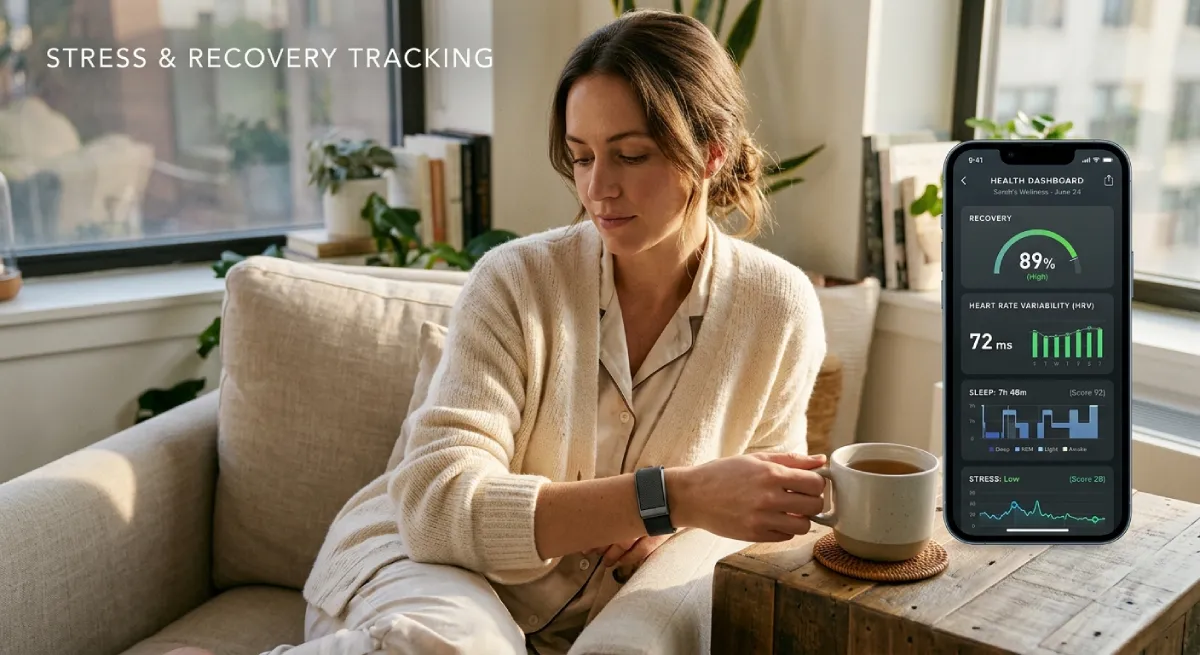
Whoop 5.0, Oura Ring, and Garmin Venu 3 currently lead the field for stress and recovery tracking, each using slightly different sensor approaches. Whoop focuses entirely on recovery metrics without a screen, while Oura blends recovery data with sleep insights in a compact ring. Garmin appeals to users who want recovery tracking alongside full smartwatch features like GPS and notifications.
Table Of Content
Stress and recovery tracking has become one of the most requested wearable features, since it turns vague tiredness into measurable data. This guide compares the best wearables for tracking stress and recovery on accuracy, comfort, and daily usability. You will also find guidance on choosing between a screenless band, a ring, or a full smartwatch based on your lifestyle.
Key Takeaways
- Whoop 5.0 offers the deepest recovery data without a distracting screen.
- Oura Ring balances recovery tracking with strong sleep insights in one device.
- Garmin Venu 3 suits users wanting recovery data plus full smartwatch features.
- Heart rate variability is the core metric behind most recovery scores.
- Comfort during sleep matters as much as sensor accuracy for reliable data.
Why Stress and Recovery Tracking Matters
Stress builds up quietly, often without a clear physical warning sign until it affects sleep or focus. Wearables solve this by turning subtle physiological signals into a daily number people can actually act on. This shift from guessing to measuring has changed how many people approach rest and training.
Recovery tracking works similarly, especially for anyone balancing exercise with daily responsibilities. A low recovery score can signal it is time to rest, while a high score suggests the body is ready for harder effort. This kind of daily feedback loop helps prevent overtraining before it leads to injury or burnout.
These devices rely heavily on heart rate variability, a metric that reflects how well the nervous system is balancing stress and recovery. Higher variability generally indicates better recovery, while lower variability often signals accumulated stress or fatigue. Understanding this metric helps explain why these wearables focus so heavily on nighttime data collection.
What to Look for Before Choosing
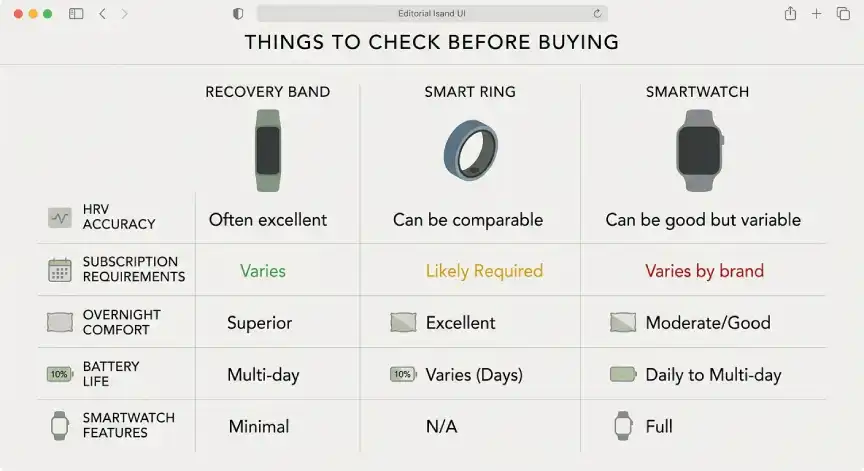
Not every wearable tracks stress and recovery with the same depth or accuracy. Review these factors before making a purchase decision:
- Heart rate variability accuracy during sleep and rest periods
- Whether the device requires a subscription for full recovery insights
- Comfort for continuous, all-day and overnight wear
- Battery life and how often charging interrupts data collection
- Whether you also want smartwatch features like GPS and notifications
Skipping this review often leads buyers toward devices with flashy marketing rather than genuinely accurate sensors. Recovery data is only useful if it is consistent enough to trust over time. Comparing the best wearables for tracking stress and recovery on these five points narrows the field quickly.
Best Wearables for Stress and Recovery Compared
This section breaks down the best wearables for tracking stress and recovery by strengths, weaknesses, and ideal user type.
Whoop 5.0
Whoop 5.0 focuses entirely on recovery, strain, and sleep tracking without any screen at all. This screenless design keeps the band lightweight and comfortable for continuous wear, including sleep. Its recovery score is widely regarded as one of the most detailed available in any wearable category.
The tradeoff is a mandatory subscription model, since Whoop does not sell the hardware outright in most plans. This ongoing cost adds up over time compared to devices with a one-time purchase price. Users who value depth over hardware ownership often find this model worthwhile regardless.
Whoop also stands out for its strain coaching, which suggests how much exertion your body can handle on a given day. This feature appeals strongly to athletes balancing training load with recovery capacity. Casual users may find this level of detail more than they actually need day-to-day.
The app also includes a journal feature, letting users log habits like alcohol, caffeine, or late meals alongside recovery scores. Over time, this reveals which lifestyle choices actually affect personal recovery the most. Few competitors offer this level of habit correlation built directly into the app.
Oura Ring
Oura Ring combines recovery scoring with some of the most trusted sleep tracking on the market. Its readiness score factors in sleep quality, heart rate variability, and recent activity to summarize daily recovery in one number. The ring format makes overnight wear far more comfortable than most wrist-based alternatives.
Like Whoop, Oura requires a subscription after an initial trial period for full feature access. Without it, users lose access to detailed trend graphs and personalized insights. This cost should factor into any comparison between Oura and screenless band alternatives.
Oura’s smaller form factor also means fewer features beyond health tracking. There is no screen for notifications, and GPS is not built in for outdoor activity tracking. Users wanting a single device for both fitness and recovery tracking may find this limiting.
Oura also offers a wide range of ring finishes and sizes, which matters for both comfort and sensor accuracy. A properly fitted ring maintains better skin contact, improving the reliability of heart rate readings overnight. The brand ships a free sizing kit before purchase to help buyers find the right fit.
Garmin Venu 3
Garmin Venu 3 adds recovery and stress tracking on top of a full smartwatch experience. It includes GPS, notifications, and a bright screen, making it a more versatile daily device than Whoop or Oura. Its recovery metrics, while solid, are generally considered slightly less refined than dedicated recovery-focused devices.
No subscription is required for Garmin’s recovery features, which appeals to buyers wanting to avoid ongoing costs entirely. This makes total ownership cost lower over time compared to Whoop or Oura, despite a higher upfront price.
Battery life sits around ten days for typical use, longer than most competing smartwatches but shorter than screenless bands like Whoop. Users wanting smartwatch convenience alongside decent recovery tracking often find Garmin the more practical daily choice.
Garmin also supports a wide range of sports profiles beyond basic activity tracking, appealing to users training for specific events. Its Body Battery feature, similar in concept to recovery scoring, gives a quick daily readout of available energy. This makes Garmin a reasonable all-in-one option for users unwilling to juggle multiple devices.
Fitbit Charge 6
Fitbit Charge 6 offers a budget-friendly option for stress and recovery tracking without Whoop- or Oura-level pricing. Its daily readiness score covers similar ground, factoring in sleep, activity, and heart rate trends. A small screen adds basic notification support without full smartwatch bulk.
Accuracy trails slightly behind the more premium options on this list, though it remains reasonable for casual users. Fitbit’s ecosystem and app remain approachable for beginners new to health tracking. Its lower price makes it a sensible entry point before committing to a pricier device.
Key Terms in Stress and Recovery Tracking
A few terms come up often when comparing these wearables. Understanding them helps you evaluate specs with more confidence.
- Heart rate variability measures the time variation between heartbeats, linked to recovery.
- Readiness score summarizes how prepared your body is for the day ahead.
- Strain quantifies physical and sometimes mental exertion accumulated during the day.
- Sleep latency tracks how long it takes to fall asleep after going to bed.
- Baseline refers to your personal average, used to judge daily readings against your norm.
Knowing these terms makes comparing recovery scores across brands much easier, since each company uses slightly different formulas and labels for similar underlying data.
Stress and Recovery Wearables Comparison Table
| Device | Best For | Battery Life | Subscription Required |
|---|---|---|---|
| Whoop 5.0 | Deep recovery and strain data | 4 to 5 days | Yes, included in plan |
| Oura Ring | Sleep and recovery in one ring | 4 to 7 days | Yes, after trial |
| Garmin Venu 3 | Recovery plus smartwatch features | 10 days | No |
| Fitbit Charge 6 | Budget-friendly recovery tracking | 7 days | Optional for extra features |
Choosing the Right Device for Your Lifestyle
Choose Whoop if recovery and strain data matter more to you than a screen or notifications. Athletes balancing intense training schedules often find its depth worth the subscription cost. Casual users may find this level of detail unnecessary for daily life.
Choose Oura if you want strong sleep tracking alongside recovery scoring in a comfortable ring. This suits people who value discreet, screenless wear over smartwatch convenience. It works especially well for those already comfortable managing health data through a phone app.
Choose Garmin or Fitbit if you want recovery tracking without an ongoing subscription. Garmin suits users wanting full smartwatch features, while Fitbit fits buyers prioritizing a lower upfront cost. Both remain solid choices for casual to moderately active users tracking daily wellness trends.
Frequently Asked Questions
What is the best wearable for tracking stress and recovery?
Whoop 5.0 and Oura Ring are widely considered among the best wearables for tracking stress and recovery today. Whoop focuses entirely on recovery, while Oura pairs it with strong sleep insights.
Do stress tracking wearables require a subscription?
Whoop requires an ongoing subscription, and Oura requires one after an initial trial. Garmin and Fitbit offer core recovery tracking without a required subscription.
How accurate is heart rate variability tracking on wearables?
Modern wearables track heart rate variability reasonably well, especially during sleep when movement is minimal. Accuracy can vary slightly depending on fit and skin contact quality.
Can a smartwatch track recovery as well as a dedicated ring or band?
Smartwatches like Garmin Venu 3 track recovery reasonably well, though dedicated devices like Whoop often offer deeper analysis. The tradeoff is added smartwatch features versus specialized recovery depth.
How long does it take to get accurate baseline readings?
Most wearables need one to two weeks of consistent wear to establish an accurate personal baseline. Readings before this period may feel less meaningful until enough data accumulates.
Conclusion
The best wearables for tracking stress and recovery in 2026 each suit slightly different priorities and budgets. Whoop and Oura lead in raw recovery depth, while Garmin and Fitbit offer strong alternatives without ongoing subscription costs. Matching your choice to your daily habits matters more than chasing the most feature-packed option available.
Before choosing a device, consider how much detail you actually want to review daily. Some users thrive on deep data, while others prefer a simple daily score without extra complexity. Whichever device you choose, consistent wear over several weeks matters most for building an accurate, trustworthy baseline.
Want more guides like this? Explore the full Wearables collection on TechAndTrends to find the right device for your health and recovery goals.






No Comment! Be the first one.