




AutoGen by Microsoft in 2026: What It Is, How It Works, and What Replaced It
AutoGen by Microsoft pioneered multi agent AI development, letting teams of AI agents collaborate on coding, research, and support tasks. In 2026, Microsoft shifted AutoGen into maintenance mode and...
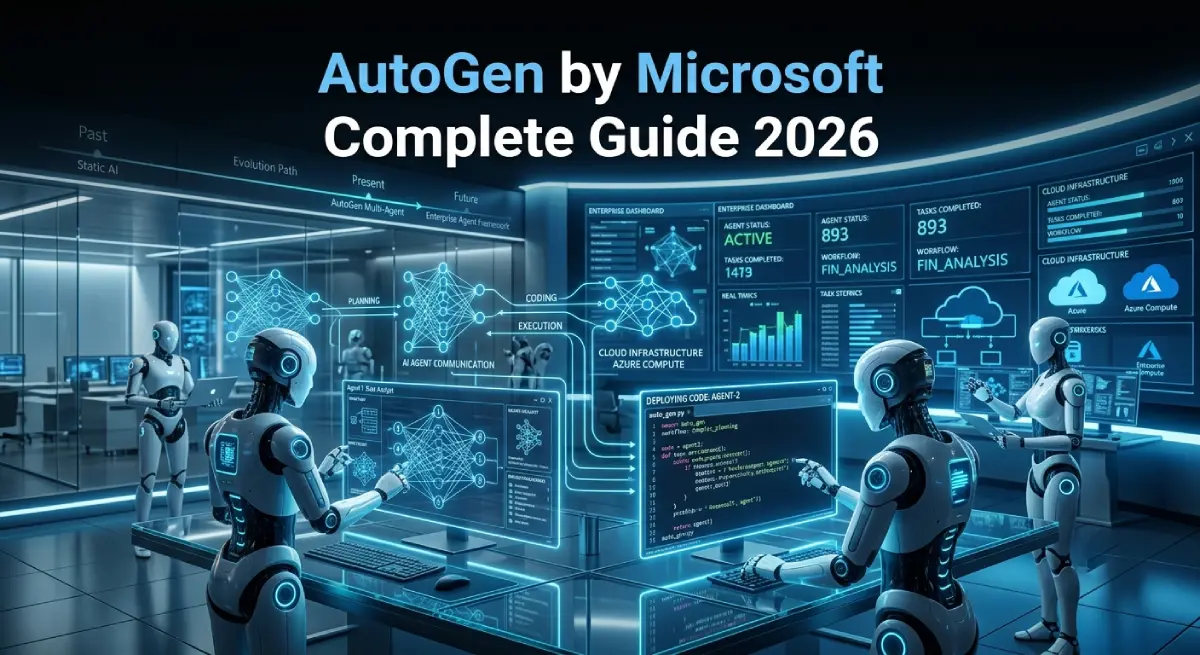
AutoGen by Microsoft changed how developers think about building AI agents. It let multiple AI agents talk to each other and solve tasks together. Instead of one chatbot doing everything, you could assign roles. One agent could research, another could write code, and a third could review the work.
Table Of Content
- What Is AutoGen?
- How AutoGen Works
- Key Features of AutoGen
- AutoGen in 2026: What Changed
- Should You Still Use AutoGen
- AutoGen vs Other Frameworks
- Real Use Cases for AutoGen
- Benefits and Limitations
- Security Considerations
- Expert Tips for Working With AutoGen
- Getting Started
- Common Misconceptions About AutoGen
- FAQ
- Conclusion
This idea felt revolutionary when Microsoft Research first released it. Thousands of developers adopted AutoGen for chatbots, coding assistants, and research tools. But 2026 brought a major shift that every developer needs to understand.
In this guide, you will learn what AutoGen by Microsoft actually is. You will also learn how it works, why it matters, and what has changed this year. We will cover its features, real use cases, and the framework now replacing it.
What Is AutoGen?
AutoGen is an open-source framework created by Microsoft Research. It helps developers build applications where multiple AI agents work as a team. Each agent can have its own role, its own instructions, and its own tools.

Instead of writing one giant prompt, you break the task into smaller agent roles. A planner agent might set the strategy. A coder agent might write scripts, while a critic agent checks the output for errors.
This approach mirrors how human teams solve complex problems. AutoGen handles the messy parts behind the scenes. It manages message routing, conversation history, and how agents pass tasks between each other.
How AutoGen Works
AutoGen is built around the idea of conversable agents. Each agent can send messages, receive messages, and decide what to do next. Agents can also call external tools, run code, or search the web.
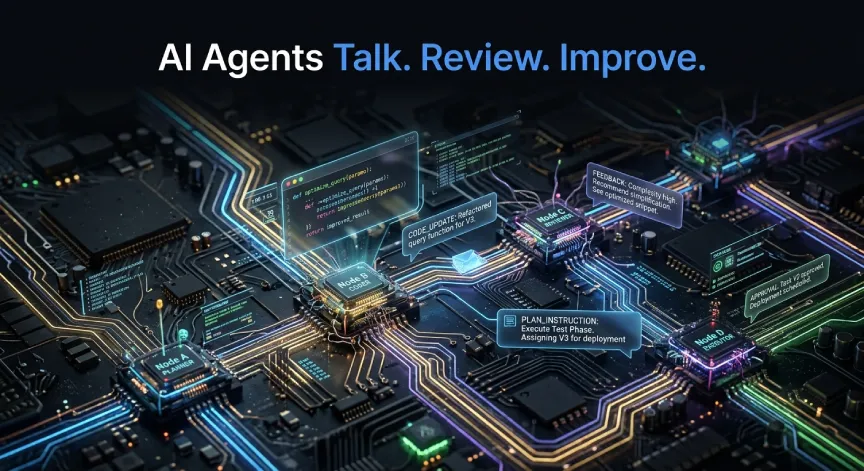
Developers define the number of agents, their goals, and how they should interact. Some setups use two agents talking back and forth. Other setups use group chats where several agents collaborate at once.
A popular pattern is the reviewer loop. One agent writes a solution while another checks it for mistakes. If the critic agent finds a problem, the writer agent revises the answer automatically.
This loop continues until the output meets quality standards. It reduces the need for constant human correction. That makes AutoGen useful for coding, research, and automated report generation.
Key Features of AutoGen
AutoGen offers several features that made it popular among developers in 2024 and 2025. These features still work today, even though the framework is changing direction.
- Multi-agent orchestration: connects many agents into one workflow, with each agent specializing in a narrow task for better accuracy
- Human in the loop support: lets a person approve, reject, or edit an agent’s response before it continues
- Code execution: allows agents to write and run Python code for data analysis, automation, and testing
- AutoGen Studio: a low-code interface for quick prototyping without deep programming knowledge
AutoGen in 2026: What Changed
This is the part every developer must know before starting a new project. As of 2026, AutoGen is officially in maintenance mode. Microsoft confirmed it will only receive bug fixes and security patches going forward.
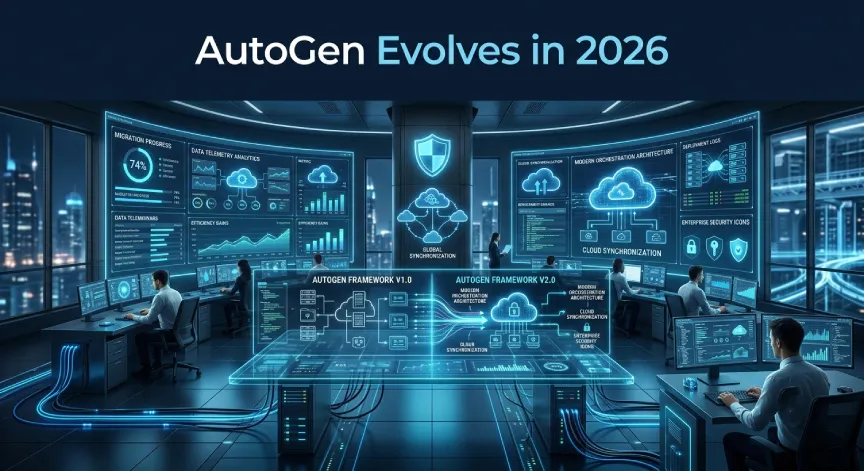
Microsoft merged AutoGen with Semantic Kernel to create a new framework. It is called Microsoft Agent Framework, often shortened to MAF. This new framework reached a stable 1.0 release on April 3, 2026.
Microsoft Agent Framework combines AutoGen’s simple agent design with Semantic Kernel’s enterprise features. It adds session-based state management, better security controls, and detailed telemetry. It also supports more AI models and cross-platform interoperability through MCP and A2A protocols.
For existing AutoGen projects, Microsoft published an official migration guide. This helps teams move their agents into the new framework smoothly. New projects starting today should build directly on Microsoft Agent Framework instead of classic AutoGen.
There is also a community-driven fork called AG2. It continues developing many of AutoGen’s original ideas independently. Some open source teams prefer AG2 if they want continued feature updates outside Microsoft’s roadmap.
Should You Still Use AutoGen
This depends heavily on your project stage and goals. If you are learning multi-agent concepts, AutoGen remains a solid teaching tool. Its documentation is mature, and many tutorials still reference it.
If you are building a production application in 2026, the picture changes. Microsoft directly recommends Microsoft Agent Framework for new enterprise deployments. Choosing MAF now avoids a painful migration later.
Existing AutoGen apps are not broken and will keep receiving security patches. But you should plan a migration timeline if you rely on active feature development. Waiting too long could leave your application without important updates.
AutoGen vs Other Frameworks
| Framework | Best For | Key Strength |
|---|---|---|
| AutoGen | Multi-agent collaboration | Conversational agent orchestration |
| Microsoft Agent Framework | Enterprise production systems | Unified orchestration with enterprise features |
| LangGraph | Production workflows | Stateful execution graphs |
| CrewAI | Rapid prototyping | Simplicity and quick setup |
| Semantic Kernel | Enterprise applications | Deep Microsoft ecosystem integration |
AutoGen pioneered many ideas that shaped this entire industry. Its influence appears in how almost every modern agent framework handles conversations. That legacy remains valuable, even as the tool itself evolves into something new.
Real Use Cases for AutoGen
Software teams have used AutoGen to automate parts of code review. One agent writes a function while another agent tests it for bugs. This speeds up development cycles significantly compared to manual review alone.
Research teams use AutoGen for literature summaries and data gathering. Multiple agents search sources, extract key facts, and compile a report. This cuts research time from days down to a few hours in many cases.
Customer support teams have built layered chatbot systems using AutoGen. One agent handles simple questions while another escalates complex issues. This structure improves response quality without needing extra human staff.
Benefits and Limitations
AutoGen made multi-agent development accessible to a wide range of developers. It offered flexible agent design, strong documentation, and an active early community. These strengths helped it become a foundational tool in agentic AI history.

However, AutoGen now carries real limitations for long-term production use. It will not receive new features, which limits future flexibility. Enterprises need active development, tighter security, and long-term support commitments.
Microsoft Agent Framework directly addresses these gaps for serious production work. It offers the reliability that large-scale AI applications require in 2026. This makes it the safer long-term choice for most new projects.
Security Considerations
Multi-agent systems introduce security risks that single chatbots rarely face. Agents that execute code or browse the web need careful sandboxing. Without proper controls, a compromised agent could run harmful commands.
Microsoft’s own documentation warns that AutoGen Studio is not production-ready. It is meant for rapid prototyping, not live customer-facing systems. Developers must add their own authentication, permission checks, and logging layers.
Microsoft Agent Framework improves this situation with built-in enterprise security. It includes stronger identity controls, filters, and detailed telemetry by default. This makes it a safer foundation for teams handling sensitive data.
Expert Tips for Working With AutoGen
Start small before building complex multi-agent chains. Test a two-agent setup first, then expand once it works reliably. This helps you catch logic errors early instead of debugging five agents at once.
Always set clear stopping conditions for agent conversations. Without limits, agents can loop endlessly and waste API calls. Define a maximum number of turns or a specific success condition for each task.
Log every agent message during development and testing. This makes it much easier to trace where a workflow went wrong. It also helps you fine-tune prompts for each agent role.
Getting Started
If you still want to explore AutoGen, installation remains simple through pip. You can find full setup instructions in the official GitHub repository. Many free tutorials also walk through basic multi-agent examples step by step.
For new projects, start instead with Microsoft Agent Framework documentation on Microsoft Learn. It includes migration guides for teams moving away from classic AutoGen. This ensures your project stays aligned with Microsoft’s long-term roadmap.
Common Misconceptions About AutoGen
Many developers assume AutoGen has been fully discontinued by Microsoft. That is not accurate. It still receives bug fixes and security patches on a regular basis.
Another myth is that AutoGen and Microsoft Agent Framework are identical. They share design roots, but Agent Framework adds enterprise features AutoGen never had. Treat them as related tools with different long-term purposes.
Some also believe multi-agent systems are always better than single agent setups. That is not always true either. Simple tasks often run faster and cheaper with just one well-prompted agent.
FAQ
What is AutoGen by Microsoft used for?
AutoGen is used to build applications where multiple AI agents collaborate. Developers use it for coding automation, research tasks, and layered chatbot systems.
Is AutoGen still maintained by Microsoft in 2026?
AutoGen is in maintenance mode as of 2026. It receives bug fixes and security patches, but no new features.
What replaced AutoGen at Microsoft?
Microsoft Agent Framework replaced AutoGen by merging it with Semantic Kernel. It reached a stable 1.0 release in April 2026.
Is AutoGen free to use?
Yes, AutoGen is open source and free to use. Running agents on cloud platforms like Azure may involve separate usage costs.
Should beginners still learn AutoGen?
Beginners can still learn core multi-agent concepts through AutoGen. It remains a helpful stepping stone toward Microsoft Agent Framework.
Conclusion
AutoGen by Microsoft helped launch the multi-agent AI movement we see today. It proved that specialized agents working together outperform single chatbot models. That core idea now lives on inside Microsoft Agent Framework.
If you are starting a new project, build on Microsoft Agent Framework directly. If you already use AutoGen, plan your migration before support windows shrink further. Either way, understanding AutoGen helps you understand where agentic AI is heading next. Its legacy will keep shaping how developers design intelligent, collaborative software for years to come.






No Comment! Be the first one.