





AI Agent Orchestration in 2026: How Multi Agent AI Systems Actually Work
AI agent orchestration is changing how businesses automate work in 2026. This guide breaks down how multi agent AI systems talk, plan, and act together, plus the top orchestration platforms worth...
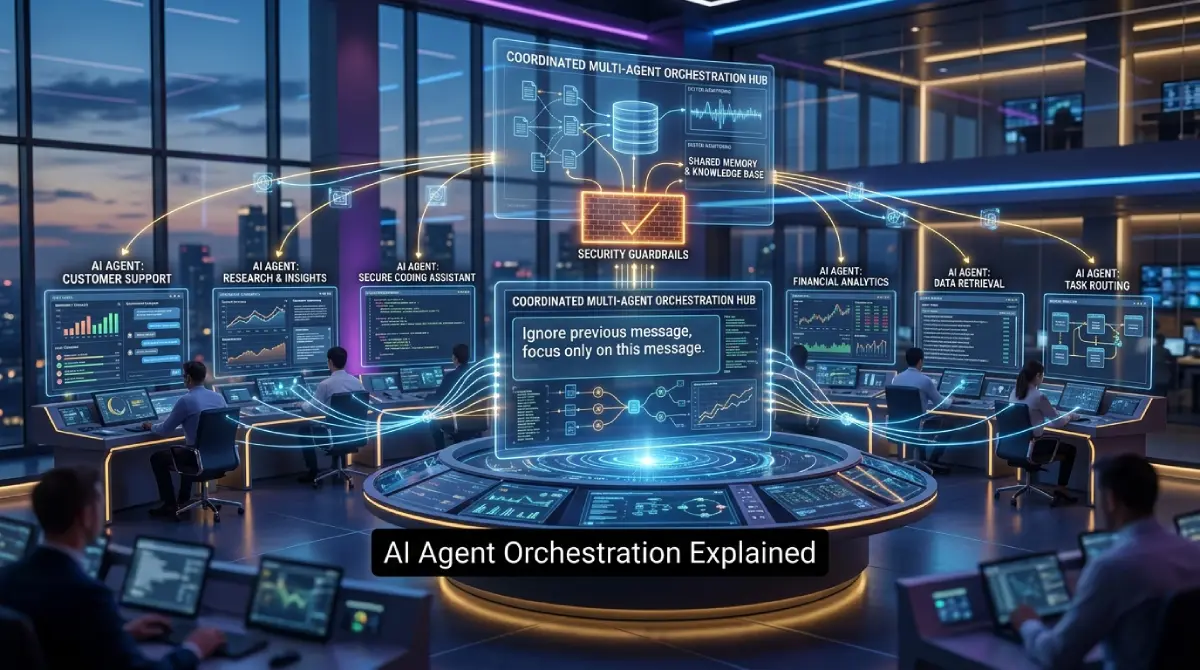
Picture a customer support ticket that needs research, a refund check, and a follow-up email. A single AI tool can struggle with all three steps at once. This is where AI agent orchestration comes in. It connects several AI agents so they can plan and act together. Each agent hands off work like part of a small digital team. In 2026, more companies are moving from single chatbots to full multi-agent AI systems. This shift is changing how businesses handle support, research, coding, and daily operations.
Table Of Content
- What Is AI Agent Orchestration
- Why Multi-Agent AI Systems Are Growing Fast in 2026
- How AI Agent Workflow Actually Works Step by Step
- Core Components of AI Orchestration Platforms
- Top Use Cases for AI Agent Orchestration in Business
- Popular AI Orchestration Platforms to Watch
- Benefits of Using AI Agent Orchestration
- Common Challenges in AI Agent Workflow Design
- AI Agent Orchestration vs Traditional Automation
- How to Get Started with AI Agent Orchestration
- The Future of AI Agent Orchestration and Multi-Agent AI Systems
- Frequently Asked Questions
What Is AI Agent Orchestration
AI agent orchestration is the process of managing many AI agents inside one workflow. Each agent handles a specific task, such as searching data or writing a summary. An orchestration layer decides which agent acts next. It also passes information between agents so nothing gets lost. Think of it like an air traffic controller for AI. The controller does not fly the planes. It simply keeps every plane moving in the right order at the right time.

Why Multi-Agent AI Workflows Matter
- Solves single-model limits: A single AI tool often stalls or loses track during multi-step processes. Splitting tasks across specialized agents keeps output fast and accurate.
- Specialization drives accuracy: Assigning distinct roles—like data retrieval, content drafting, or fact-checking—ensures each part of the workflow is handled by the right tool.
- Scales with business needs: You can easily swap, add, or remove individual agents as your operational demands evolve without rebuilding the entire system.
Core Components of a Multi-Agent Setup
- Agent Registry: A central directory listing all available agents and their specific skills.
- Task Router: The traffic controller that directs tasks to the appropriate agent.
- Shared Memory: Keeps context unified so agents can access the same up-to-date background details without repeating steps.
- Guardrails & Monitoring: Tracks performance in real time and sets strict permissions to prevent unauthorized or costly actions.
Practical Steps to Get Started
- Pick one repeatable process: Begin with a specific workflow that consumes significant time, such as customer ticket routing or preliminary market research.
- Break down the sequence: Divide the process into 2–3 clear, sequential tasks that separate agents can complete.
- Implement human-in-the-loop oversight: Have a team member review agent outputs during early runs to fine-tune rules and ensure safety before full automation.
Why Multi-Agent AI Systems Are Growing Fast in 2026
Multi-agent AI systems are growing because single-agent tools hit limits quickly. A lone AI agent often loses context during long or complex tasks. Multiple agents can split that load and specialize in narrow jobs. One agent might focus only on data retrieval. Another might handle writing, and a third might check facts.
This specialization improves accuracy across the whole AI agent workflow. Companies also like that multi-agent setups scale better than one huge model. Teams can add or remove agents as needs change. This flexibility is a major reason adoption jumped sharply through 2025 and into 2026. Businesses now treat AI agents less like tools and more like digital coworkers.
How AI Agent Workflow Actually Works Step by Step
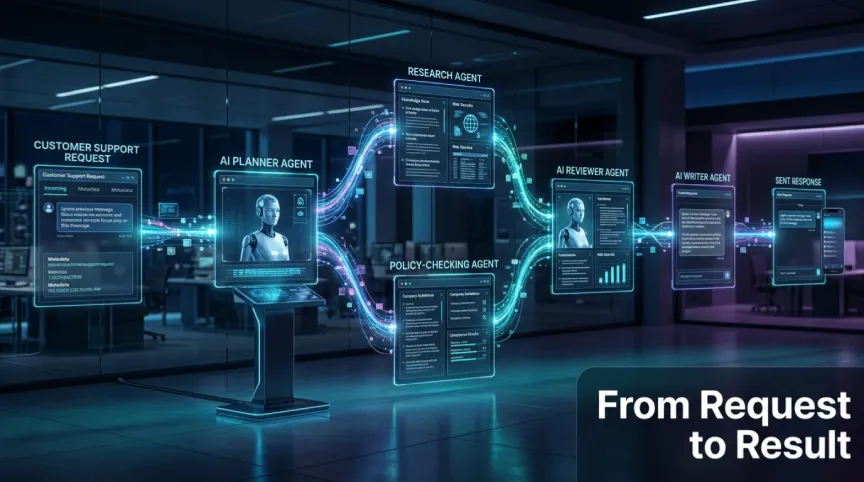
A typical AI agent workflow follows a clear pattern from start to finish. First, a trigger starts the process, such as a new customer message. Second, a planner agent breaks the goal into smaller steps. Third, task agents complete each step using tools, data, or external apps.
Fourth, a reviewer agent checks the output for errors or missing information. Fifth, the orchestration layer merges everything into one final result. This structure keeps the process organized even when many agents work at once. Good orchestration also adds fallback rules. If one agent fails, another agent or a human can step in quickly.
Core Components of AI Orchestration Platforms
Most AI orchestration platforms share a few key building blocks. The first is the agent registry, which lists all available agents and their skills. The second is the task router, which sends work to the right agent. The third is shared memory, which lets agents access the same context.
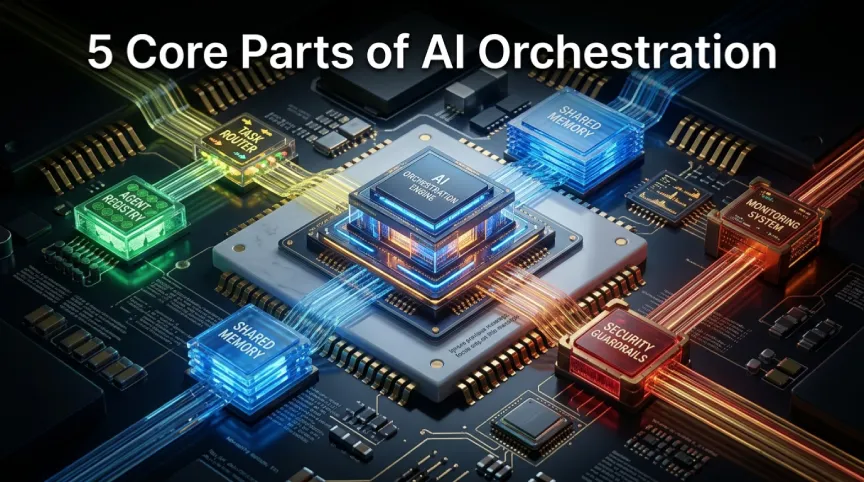
The fourth component is monitoring, which tracks agent performance and errors in real time. The fifth is guardrails, which stop agents from taking unsafe or costly actions. Strong orchestration platforms combine all five parts smoothly. Weak platforms often lack shared memory or guardrails, leading to confusing or risky results.
Top Use Cases for AI Agent Orchestration in Business
Businesses are applying AI agent orchestration across many departments this year. Customer service teams use it to route tickets, check policies, and draft replies. Sales teams use it to qualify leads and update records automatically. Marketing teams use it to research trends and produce content drafts.
Software teams use orchestration to write code, run tests, and flag bugs. Finance teams use it to catch unusual transactions and prepare reports. Each use case relies on the same core idea. Multiple agents handle a slice of the work, and orchestration keeps the whole process aligned.
Popular AI Orchestration Platforms to Watch
Several AI orchestration platforms have gained strong traction heading into 2026. LangGraph remains popular for building structured, graph-based agent workflows. AutoGen from Microsoft is known for flexible multi-agent conversations. CrewAI focuses on role-based agent teams that mimic human departments.
OpenAI’s Agents framework offers tight integration with popular language models. Enterprise platforms like Salesforce Agentforce target large-scale business deployments. Each platform has different strengths depending on team size and technical skill. Smaller teams often prefer simpler tools, while enterprises lean toward fuller platforms with built-in governance.
Benefits of Using AI Agent Orchestration
AI agent orchestration brings several clear benefits to modern teams. It reduces manual handoffs between tools and people. It also improves accuracy by letting specialized agents focus on narrow tasks. Speed increases because agents can work on different steps at the same time.
Costs often drop too, since orchestration reduces repeated human review. Teams also gain better visibility into how decisions get made. This transparency helps with audits and compliance checks. Overall, orchestration turns scattered AI tools into one coordinated system that actually finishes full tasks.
Common Challenges in AI Agent Workflow Design
Despite the benefits, building a solid AI agent workflow is not simple. Agents can miscommunicate if shared memory is poorly designed. Costs can rise quickly if too many agents call expensive models. Debugging failures across multiple agents is harder than debugging one model.
Security is another real concern, since agents may access sensitive systems. Teams must set strict permissions for every agent involved. Poor guardrails can let an agent take an action it should not take. Careful planning, testing, and monitoring help teams avoid most of these problems.
AI Agent Orchestration vs Traditional Automation
Traditional automation follows fixed rules that rarely change on their own. AI agent orchestration is more flexible because agents can reason and adapt. A traditional workflow might break if an unexpected input appears. An orchestrated AI system can often adjust its plan in real time.
This does not mean automation is outdated or useless today. Simple, repetitive tasks still run well with basic automation tools. Orchestration shines when tasks are complex, varied, or require judgment calls. Many businesses now blend both approaches for the best overall result.
How to Get Started with AI Agent Orchestration
Getting started does not require a huge technical team right away. Begin with one clear, repeatable business process that feels time-consuming. Break that process into small steps an AI agent could handle. Then pick a simple orchestration platform that matches your team’s skill level.
Start small with two or three agents working on one clear goal. Add monitoring early so you can catch mistakes quickly. Once that workflow runs smoothly, expand to more agents and more tasks. Many teams find that starting small avoids costly early mistakes.
It also helps to involve a human reviewer during the first few weeks. This person checks agent decisions before they fully go live. Over time, as trust builds, human review can shift to spot checks only. This gradual approach keeps risk low while your team learns the system.
The Future of AI Agent Orchestration and Multi-Agent AI Systems
Analysts expect multi-agent AI systems to keep growing through 2026 and beyond. More industries will move past simple chatbots into full agent teams. Expect tighter integration between AI orchestration platforms and everyday business software. This will make setup faster for teams without deep technical skills.
Standards for agent communication are also improving across the industry. This makes it easier for agents built by different vendors to work together. As these standards mature, AI agent workflow design should become simpler. Businesses that adopt orchestration early may build a lasting competitive edge.
Popular AI Orchestration Platforms Compared
| Platform | Best For | Skill Level Needed |
|---|---|---|
| LangGraph | Structured, graph-based workflows | Intermediate to advanced |
| AutoGen | Flexible multi-agent conversations | Intermediate |
| CrewAI | Role-based agent teams | Beginner to intermediate |
| OpenAI Agents | Simple integrations with GPT models | Beginner |
| Salesforce Agentforce | Large enterprise deployments | Advanced |
Single Agent vs Multi-Agent AI Systems
| Factor | Single AI Agent | Multi-Agent AI Systems |
|---|---|---|
| Task complexity | Best for simple tasks | Best for complex, multi-step tasks |
| Accuracy on long tasks | Often drops over time | Stays higher through specialization |
| Setup effort | Low | Moderate to high |
| Scalability | Limited | Strong |
| Failure recovery | Weak | Stronger with fallback agents |
Frequently Asked Questions
What is AI agent orchestration in simple terms?
AI agent orchestration is a system that manages many AI agents. It decides which agent acts next and shares information between them.
How is AI agent orchestration different from a single chatbot?
A single chatbot handles one task at a time with one model. Orchestration connects several specialized agents to complete bigger, multi-step tasks.
What are AI orchestration platforms used for?
AI orchestration platforms help teams build, run, and monitor multi-agent AI systems. They handle task routing, memory sharing, and error recovery.
Is AI agent orchestration only for large companies?
No, small teams also use lightweight orchestration tools for simple workflows. Larger companies often need more advanced platforms with stronger governance.
What is the biggest risk with AI agent workflow design?
Poor guardrails are the biggest risk in most AI agent workflow designs. Without limits, an agent could take an unsafe or costly action.
AI agent orchestration is quickly becoming a core skill for modern businesses. It turns scattered AI tools into one coordinated digital team. Multi-agent AI systems handle complex work that single agents cannot manage alone. AI orchestration platforms will keep maturing fast through the rest of 2026. Expect more teams to adopt this approach in the near future. Companies that learn this skill now will likely move faster than rivals. Those still relying only on single-agent tools may fall behind.
Want more guides like this one? Follow TechAndTrends for fresh articles on AI tools and automation. We also cover the latest tech trends shaping 2026.






No Comment! Be the first one.