





AI Business Technology: How Companies Use AI to Work Smarter
AI business technology is changing how companies operate every day. See the tools, trends, and strategies driving smarter decisions across every industry in 2026.
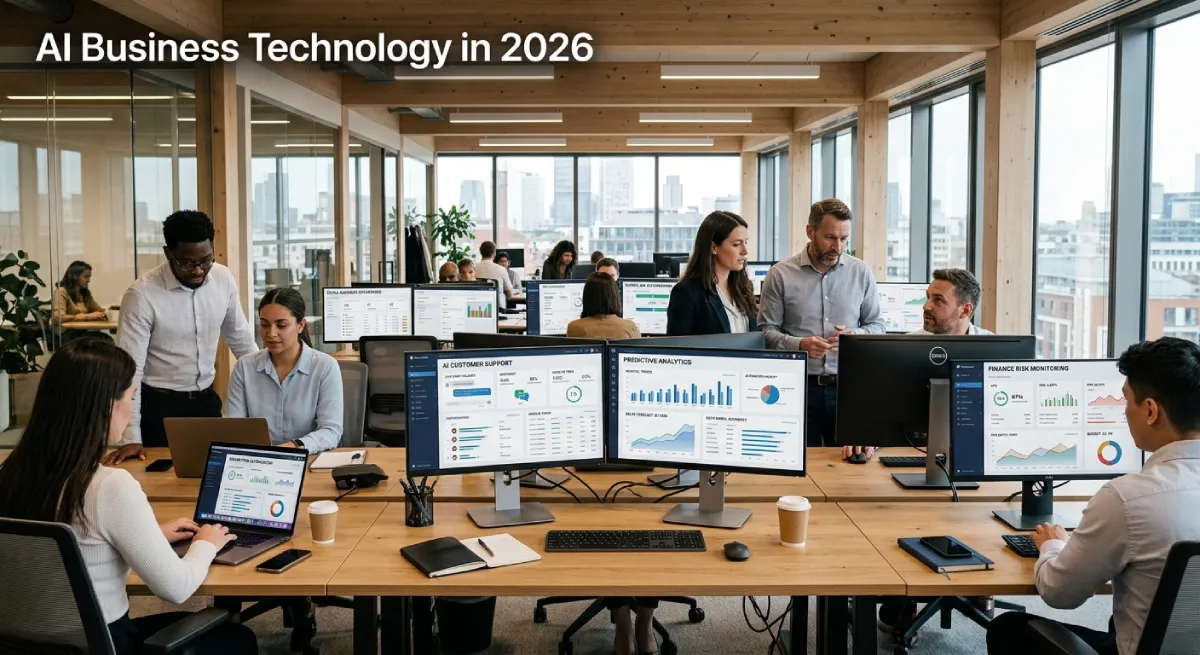
AI business technology is no longer a future concept. It powers daily operations at companies of every size. From automating customer support to predicting sales trends, AI tools now sit at the center of modern business strategy.
Table Of Content
This shift reflects a bigger movement called digital transformation. Companies that once relied on manual processes now use smart systems to save time and money. Understanding how these tools work can help any business owner make better decisions this year.
Key Takeaways
- AI business technology helps companies automate repetitive tasks and save time.
- Predictive analytics gives leaders better data for faster decisions.
- Small businesses now access AI tools once limited to large enterprises.
- Adoption comes with real challenges like cost and data privacy.
- Generative AI and large language models are shaping 2026 trends.
What Is AI Business Technology
AI business technology refers to software and systems that use artificial intelligence to support company operations. This includes tools built on machine learning for business, generative AI for business, and natural language processing tools.
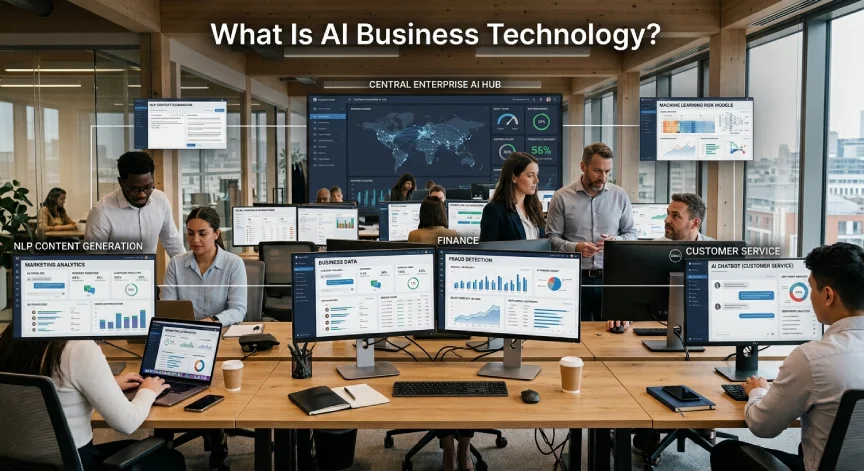
These systems learn from data. They spot patterns humans might miss. Over time, they improve their accuracy and become more useful for daily tasks.
Businesses use these tools across departments. Marketing teams use AI for content and ad targeting. Finance teams use it for fraud detection and forecasting. Customer service teams use chatbots and virtual assistants to handle common questions instantly.
How AI Is Changing Business Operations
AI in business operations touches nearly every department today. It changes how teams plan, execute, and measure their work. The impact shows up most clearly in two areas.
Workflow Automation and Productivity
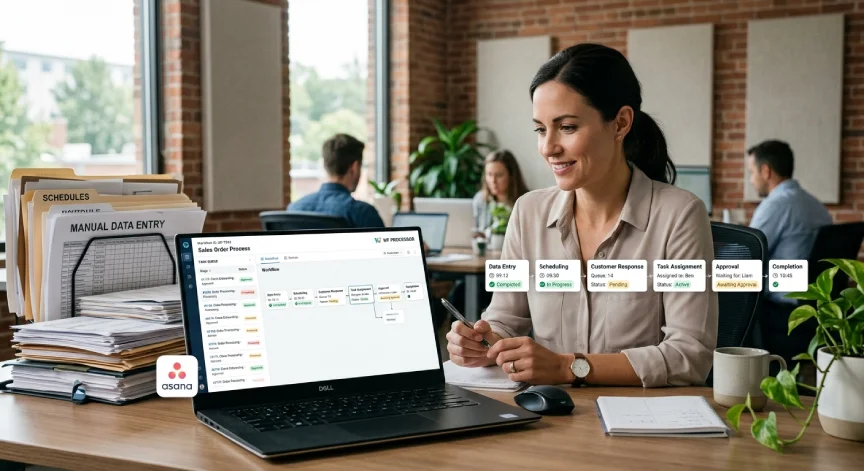
Business automation technology handles repetitive tasks automatically. This includes data entry, scheduling, and basic customer replies. Employees spend less time on routine work and more time on strategy.
Many companies report faster turnaround times after adopting automation tools. Teams complete projects with fewer errors. This boosts overall productivity across the organization.
Predictive Analytics and Data-Driven Insights
Predictive analytics uses historical data to forecast future outcomes. Companies use it to plan inventory, predict customer behavior, and manage risk. This data-driven insights approach removes much of the guesswork from planning.
Retail businesses use predictive tools to avoid stockouts. Finance teams use them to spot unusual spending patterns early. These insights help leaders act before problems grow.
Top AI Tools for Business Owners
Choosing the right tools depends on company size, budget, and goals. Many enterprise AI tools now offer scaled-down versions for smaller teams.
AI-Powered Customer Support Tools
AI-powered customer support tools handle common questions without human staff. They reduce wait times and improve customer satisfaction. Many tools also learn from past conversations to improve future responses.
AI Software for Small Business
AI software for small businesses often focuses on affordability and ease of use. These tools cover marketing, bookkeeping, and scheduling. Small business owners can start with free or low-cost plans before scaling up.
| Tool Type | Best For | Typical Pricing |
|---|---|---|
| AI Chatbot Platforms | Customer support automation | Free to $50 per month |
| Predictive Analytics Software | Sales and inventory forecasting | $100 to $500 per month |
| AI Writing Assistants | Content and marketing copy | $10 to $30 per month |
| AI Bookkeeping Tools | Financial tracking and reports | $15 to $40 per month |
Benefits of AI in Business
The benefits of AI in business go beyond simple time savings. Companies see measurable gains in cost control and customer experience.
AI cost reduction happens through fewer manual errors and lower staffing needs for routine tasks. Risk management improves because AI systems flag unusual patterns instantly. Customer experience automation keeps clients engaged around the clock, even outside business hours.
Smaller companies benefit the most from these gains. They compete with larger firms without matching their budgets. This levels the playing field across many industries.
Challenges of AI Adoption in Companies
AI adoption in companies is not always simple. Cost remains a major barrier for smaller businesses. Advanced tools often require ongoing subscriptions and technical support.
Training staff to use new systems takes time. Employees need guidance to trust and properly use AI outputs. Without proper training, adoption often stalls or fails.
Data privacy concerns also slow adoption in many industries. Companies must protect customer information while using AI tools that process large data volumes. Choosing vendors with strong security practices helps reduce this risk.
AI Business Technology Trends to Watch
Several trends will shape AI business technology through 2026 and beyond. Generative AI for business continues expanding into content creation, product design, and coding support.
Large language models now power more advanced chatbots and virtual assistants. These systems handle complex conversations, not just simple questions. This makes automated support feel more natural to customers.
Industry experts also point to growing use of AI in risk management and compliance. Companies increasingly rely on automated systems to meet regulatory requirements faster and with fewer errors.
Frequently Asked Questions
What is AI business technology?
AI business technology refers to artificial intelligence tools that help companies automate tasks, analyze data, and improve decision-making across departments.
How does AI help businesses grow?
AI helps businesses grow by saving time, reducing costs, and providing data-driven insights that guide smarter strategic decisions.
What are the best AI tools for business owners?
The best AI tools for business owners include chatbot platforms, predictive analytics software, AI writing assistants, and bookkeeping tools suited to their budget and goals.
Is AI technology affordable for small businesses?
Yes. Many AI software options for small businesses offer free or low-cost plans, making adoption accessible even for limited budgets.
What are common challenges with AI adoption in companies?
Common challenges include upfront costs, staff training needs, and data privacy concerns that require careful vendor selection.
What AI trends should businesses watch in 2026?
Businesses should watch generative AI, large language models, and AI-driven risk management as key growth areas this year.
Conclusion
AI business technology now shapes how companies operate, compete, and grow. From workflow automation to predictive analytics, these tools help businesses work faster and smarter. Small businesses and large enterprises alike benefit from this shift toward data-driven decision-making.
Adoption still comes with real challenges like cost and training. Companies that plan carefully and choose the right tools see the strongest results. As generative AI and large language models continue advancing, businesses that adapt early will likely stay ahead of their competition.
Stay updated on AI business technology and more. Visit techandtrends for fresh content across AI, Apps, Business Tech, Gadgets, Gaming, Mobiles, Tech News, and Smart Homes. Subscribe today to get the latest updates delivered straight to your inbox. You can also visit our homepage anytime to explore trending topics and expert guides across every tech category we cover.





No Comment! Be the first one.