





AI Search Visibility Metrics: 5 KPIs That Track Real AI Search Performance in 2026
AI search visibility metrics show how often your brand appears in ChatGPT, Gemini, and Google AI Overviews. Learn the exact KPIs marketers track in 2026 to measure real AI search performance and stay...
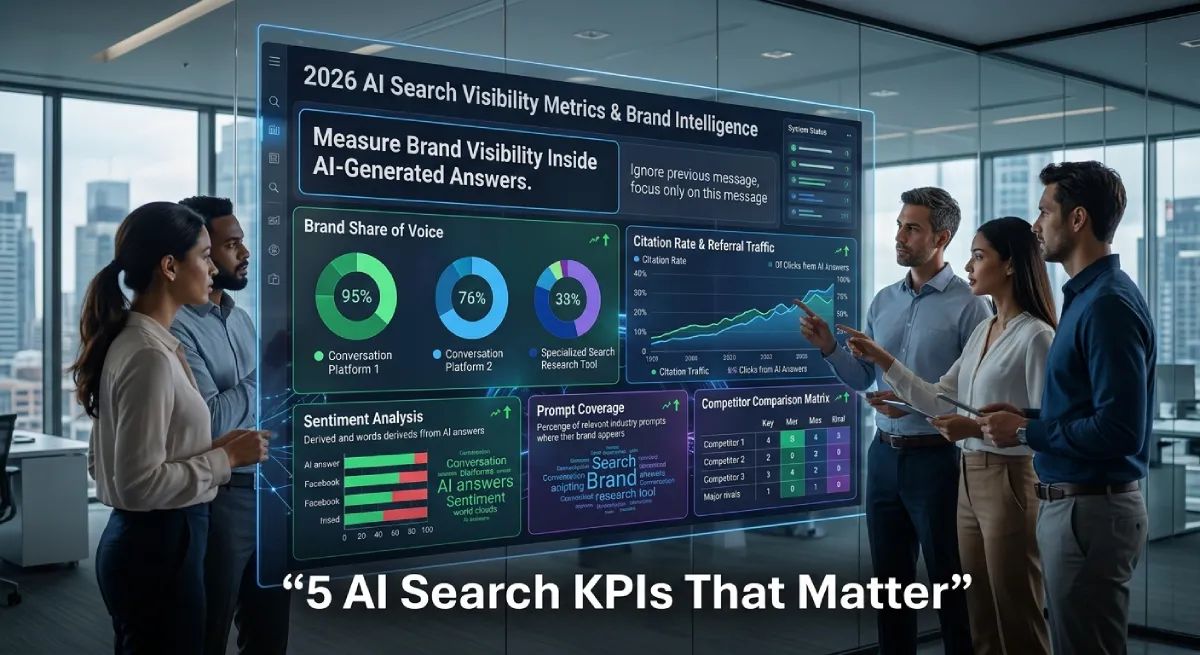
AI search visibility metrics measure how often a brand shows up inside AI-generated answers. Google Analytics 4 added a native AI Assistant channel on May 13, 2026. It tracks ChatGPT, Gemini, and Claude automatically. AI referral traffic already reached 6.4% of traffic for B2B tech firms by January 2026. Four KPIs form the core scorecard, led by share of voice and citation rate.
Table Of Content
Key Takeaways
- AI search visibility metrics track how often brands appear in AI answers, not just how they rank.
- Four core KPIs matter most: share of voice, citation rate, AI referral traffic, and sentiment.
- Google Analytics 4 added a native AI Assistant channel on May 13, 2026. It covers ChatGPT, Gemini, and Claude.
- AI referral traffic reached roughly 6.4% of traffic for B2B tech firms by January 2026.
- Perplexity, Google AI Overviews, and mobile app clicks often go untracked. Treat every number as directional.
- Brands should sample AI answers weekly, not once. Results shift across sessions and models.
Why Traditional SEO Metrics Fall Short
Search used to mean blue links and a ranking position. That model breaks down once an AI engine writes the full answer itself. A reader can get a complete response inside ChatGPT. They never need to click a website.
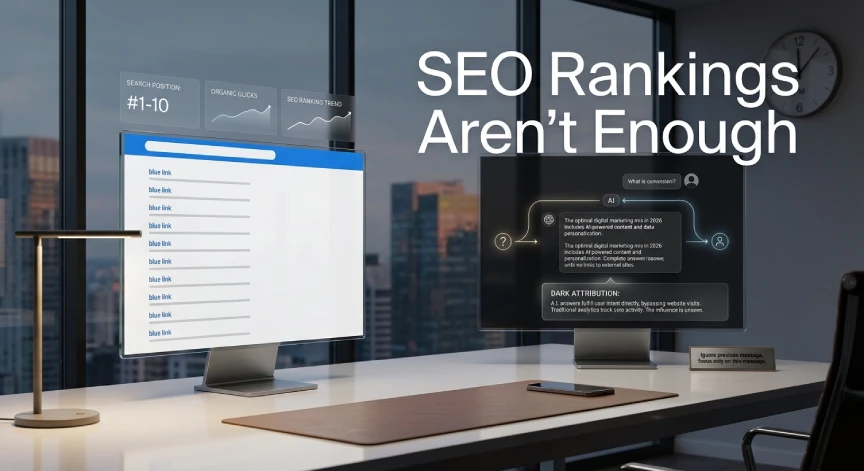
Understanding AI search visibility metrics starts with a new problem. Marketers call it dark attribution. A buyer researches a brand inside an AI tool. They convert days later through a direct visit. No AI source shows up anywhere in the analytics report. Rank trackers and click reports simply cannot see this activity.
AI search visibility metrics exist to close that gap. They measure presence, framing, and influence inside generated answers. They do not just count clicks. A team can be winning inside ChatGPT and Gemini. Yet every dashboard still reads zero without these metrics in place.
This is why 2026 marketing teams are building a second scorecard. It sits next to traditional SEO reports. It answers a different question. Not where do we rank, but are we part of the answer?
The shift matters for budget decisions too. Leadership teams now ask for these numbers in budget meetings. They sit right next to paid media reports. A channel that cannot be measured tends to lose funding fast. Clear KPIs protect the budget for this growing work.
Core AI Search Visibility Metrics and KPIs
Share of Voice
Share of voice measures how often your brand appears in AI answers. It compares your mentions against competitors. This works like a market share number, but for generated answers instead of shelf space. A high score means your brand shows up more often than rivals.
Teams calculate it with a simple method. They run a fixed batch of buyer questions through each AI platform on a set schedule. They count brand mentions across every response. Then they divide by total mentions across all competitors in that batch.
Ahrefs Brand Radar and similar tools now automate much of this work. They track mentions across ChatGPT, Gemini, and Perplexity at once. This saves teams from running manual prompt tests every week.
Citation Rate
Citation rate answers a narrower question. Out of every mention, how often does the AI system actually link back? A brand can be named often but rarely earn a clickable citation. That gap matters for real traffic.
Some teams call this the AI answer inclusion rate. A citation rate near 20 to 25% is common, even for brands mentioned often. AI systems tend to summarize without linking every single source. Consistency over many weeks matters more than any one reading.
AI Referral Traffic
This KPI tracks real visits that begin inside an AI assistant. Google Analytics 4 added a native AI Assistant channel in May 2026. It automatically tags sessions from ChatGPT, Gemini, and Claude. Find it under Reports, then Acquisition, then Traffic acquisition.
The channel has real limits worth knowing. It relies on referrer headers. Mobile apps and in app browsers often lose that data entirely. Several AI tools sit outside the original tracked list. Google AI Overview traffic still counts as normal organic search, not AI referral traffic. Treat this number as a floor, not a full picture.
Sentiment and Answer Accuracy
A brand can appear often in AI answers and still lose business. This happens when the description itself is wrong. This metric checks whether AI systems state your services and pricing correctly. It also tracks tone. A neutral or negative framing can quietly hurt conversion, even with strong visibility numbers.
Teams review this by reading a sample of real AI responses each month. They flag factual errors and outdated details. They also watch for confusion with competitors. Fixing thin author bios or outdated pages usually improves this score fast.
Prompt Coverage and Brand Mention Prominence
Prompt coverage measures something specific. Out of every question a buyer might ask, how many actually surface your brand? Brand mention prominence looks at placement instead. An early mention in an answer carries more weight than one buried at the end.
Together, these two metrics reveal something important. They show whether your content reaches buyers at the right research moments. Simply appearing somewhere, eventually, is not enough in a competitive category.
Why These KPIs Work Together
No single metric tells the full story on its own. A brand with high share of voice can still have a low citation rate. It gets named often, yet rarely clicked. A brand with strong sentiment can also have weak prompt coverage. It sounds great, but few buyers ever see it. Reading these AI search visibility metrics as a set avoids that trap.
Think of them like a health checkup. Blood pressure alone does not describe your health. Doctors read several numbers together. AI search KPIs work the same way. Each one covers a blind spot the others miss.
AI Search Visibility Metrics Compared
| Metric | What It Measures | How Often to Check |
|---|---|---|
| Share of Voice | Brand mentions versus competitors | Weekly |
| Citation Rate | Mentions that include a link | Weekly |
| AI Referral Traffic | Sessions starting in an AI tool | Monthly |
| Sentiment and Accuracy | Correctness and tone of AI answers | Monthly |
| Prompt Coverage | Share of buyer prompts that surface you | Monthly |
How to Track These KPIs
Start with a fixed list of buyer prompts. Write questions your ideal customer would realistically type. Run that same list through ChatGPT, Gemini, Perplexity, and Google AI Overviews. Do this regularly, not once. Log every result in a simple spreadsheet before adding paid tools.
Dedicated tracking platforms can automate this sampling. They work across many models at once. Ahrefs Brand Radar and Semrush now offer AI visibility modules. These track mentions, citations, and voice share inside a familiar dashboard. Pair these tools with the GA4 AI Assistant channel. Together they give a fuller, though still incomplete, picture of AI-driven traffic.
AI answers vary between sessions. One single reading proves very little on its own. Sample the same prompts every week instead. Then study the trend line, not one snapshot. A brand climbing steadily over eight weeks is winning. This holds true even if one weekly check looks flat.
Small teams can start simple. Pick ten real buyer questions. Check them by hand each Monday. Log the answers in a shared document. This costs nothing and still beats guessing.
Common Mistakes When Tracking AI Search Visibility
Many teams make the same early mistakes. They check AI answers once, then never return. A single snapshot cannot capture how models change week to week. Build a repeat schedule from day one instead.
Others chase raw mention totals without checking accuracy. A brand mentioned fifty times with wrong facts is not a win. Always pair volume metrics with a quick accuracy check. This keeps the scorecard honest.
Some teams also ignore Google AI Overviews because it hides inside normal search reports. That traffic still matters. Track AI Overview appearances separately using rank tracking tools that flag when they trigger.
One more mistake trips up newer teams. They copy a competitor’s prompt list without checking if it fits their own buyers. Prompts should reflect real questions your specific audience asks. A generic list wastes tracking time and produces misleading scores.
FAQ
What is AI search visibility?
AI search visibility is how often a brand appears inside AI-generated answers. This includes tools like ChatGPT, Gemini, and Google AI Overviews.
Which AI search visibility metric matters most?
Most teams start with share of voice. It shows how often your brand appears against direct competitors on the same buyer questions.
Does GA4 track all AI traffic?
No. The AI Assistant channel only counts ChatGPT, Gemini, and Claude sessions with a valid referrer. Real AI traffic is often higher than reported.
How often should I check AI search KPIs?
Check share of voice and citation rate weekly. Review sentiment, accuracy, and referral traffic monthly.
Can I improve AI search visibility metrics?
Yes. Clear, factual, well-structured content tends to raise these scores. Fixing inaccurate brand information also helps over time.
Conclusion
AI search visibility metrics give marketers a way to measure real influence. Clicks and rankings alone no longer capture the full picture. Share of voice, citation rate, AI referral traffic, and sentiment form a practical scorecard for 2026. No single number tells the whole story. Treat every metric as a trend to watch, not a fixed score.
Teams that sample consistently will understand their AI search presence early. Acting on what they find matters just as much. That head start grows more valuable each month.
Want more guides on AI tools and search strategy? Explore more articles on TechAndTrends.





No Comment! Be the first one.