





How Do Apps Make Money in 2026? The Complete Guide to Every Revenue Model
Free apps are not really free. Behind every download sits a business model built to earn revenue. This guide breaks down how do apps make money in 2026, covering ads, subscriptions, purchases, data,...
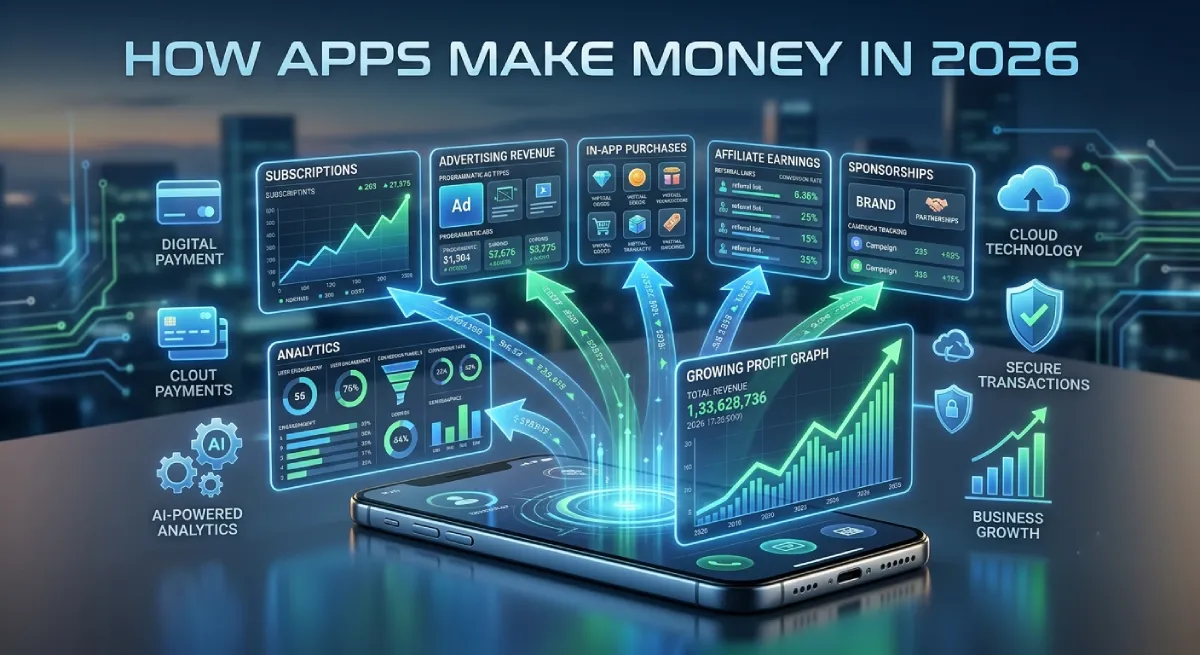
You open an app. It costs nothing to download. Yet somehow, the company behind it pays engineers, servers, and marketing teams. So how do apps make money without charging you a cent upfront?
Table Of Content
- Why Free Apps Still Need a Business Model
- The Main Ways Apps Make Money
- Hybrid Monetization Is Winning in 2026
- How Developers Choose the Right Model
- How App Store Fees Affect Developer Revenue
- Comparison of Popular App Monetization Models
- Common Mistakes That Hurt App Revenue
- Frequently Asked Questions
- Final Thoughts
The answer is more layered than most people expect. Modern apps rarely rely on one income source. Instead, they blend several models to build steady, scalable revenue.
In 2026, the global app economy has grown into a massive industry. Consumer spending on apps reached roughly 540 billion dollars in 2025. Mobile advertising alone brought in over 380 billion dollars that same year. This guide explains every major method apps use to turn users into revenue.
Why Free Apps Still Need a Business Model
A free download does not mean a free product. Every app has hosting costs, update cycles, and support teams. Someone always pays for that infrastructure.
Developers know that charging upfront scares away most users. Studies show people prefer trying an app before paying anything. This is why free access paired with smart monetization became the industry standard.
The real question is not whether an app makes money. It is which method fits its audience and purpose best. The right fit determines long-term growth and user trust.
The Main Ways Apps Make Money
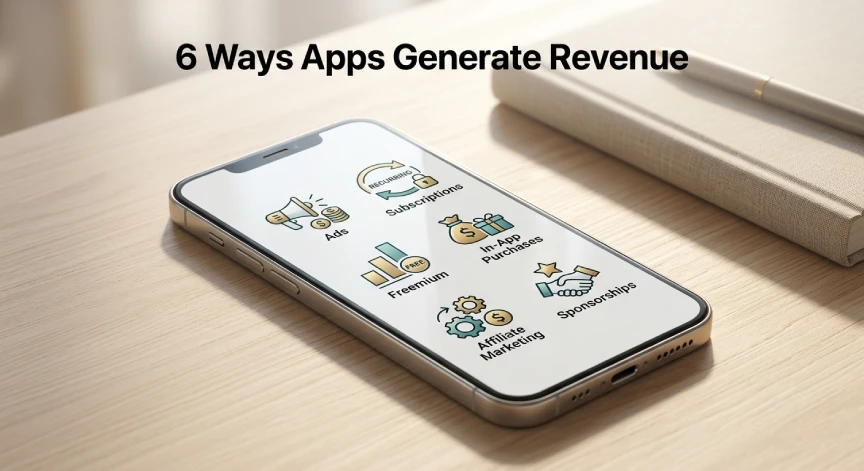
In-App Advertising
Advertising is the most common way free apps generate income. Developers place banner ads, video ads, or native ads inside the app. Every impression, click, or completed view earns a small payout.
Rewarded video ads have become especially popular in 2026. Users watch a short clip in exchange for in-game currency or extra features. This format keeps engagement high while still generating ad revenue.
Ad-based apps typically need large user bases to earn meaningful income. A single ad might pay fractions of a cent. Scale is what turns pennies into real profit.
In-App Purchases
In-app purchases let users buy digital goods inside the app itself. This includes game currency, power-ups, filters, or extra storage. Gaming apps rely heavily on this model.
Mobile games generate far more revenue per paying user than most other app categories. Paying players in games often spend significantly more annually than users of non-gaming apps. This gap shows why gaming studios invest so heavily in purchase design.
The key to successful in-app purchases is timing. Offers that appear at the right emotional moment convert far better. A well-placed upgrade prompt can outperform a random popup by a wide margin.
Subscription Models
Subscriptions have become one of the fastest-growing monetization methods in 2026. Users pay weekly, monthly, or yearly fees for premium access. This model works well for productivity, fitness, streaming, and education apps.

Subscription revenue grew dramatically compared to previous years, according to recent industry tracking. This shift reflects a broader trend toward predictable recurring income. Developers prefer subscriptions because they smooth out cash flow over time.
However, subscription fatigue is a real challenge. Users now juggle many recurring charges across different apps. Successful apps combat this by offering clear value and flexible pricing tiers.
Freemium Models
Freemium apps offer basic features for free and charge for advanced ones. This model dominates productivity tools, cloud storage, and creative software. Users get enough value to stay engaged before hitting a paywall.
The freemium model works because it lowers the barrier to entry. People try the product risk-free first. Once they depend on it, upgrading feels like a natural next step. It rarely feels like a hard sell.
Around seventy percent of mobile apps now use some version of freemium pricing. Gaming apps show even higher adoption of this approach. This confirms freemium remains a dominant strategy across categories.
Affiliate Marketing and Partnerships
Some apps earn money by promoting other companies’ products or services. When a user completes a purchase through an affiliate link, the app earns a commission. Shopping, travel, and finance apps use this method often.
Affiliate marketing works best when the recommendation feels natural. Users trust apps that suggest genuinely useful products. This trust translates into higher click-through and conversion rates.
Only a small share of apps rely primarily on affiliate income. Yet those that do often see strong returns from a focused user base. Niche apps with loyal audiences benefit the most from this model.
Data Monetization and Insights
Some apps generate revenue by analyzing anonymized user behavior. This data helps brands understand trends, preferences, and market gaps. Privacy regulations in 2026 have made this practice far more transparent than before.
Users must now give clear consent before their data gets shared. Apps that handle this responsibly build stronger long-term trust. Those that do not risk fines and reputation damage.
Data monetization rarely works alone. It usually supports other revenue streams rather than replacing them entirely. Most apps treat it as a background layer, not a headline strategy.
Sponsorships and Branded Content
Apps with strong niche audiences often attract sponsorship deals. Brands pay to appear inside app content, challenges, or features. Fitness, gaming, and lifestyle apps use this method frequently.
Sponsorships work best when the brand fits the app naturally. A running app partnering with a shoe brand feels authentic. Mismatched sponsorships can damage user trust quickly.
Hybrid Monetization Is Winning in 2026
Most successful apps today do not rely on a single model. They blend ads, subscriptions, and purchases into one hybrid strategy. This approach protects revenue if one stream underperforms.

Industry data shows hybrid models can lift lifetime value significantly compared to single-stream approaches. Combining ads with subscriptions lets free users generate some income too. Meanwhile, paying users unlock a fully ad-free experience.
This flexibility is why hybrid monetization has become the default strategy. Developers test different combinations to find what fits their audience. The goal is balancing user experience with sustainable income.
How Developers Choose the Right Model
Category matters more than trend when choosing a strategy. Gaming apps lean toward purchases and rewarded ads. Productivity apps often favor subscriptions instead.
Audience behavior also shapes the decision. Younger users often prefer watching ads over paying directly. Professional users typically accept subscription costs for reliable, ad-free tools.
Testing remains essential throughout an app’s life. Developers experiment with pricing, ad placement, and paywall timing. Small adjustments can significantly change overall revenue without changing the core product.
How App Store Fees Affect Developer Revenue
App stores take a share of every digital transaction made inside an app. Apple and Google typically charge a commission on purchases and subscriptions. This fee can reach up to thirty percent on many transactions.
Smaller developers often qualify for reduced commission rates. Programs exist that lower fees for apps earning under a set yearly threshold. This helps early-stage developers keep more of their earnings.
These fees directly influence pricing decisions across the industry. Some apps raise prices slightly to offset the commission. Others move certain purchases to their own websites where fees do not apply.
Understanding these costs matters when evaluating any monetization strategy. A subscription that looks profitable on paper may earn less after fees. Smart developers always factor platform costs into their revenue plans.
Comparison of Popular App Monetization Models

The table below compares common models used across the app economy.
| Model | Best For | Revenue Predictability | User Friction |
|---|---|---|---|
| In-App Ads | Free, high volume apps | Low | Low |
| In-app Purchases | Games and entertainment | Medium | Medium |
| Subscriptions | Productivity and streaming | High | Medium |
| Freemium | Software and tools | Medium | Low |
| Affiliate Marketing | Shopping and finance apps | Low | Very Low |
| Sponsorships | Niche audience apps | Medium | Low |
Common Mistakes That Hurt App Revenue
Many developers add too many ads too early. This annoys users before they see the app’s real value. High ad density often leads to quick uninstalls.
Another mistake is copying a competitor’s pricing without testing it first. What works for one audience may fail for another. Local pricing, currency, and cultural expectations all affect conversion.
Ignoring user feedback around monetization is equally risky. Sudden paywalls or aggressive upsells frustrate loyal users fast. Listening to complaints early prevents larger churn later.
Frequently Asked Questions
How do free apps make money without charging users?
Free apps often earn through advertising, affiliate links, or optional in-app purchases. Some also use freemium models with paid upgrades. Many combine several methods for stability.
What is the most profitable app monetization model?
There is no single best model for every app. Gaming apps often profit most from in-app purchases. Productivity and streaming apps typically profit more from subscriptions.
Do all apps use ads to make money?
No, many apps skip ads entirely. Subscription-based tools and premium software often avoid ads completely. This keeps the user experience cleaner for paying customers.
Is data monetization still legal in 2026?
Yes, but only with proper user consent and transparency. Regulations now require clear opt-in permissions. Apps that ignore these rules face legal and reputational risk.
Can a small app survive without huge downloads?
Yes, through niche targeting and loyal user bases. Affiliate marketing and sponsorships work well for smaller audiences. Focused apps often earn more per user than broad ones.
Final Thoughts
Understanding how apps make money reveals why free is rarely really free. Every tap, ad view, and upgrade supports a larger business model. The smartest apps blend multiple streams for lasting stability.
As 2026 continues, hybrid monetization will likely keep growing. Users expect flexibility, and developers need predictable income. Apps that balance both will lead the next wave of growth.
If you are building or evaluating an app, study its revenue model closely. The method it chooses says a lot about its long-term strategy. Smart monetization is not just about profit. It is about building trust that keeps users coming back.






No Comment! Be the first one.