





Smart Rings vs Smartwatches in 2026: Full Comparison Guide for Health, Sleep, and Fitness Tracking
Choosing between a smart ring and a smartwatch in 2026? Here is a clear, research backed comparison of battery, accuracy, price, and daily comfort.
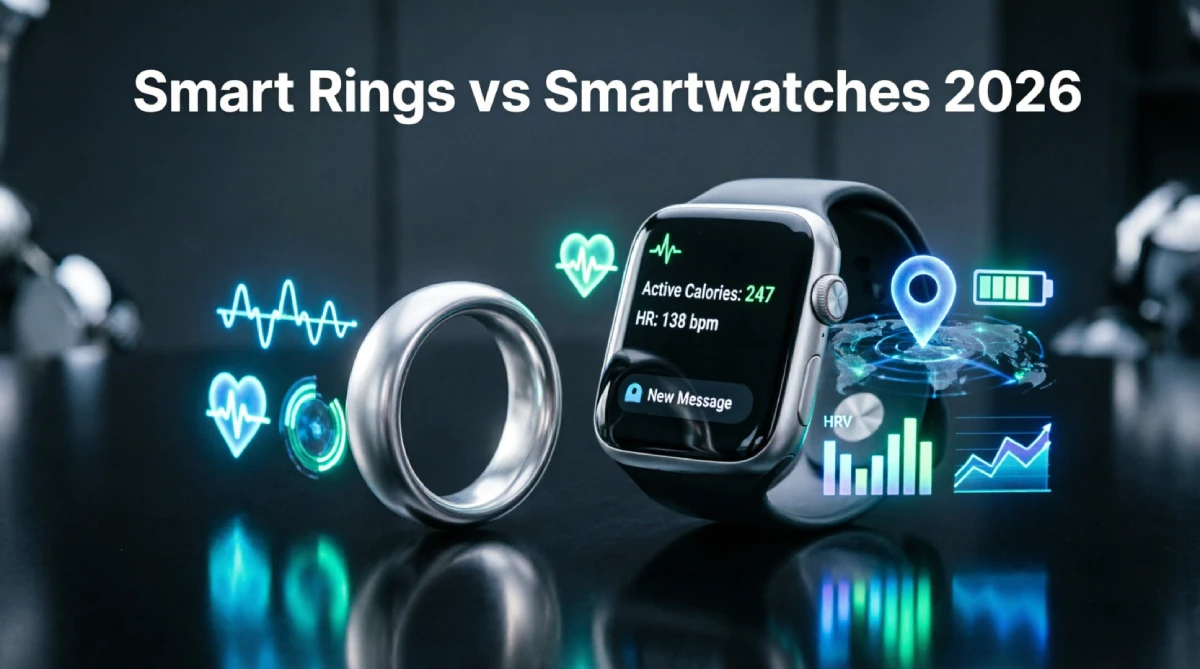
Smart Rings vs Smartwatches: Who wins? Smart rings win on comfort and battery life. Smartwatches win on features and daily interaction. If you want quiet, accurate sleep tracking, choose a ring. If you want notifications, apps, and workout screens, choose a watch.
Table Of Content
- What Is a Smart Ring
- What Is a Smartwatch
- Smart Rings vs Smartwatches: Key Differences
- Battery Life Compared
- Sleep and Health Tracking Accuracy
- Price and Subscription Costs
- Comfort and Everyday Wear
- Fitness and Workout Tracking
- Notifications, Apps, and Daily Functionality
- Which One Should You Buy
- 2026 Market Trends
- Frequently Asked Questions
- Conclusion
- Stay Updated on the Latest Wearable Technology
Many people now wear both devices together. The ring handles nighttime recovery data. The watch handles daytime activity and communication. This combined setup is becoming common among serious health trackers in 2026.
What Is a Smart Ring
A smart ring is a small device worn on your finger. It has no screen and no buttons. It quietly collects data like heart rate, sleep stages, and body temperature through the night.
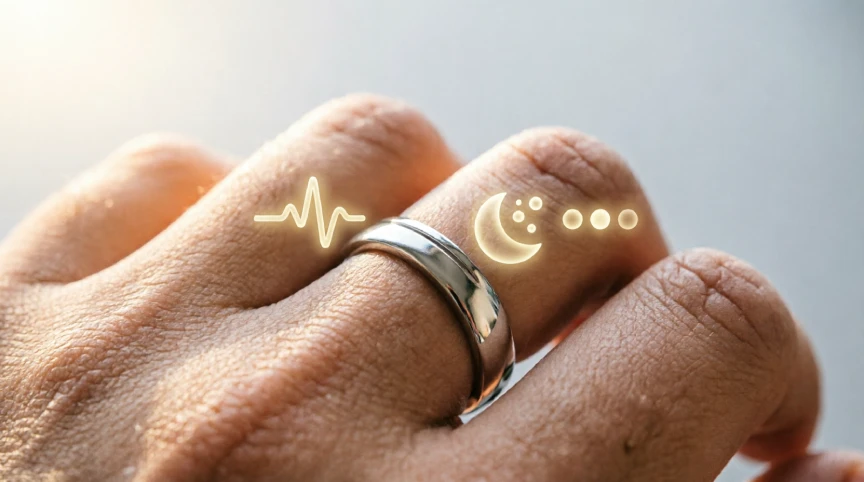
Rings connect to a phone app using Bluetooth. The app shows your daily readiness score, sleep quality, and recovery trends. These devices are typically minimalist, often lacking a screen, and focus on discreet data collection.
Most people forget they are even wearing one. That is the entire point of the design. A smart ring blends into daily life without demanding attention.
What Is a Smartwatch
A smartwatch sits on your wrist and includes a full display. It shows messages, calls, weather, and workout stats in real time. Many models also support mobile payments and voice assistants.
Smartwatches track heart rate, sleep, and blood oxygen just like rings do. Some models even offer ECG readings, providing users with a detailed overview of their physical condition. Built-in GPS is also common, which helps runners and cyclists map routes accurately.
A smartwatch acts like a small extension of your phone. You can reply to texts, control music, and check calendars from your wrist. This makes it a stronger all-in-one choice for daily productivity.
Smart Rings vs Smartwatches: Key Differences
| Feature | Smart Ring | Smartwatch |
|---|---|---|
| Battery life | 4 to 9 days | 1 to 2 days |
| Screen | None | Full display |
| Notifications | No | Yes |
| GPS tracking | Rare | Common |
| Sleep accuracy | Very high | High |
| Workout tracking | Basic | Advanced |
| Average price | 250 to 400 dollars | 150 to 500 dollars |
| Subscription fee | Sometimes required | Rarely required |
| Comfort for sleep | Excellent | Good |
Battery Life Compared
Battery life is one of the clearest differences between these two wearables. Smart rings hold a clear advantage here because their small size uses far less power than a screen based device. Many rings run for four to nine days on one charge.
Smartwatches usually need daily or every other day charging. The bright screen and constant connectivity drain the battery fast. This becomes a real hassle for people who also want overnight sleep data, since the watch is often charging while you sleep.
If uninterrupted tracking matters most to you, this single factor may decide your purchase. A ring never needs to come off for a full week. A watch often forces a choice between charging and continuous wear.
Sleep and Health Tracking Accuracy
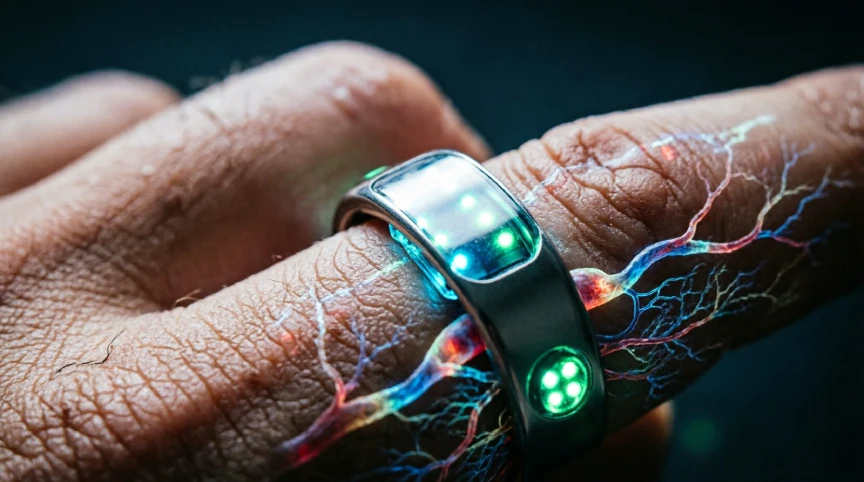
Rings tend to produce more accurate sleep data than watches. This comes down to where the device sits on your body. Smart rings benefit from the finger’s denser capillary network, which provides a cleaner PPG signal at rest.
Research backs this up with real numbers. Studies have shown the Oura Ring achieves 79% four-stage sleep classification accuracy against polysomnography, outperforming wrist-worn devices in the same comparison. That is a meaningful gap for anyone serious about sleep and recovery tracking.
Heart rate variability readings follow a similar pattern. Finger-based sensors generally produce cleaner HRV signals than wrist sensors. This matters for athletes and anyone closely monitoring stress and recovery.
Price and Subscription Costs
Sticker price alone does not tell the full story. Most smartwatches land somewhere between 150 and 500 dollars, while smart rings typically fall in the 250 to 400 dollar range. That gap looks small at first glance.
The real cost difference shows up later. Many smart rings lock full health insights behind a monthly subscription fee, often $ 10 to $ 20 per month, which adds up to $ 240 per year on top of the device itself. Always check subscription terms before buying any ring.
Not every brand charges these fees. Some newer models have moved toward a subscription-free approach, including RingConn, which includes full health data access with no ongoing fee. This makes long-term ownership costs much easier to predict.
Comfort and Everyday Wear
Comfort is where rings clearly stand out. A ring weighs only a few grams and sits flush against your finger. Most users report forgetting they have one on within a few days.
Watches are noticeably bulkier by comparison. Some people find wrist devices uncomfortable during sleep or intense exercise. Skin irritation and sweat buildup are also more common complaints with watches than with rings.
Both devices are usually water-resistant enough for swimming and showering. Rings are typically water-resistant and rated for swimming, and most smartwatches match this, but the ring’s smaller profile makes it easier to forget you’re even wearing it. For pure daily comfort, the ring format has a clear edge.
Fitness and Workout Tracking

This is where smartwatches take a firm lead. A watch gives you real-time heart rate on screen during a workout. It also offers GPS mapping, sport-specific modes, and audio coaching cues.
Rings struggle here by design. Smart rings do not provide real-time heart rate display, GPS tracking, or on-wrist workout guidance, and they struggle with heart rate accuracy during high-intensity or grip-heavy exercises. A ring simply was not built for active training sessions.
If you lift weights, run, or cycle seriously, a watch or chest strap will serve you better. Save the ring for passive tracking outside of workouts. Many athletes now use both devices for this exact reason.
Notifications, Apps, and Daily Functionality
A smartwatch functions like a mini smartphone on your wrist. You get texts, calls, calendar alerts, and app notifications instantly. Many models also support contactless payments and offline music storage.
Rings intentionally skip all of this. Smart rings intentionally avoid these features to stay focused on health, unlike devices such as the Samsung Galaxy Watch, which are designed for productivity and connectivity. That focus is a feature for some buyers and a dealbreaker for others.
Think about how often you check notifications during the day. If constant connectivity matters to you, a watch will feel far more useful. If you prefer fewer digital interruptions, the ring’s silence becomes an advantage.
Which One Should You Buy
Choose a smart ring if you want quiet, accurate, all-day health tracking. It suits people who value comfort, long battery life, and minimal screen time. Sleep-focused users and those who dislike wrist devices will benefit most.
Choose a smartwatch if you want an all-in-one wearable. It suits people who train seriously, need GPS, or rely on notifications throughout the day. Busy professionals and active athletes tend to prefer this format.
Many wellness-focused users now own both devices at once. If you want the most comprehensive health data, wearing both is the strongest approach, using the ring for nighttime recovery and the watch for daytime activity and workouts. This combination gives you the strengths of each device without the weaknesses.
2026 Market Trends
The smart ring category is growing fast this year. Oura launched the Oura Ring 5 in May 2026 with a design about 40% smaller than the previous generation, while still keeping a battery life of six to nine days. The company also added AI-powered cardiovascular monitoring tools.
Consumer preference is shifting toward smaller devices overall. About 58% of wearable users now prefer smaller, less noticeable devices, such as rings, over traditional wrist-based wearables. This trend suggests rings will keep gaining ground on watches in the coming years.
Smartwatches are not standing still either. New models continue to add health sensors once found only in rings. Expect the line between these two categories to keep blurring through 2026 and beyond.
Frequently Asked Questions
Is a smart ring more accurate than a smartwatch?
For sleep and HRV tracking, yes, a smart ring is often more accurate. For real-time workout data and GPS, a smartwatch performs better.
Do smart rings need a monthly subscription?
Some brands charge a monthly fee for full health insights. Others, like RingConn, include all data access with no extra cost.
Can a smart ring replace a smartwatch completely?
Not for active training or daily notifications. A ring works best as a sleep and recovery tool, not a full smartwatch replacement.
Which lasts longer, a smart ring or a smartwatch battery?
Smart rings typically last four to nine days per charge. Most smartwatches need charging every one to two days.
Are smart rings good for weight lifting or running?
Not really. Rings lack real-time heart rate display and GPS, making them weaker for active workout tracking than a smartwatch.
Conclusion
There is no single winner in the smart rings vs smartwatches debate. Each device serves a different lifestyle and health goal. Your daily habits, not the spec sheet, should guide your final choice.
If comfort and sleep accuracy matter most, pick a ring. If features and daily interaction matter most, pick a watch. And if your budget allows it, wearing both may give you the clearest picture of your health yet.
Stay Updated on the Latest Wearable Technology
Wearable technology is evolving faster than ever, with smarter rings, advanced smartwatches, and AI-powered health features launching every year. Subscribe to TechAndTrends for expert comparisons, in-depth reviews, buying guides, and the latest innovations in wearable tech. Join thousands of readers who stay informed and choose the right gadgets with confidence.






No Comment! Be the first one.