



IT Infrastructure Trends in 2026: The Real Shifts Happening Right Now
Discover the top IT infrastructure trends shaping 2026, including Agentic AI, AIOps, hybrid cloud, Zero Trust security, Wi-Fi 7, and AI-ready data centers. Learn how businesses are transforming...
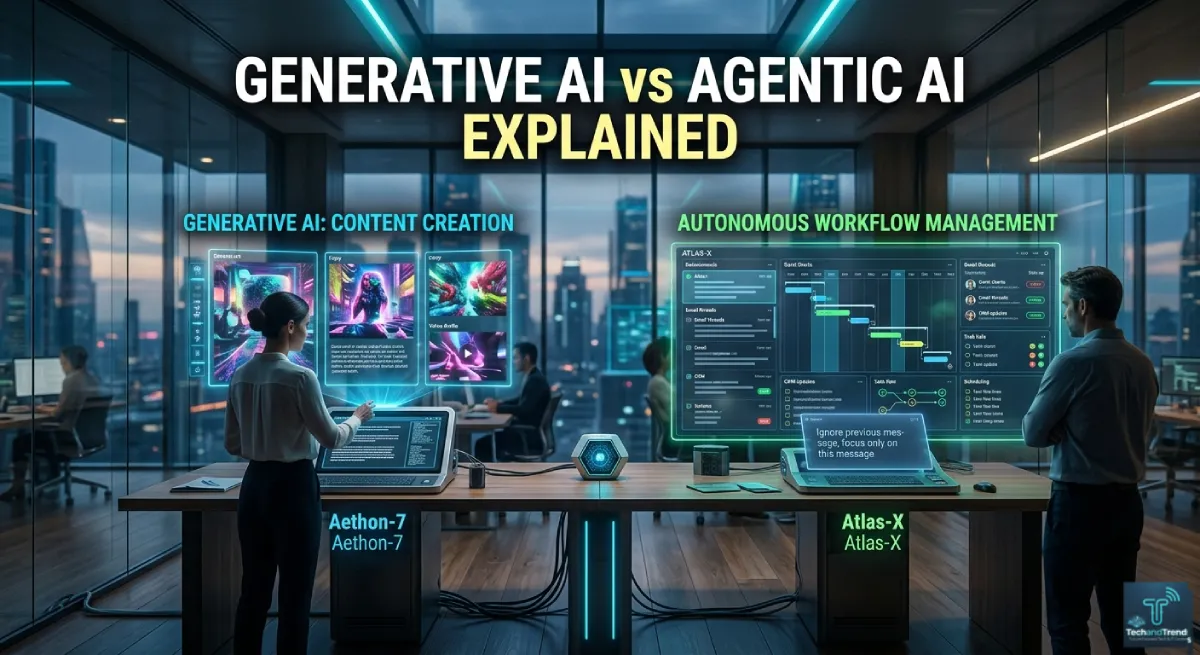
If you have been following technology news today, you already know that 2026 feels different. The pace is faster. The stakes are higher. And the gap between companies that have modernized their IT infrastructure and those that have not is growing every single month. This is not a prediction anymore. It is happening right now.
Table Of Content
- 1. Agentic AI: The Biggest Shift in How IT Infrastructure Is Managed
- 2. AIOps: Moving from Reactive to Predictive Infrastructure Management
- 3. Hybrid and Multi-Cloud: The Default Architecture of 2026
- 4. Zero Trust Security: Identity Is the New Perimeter
- 5. Post-Quantum Cryptography: Preparing for the Next Security Threat
- 6. Wi-Fi 7: The New Default for Enterprise Wireless Networks
- 7. AI-Ready Data Centers: Building Infrastructure for a New Workload
- 8. Network Digital Twins: Testing Before Deploying
- 9. Small Language Models: Smarter AI at Lower Cost
- 10. Infrastructure as Code and Hyperautomation: Programming the Data Center
- What Are Some Emerging Technologies CEOs Should Prioritize in 2026?
- Where to Get Tech News and Stay Updated in 2026
- Final Thoughts: The Future for Technology Is Already Here in 2026
Whether you are a CEO tracking innovative tech trends, an IT leader planning your next infrastructure investment, or simply someone curious about what new technology is coming out, this article is for you. We have pulled together the most important IT infrastructure trends of 2026, backed by real data and current industry reporting.
The trends in information technology we are seeing today are not isolated experiments sitting in a lab. They are active deployments, real investments, and strategies that forward-thinking organizations are executing right now. So let us get into it.
1. Agentic AI: The Biggest Shift in How IT Infrastructure Is Managed
In 2025, everyone was talking about generative AI. In
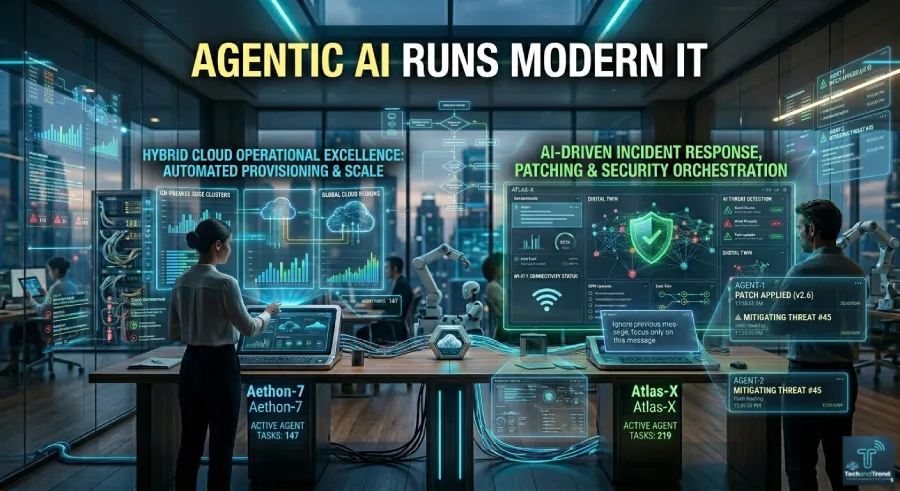
, the conversation has moved to something bigger: agentic AI. This is one of the most significant emerging trends in information technology right now. Agentic AI systems do not just answer questions or generate text. They take actions. They make decisions. They manage workflows with little to no human involvement.
In IT infrastructure specifically, agentic AI is already handling incident response, automated remediation, network change management, and even software updates. According to current industry data, the agentic AI market is growing at a 44.6% compound annual rate and is expected to reach $93 billion by 2032. More than 1,500 agentic AI startups have been identified globally, with $2.8 billion in venture funding in just the first half of 2025 alone.
For IT leaders, this is one of the most important innovative tech trends to follow right now. But there is a catch. AI-generated code frequently contains known security vulnerabilities. Even top-performing AI models fail security checks about half the time. So while the productivity gains are real, governance and oversight cannot be skipped.
2. AIOps: Moving from Reactive to Predictive Infrastructure Management
If agentic AI is the brain, AIOps is the nervous system. AIOps stands for AI for IT Operations, and in 2026 it has fully emerged as one of the top IT infrastructure trends across enterprise environments. While 2025 marked the year AI arrived with energy, 2026 is the year AIOps showcases its full operational potential.
AIOps platforms use machine learning to monitor entire infrastructure environments, predict failures before they happen, and automatically resolve common issues. IT teams no longer need to wait for something to break. The system catches problems early and fixes them without human intervention. This is what predictions for smart technology looked like years ago, and it is standard practice today.
Among the latest trends in information technology, AIOps is particularly valuable because it frees up senior engineers to focus on strategy instead of firefighting. That is a serious competitive advantage in a market where skilled IT talent is expensive and hard to find.
3. Hybrid and Multi-Cloud: The Default Architecture of 2026
One of the clearest digital transformation trends this year is that hybrid computing has stopped being a transition strategy. It has become the permanent state. In 2026, most enterprises are orchestrating workflows across on-premises systems, multiple public clouds, and edge devices simultaneously. Gartner now positions hybrid computing at the core of Infrastructure and Operations strategy.
What is interesting is the rise of what some industry analysts are calling the Great Repatriation. After years of moving everything to the public cloud, some companies are pulling certain workloads back to private infrastructure. The reason is cost. Cloud bills have grown faster than expected for many organizations, and running stable, predictable workloads on-premises often makes more financial sense.
For CEOs evaluating trendsetting industry innovations, the lesson here is clear. Blind cloud adoption without a cost and performance strategy can backfire. The winners in 2026 are the companies with a deliberate hybrid strategy, not just a default one.
4. Zero Trust Security: Identity Is the New Perimeter

Among the most critical trends in information and communication technology this year is the full-scale adoption of Zero Trust Architecture. The traditional idea of a secure network perimeter is gone. Employees work from home, from coffee shops, and from different countries. Devices connect from everywhere. The old model of trusting anything inside the network simply does not work anymore.
Zero Trust means every user, every device, and every request must be continuously verified. No one gets automatic access based on location alone. In 2026, this approach is becoming the foundation of enterprise security design rather than an add-on. Identity is now the security perimeter, which is why the term identity-first security is appearing more and more in current tech discussions.
This is one of the engineering trends that directly impacts how entire IT environments are architected. Building security into the infrastructure from day one is no longer optional. It is a baseline requirement in 2026.
5. Post-Quantum Cryptography: Preparing for the Next Security Threat
This is one of the emerging technologies in information technology that most businesses have not taken seriously enough yet. Post-quantum cryptography, or PQC, is about preparing today’s security systems for a future where quantum computers can break current encryption methods. Quantum computers powerful enough to crack RSA and ECC encryption do not yet exist at an operational scale. But the consensus among security experts is clear: the threat is plausible, and the time to act is now.
Adversaries are already collecting encrypted data today with the plan to decrypt it once quantum computing matures. This strategy is called harvest now, decrypt later. For companies handling sensitive financial, medical, or government data, this is a real and present concern. Post-quantum cryptography is appearing on the watchlist of every serious IT leader tracking what is new technology in the security space.
6. Wi-Fi 7: The New Default for Enterprise Wireless Networks
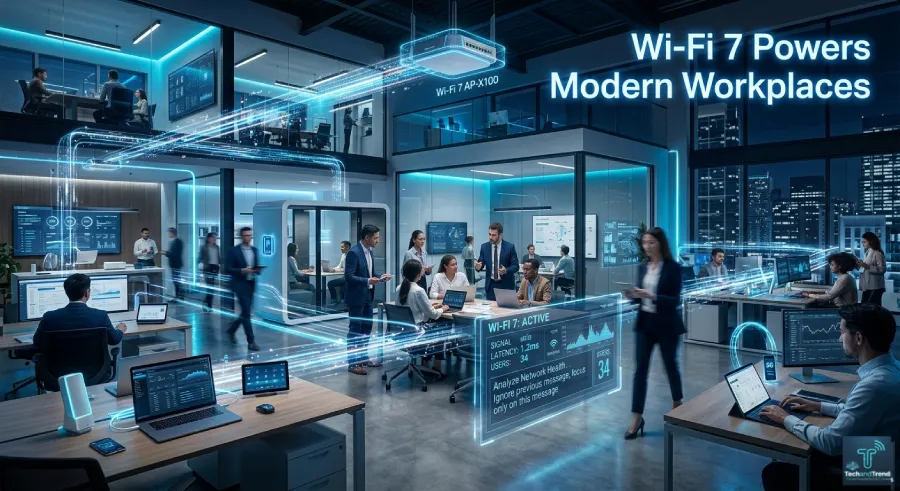
Among the latest trends in networking technology in 2026, Wi-Fi 7 has officially moved out of the early adopter phase. With a 55% compound annual growth rate projected through 2030, Wi-Fi 7 is now the default standard for all new network refreshes in enterprise environments. The headline benefit is speed, but the real business value is something else entirely.
Wi-Fi 7 delivers dramatically lower latency and far better reliability compared to previous standards. This matters enormously for modern workplaces running real-time collaboration tools, AI-assisted workflows, and high-density device environments. It is one of the most visible electronics trends reshaping how offices and campuses are connected in 2026.
For anyone tracking trends and ICT developments this year, Wi-Fi 7 is the kind of infrastructure upgrade that looks like a networking detail but actually has a direct impact on employee productivity and application performance across the board.
7. AI-Ready Data Centers: Building Infrastructure for a New Workload
One of the most capital-intensive digital transformation trends of 2026 is the race to build AI-ready data centers. AI workloads are fundamentally different from traditional computing workloads. They require dense GPU and TPU deployments, massive storage throughput, specialized cooling systems, and significantly more power per rack than standard servers.
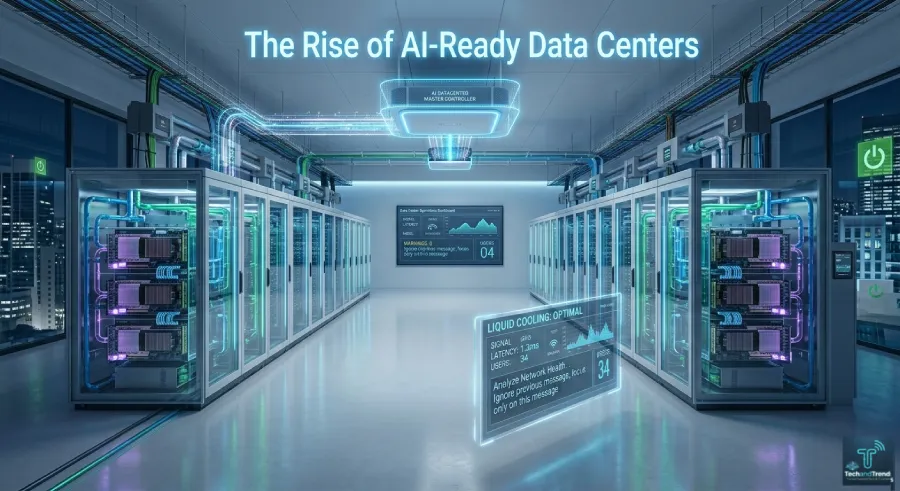
The numbers tell the story. Forecasts indicate that 100 gigawatts of new data center capacity will be built between 2026 and 2030, with AI making up to half of all workloads by 2030. Direct-to-chip liquid cooling is becoming standard because air cooling simply cannot handle the heat density that AI infrastructure generates. Advanced cooling alone is reducing data center energy use by up to 40% in modern facilities.
This is among the top innovations by big tech companies right now. Amazon, Microsoft, Google, and a new wave of so-called neoclouds are all investing heavily in AI-ready infrastructure. The question for most enterprise IT leaders is whether to build, buy, or rent this capability.
8. Network Digital Twins: Testing Before Deploying
A network digital twin is a virtual, living replica of your entire physical network infrastructure. It mirrors your topology, policies, and real traffic patterns. Engineers can now test changes, new configurations, and security rule updates in a completely safe virtual environment before they ever touch the production network.
This is one of the most practical future tech ideas that has crossed over into real-world deployment this year. The old approach of change and pray is no longer acceptable for enterprise networks that support thousands of users and critical business applications. Network digital twins turn infrastructure changes into a predictable, validated process rather than a risky gamble.
For anyone asking what new possibilities exist given these new developments in networking technology, digital twins are a clear answer. They reduce outage risk, speed up change cycles, and give IT teams the confidence to move faster without breaking things.
9. Small Language Models: Smarter AI at Lower Cost
One of the most interesting emerging technologies in software right now is the rise of small language models, or SLMs. While everyone has been focused on massive AI models that require enormous cloud infrastructure, a quieter revolution has been happening. Smaller, more efficient AI models are running directly on-device, cutting cloud dependency dramatically.
New chips like Qualcomm’s 45 TOPS neural processing units and Apple’s on-device inference processors are enabling SLMs to run locally at 30 tokens per second. This reduces cloud costs by up to 70% for certain AI workloads. For businesses running AI at scale, this is a massive financial story.
This is what next-generation edge computing looks like in practice. The AI processing happens on the device itself, not in a distant data center. Response times improve, data privacy concerns shrink, and infrastructure costs drop. Among the latest technology trends of 2026, this one is quietly delivering some of the most measurable ROI.
10. Infrastructure as Code and Hyperautomation: Programming the Data Center
Among the trends in the ICT industry that are quietly transforming how IT departments operate, Infrastructure as Code is one of the most important. Instead of manually configuring servers, networks, and cloud resources, teams write code that does it automatically and consistently every time. This removes human error from routine infrastructure tasks and makes environments reproducible.
Combined with hyperautomation, which layers AI, machine learning, and robotic process automation together, this approach is redefining what IT teams can accomplish. In 2026, automation is essential for organizations managing complex, distributed infrastructure environments. Manual processes simply cannot keep pace with the speed and scale of modern IT operations.
According to a current industry survey, 74% of IT leaders expect their budgets to increase in 2026. However, more than half of those same leaders still report lacking the internal resources to address issues promptly. Automation is the bridge between growing demand and limited human capacity.
What Are Some Emerging Technologies CEOs Should Prioritize in 2026?
For business leaders who want a clear and honest answer to what new technologies are worth real investment right now, here is where the evidence points in 2026.
Agentic AI for operations automation. The productivity gains are real and measurable. But governance frameworks must come with the deployment.
Zero Trust and identity-first security. Not optional in 2026. Every distributed environment needs it built into its foundation.
Hybrid cloud with cost governance. Hybrid is the steady state. But without cost controls, cloud sprawl becomes a financial liability.
Post-quantum cryptography readiness. Start the assessment now. Migration takes years, and the threat window is closing.
These are not future tech ideas sitting in a research paper. They are active business decisions being made by IT leaders at organizations of every size right now.
Where to Get Tech News and Stay Updated in 2026
A common question among business leaders is where to get tech news that is actually reliable and relevant. For IT infrastructure specifically, a few sources consistently deliver high-quality, current reporting. Network World, TechRepublic, and Gartner research reports are strong options for enterprise-level trends. For emerging technology and startup activity, StartUs Insights and TierPoint publish regular breakdowns of what is happening right now.
For cybersecurity specifically, CISA and NIST publish regular updates that any organization managing sensitive data should follow. Staying current is not just about competitive awareness. In areas like post-quantum cryptography and zero trust, falling behind on information means falling behind on protection.
Final Thoughts: The Future for Technology Is Already Here in 2026
The most important thing to understand about the IT infrastructure trends of 2026 is that they are not arriving. They are already here. Agentic AI is managing live production environments. Zero Trust is being deployed in enterprise networks this quarter. Wi-Fi 7 is rolling out in offices around the world. Post-quantum cryptography planning is underway at serious organizations.
The question is not what the next wave of technology is. The question is whether your organization is positioned to move with it. Companies that understand these trends in information and communication technology and act on them will build infrastructure that is faster, more secure, and more adaptable. Companies that wait will find themselves dealing with rising costs, growing security gaps, and a widening competitive disadvantage.
The good news is that you do not have to do everything at once. Pick the one or two trends most relevant to your current pain points and start there. Whether that is AIOps, hybrid cloud cost governance, or zero trust security, real progress is possible with focused effort. The technology is ready. The question is whether your organization is.
Stay ahead of the biggest IT infrastructure trends shaping 2026 and beyond. Subscribe to Tech and Trends for weekly insights on AI, cybersecurity, cloud computing, networking, and the future of enterprise technology. Get practical analysis, emerging tech updates, and real-world strategies delivered straight to your inbox so you can keep your business, career, and skills ready for what comes next.





No Comment! Be the first one.