




Smart Ring vs Smartwatch for Sleep and Recovery: Which Tracks Better?
Rings win the night, watches win the day. Oura Ring 5, Samsung Galaxy Ring, Apple Watch Series 12 and Garmin Venu 4 compared on sleep tracking, recovery scores, battery life and price.
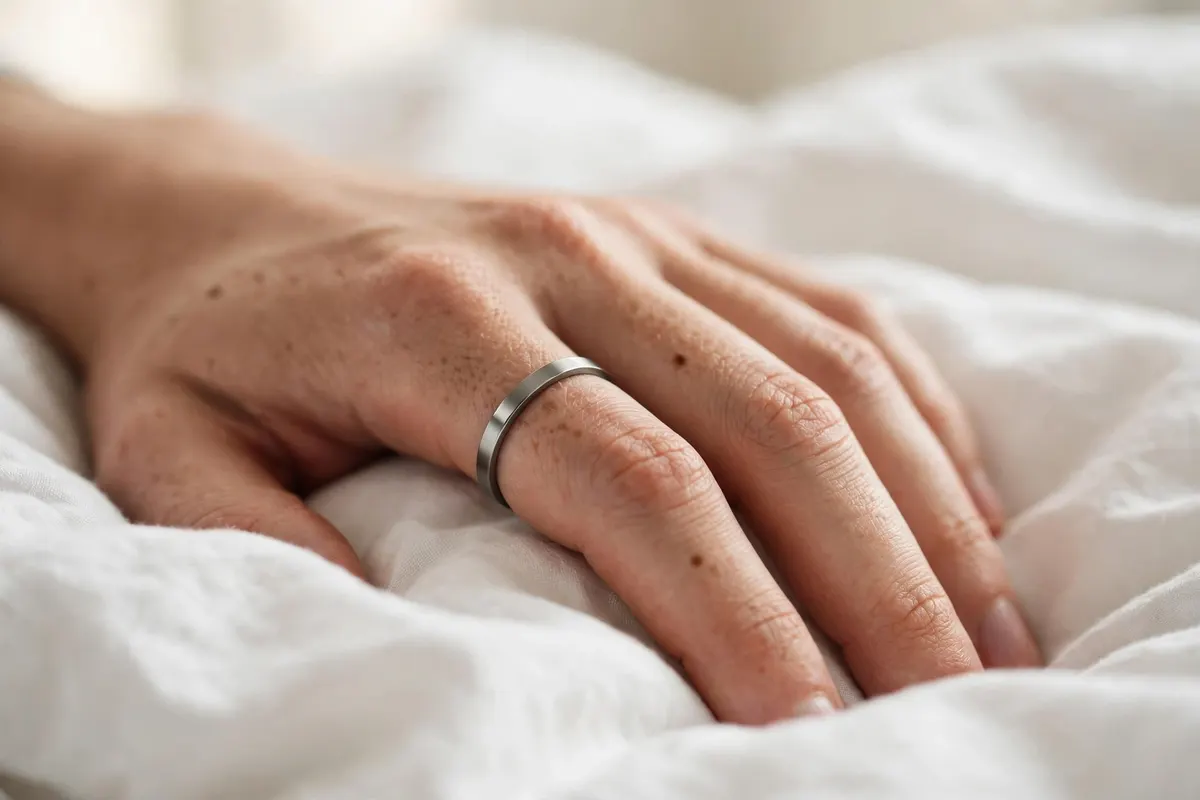
A sleep tracker only helps when you keep wearing it through the night. That simple fact is now pushing many buyers away from a watch and toward a ring. Both devices promise sleep stages, heart rate variability and a morning recovery score.
Table Of Content
The real choice is not ring technology against watch technology. It is comfort and battery life against screens, apps and deeper daytime features. Your phone, budget and tolerance for subscriptions matter just as much as the sensor list.
This comparison uses four current devices: the Oura Ring 5, the Samsung Galaxy Ring, the Apple Watch Series 12 and the Garmin Venu 4. Prices are US prices checked on 13 November 2026.
I found peer-reviewed research on earlier wearable generations, but no authority-grade validation for these exact current models. For that reason, this article makes no independent accuracy ranking. Every battery figure is a maker’s claim, and every score below is described in the maker’s own terms.
Rings Win the Night, Watches Win the Day
For sleep and recovery alone, start with a ring. A ring removes the screen, cuts the weight to a few grams and makes continuous wear much easier. That matters because consistent nights produce more useful trends than one perfect-looking report.
The Oura Ring 5 is the most focused sleep and recovery product here. Samsung’s Galaxy Ring is the cleaner choice for a Galaxy phone owner who rejects subscriptions. The Garmin Venu 4 is stronger when recovery must sit beside serious training data.
The Apple Watch Series 12 is the best answer when the device must also run your day. It brings sleep and readiness into a full smartwatch, but it also brings daily charging and much more weight to bed.
Four Current Trackers, Side by Side
Prices can change with promotions, and none of the prices below includes tax. The battery column repeats each maker’s claim. It is not a promise of the result you will get with your settings and usage.
| Device | US price | Subscription | Maker battery claim | Weight | Key sleep and recovery features |
|---|---|---|---|---|---|
| Oura Ring 5 | $399 or $499 by finish | $5.99/month or $69.99/year for full data | Up to 6 to 9 days | From 2 g | Readiness Score, sleep stages, HRV, temperature trends, blood oxygen sensing |
| Samsung Galaxy Ring | $399.99 | No subscription fee for Galaxy Ring data in Samsung Health | Up to 7 days; up to 6 days for smaller sizes | 2.3 to 3.0 g | Energy Score, Sleep Score, sleep stages, Sleep Coaching, snore detection |
| Apple Watch Series 12 | From $399 | No separate price listed in Apple’s specs for built-in Sleep, Vitals and Readiness | Up to 24 hours; up to 38 hours in Low Power Mode | 31.5 to 52.9 g, case only | Sleep stages, Sleep Score, Vitals, Recovery HRV, Readiness |
| Garmin Venu 4 | From $549.99 | Core Garmin Connect features remain free; Connect+ is optional | Up to 10 days for 41 mm; up to 12 days for 45 mm | 33 to 38 g, case only | Body Battery, sleep score and stages, sleep coach, HRV status, training readiness |
Sleep Tracking Is Mostly About What You Will Wear All Night
Comfort is the ring’s clearest advantage. The Oura starts at 2 grams, and the Galaxy Ring ranges from 2.3 to 3.0 grams. Even the lightest Apple Watch case starts at 31.5 grams before the band is added.
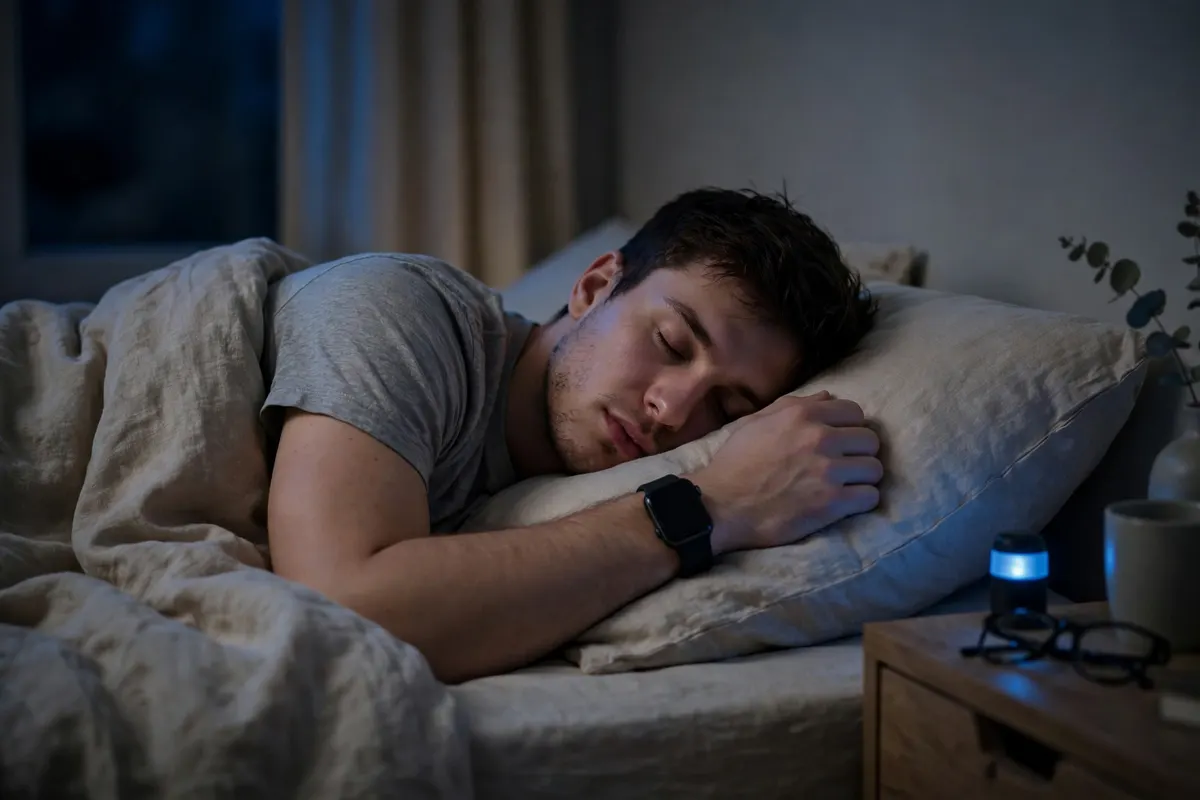
Fit still matters. A loose ring can move during the night, and a tight ring can become the thing you notice most. Both Oura and Samsung offer sizing kits, so use one before you commit to a size.
Oura builds its sleep report around sleep stages, resting heart rate, HRV, respiration and temperature trends. Its red and infrared LEDs support blood oxygen sensing. Its green and infrared LEDs support heart rate, HRV and respiration rate.
Samsung gives Galaxy Ring users sleep stages, a Sleep Score, snore detection and Sleep Coaching. Its sensors cover movement, heart rate and skin temperature. Samsung presents the ring as a sleep-first device, and its feature list supports that position.
Apple’s Sleep app records sleep stages and produces a Sleep Score. The Vitals app brings together heart rate, respiratory rate, wrist temperature, sleep duration and HRV. The package is broad, but the watch remains the largest and heaviest device here.
Garmin’s Venu 4 records sleep stages and a sleep score. Its sleep coach uses sleep and activity history, circadian rhythm, HRV status and naps. That makes Garmin especially useful when poor sleep and hard training keep affecting each other.
Do not treat any sleep-stage split as a laboratory result. I found no authority-grade study that validates these exact models against polysomnography. Use the stages to spot patterns over weeks, and pay more attention to total sleep, timing and how you feel.
Apple calls its Series 12 heart rate sensing the most accurate in a wearable. That is Apple’s claim, not a result established by this comparison. Oura also promotes validation research, but earlier studies do not prove the performance of Ring 5 hardware.
Recovery Scores Do Not Speak the Same Language
A score of 85 in one app does not equal a score of 85 in another. Each company chooses its own scale, inputs and personal baselines. Compare your score with your own history inside one system, not with a friend’s score elsewhere.
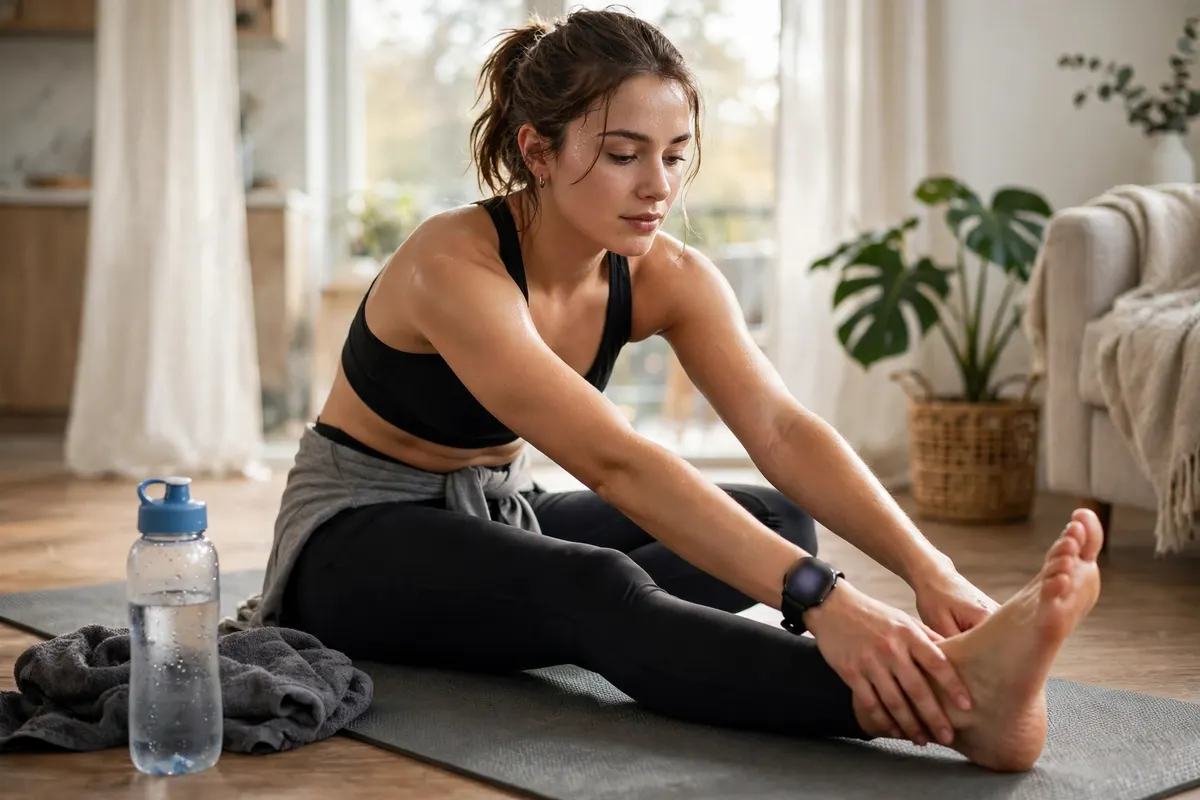
Oura’s Readiness Score runs from 0 to 100. It uses nine contributors covering sleep, sleep balance, sleep regularity, previous-day activity and activity balance. The remaining contributors are resting heart rate, HRV balance, body temperature and Recovery Index.
That long view is Oura’s strength. Sleep Balance looks at the past two weeks, and HRV Balance compares recent HRV with a longer personal average. The score can therefore reflect accumulated strain rather than one rough night alone.
Samsung’s Energy Score uses yesterday’s sleep, activity, sleeping heart rate and sleeping heart rate variability. Samsung says Galaxy AI turns those inputs into a daily readiness view inside Samsung Health. Wellness Tips then convert the data into suggested actions.
The Samsung approach is simpler and easier to act on each morning. Its weakness is ecosystem fit. Galaxy Ring starts with a Galaxy smartphone and a Samsung account, so it is not a neutral pick for every Android owner.
Apple’s new Readiness app uses a 0 to 10 score. Apple says it analyses recent activity, training load, vitals and sleep score. It also updates during the day as new activity and vitals arrive.
Apple pairs the number with one of four recommendations: Recover, Pace Yourself, Ready or Go For It. That plain language is useful. A smaller scale also means the score is a daily guide, not a detailed recovery audit.
Garmin’s Body Battery runs from 5 to 100. Garmin says the watch analyses HRV, stress level, sleep quality and activity data. Good sleep charges the level, and demanding activity or stress drains it.
Garmin also separates Body Battery from training readiness and recovery time. That separation suits athletes because it distinguishes general energy from the effect of a specific workout. For a casual sleeper, the extra layers may feel like work.
Battery Claims, Charging Breaks and Missed Nights
Battery life decides whether sleep tracking becomes a habit. A device on a charger cannot record the night, and a low battery warning at bedtime can quietly break a long data streak.
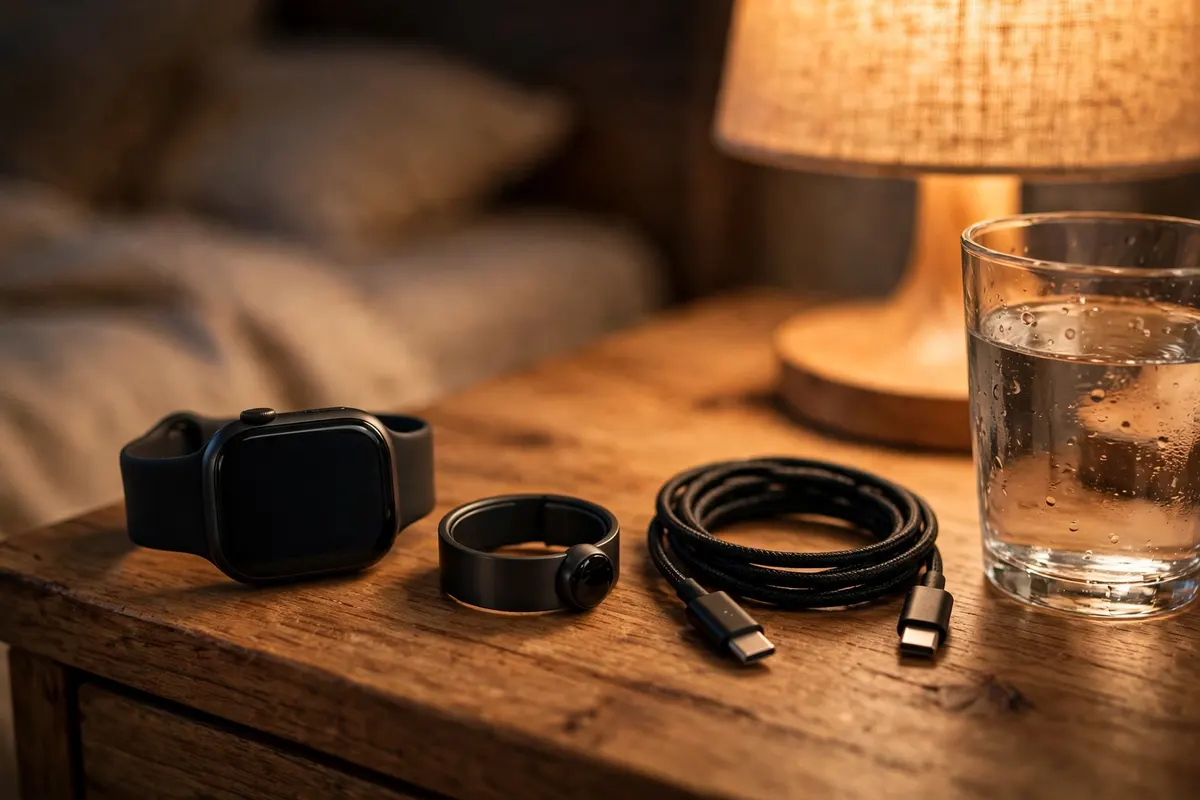
Oura claims up to 6 to 9 days for Ring 5, depending on size and enabled features. A full charge takes about 80 minutes. Oura advises at least 30% before bed, because a low battery can leave you without a Sleep Score or Readiness Score.
Samsung claims up to 7 days for the Galaxy Ring. Its support guide says smaller sizes reach up to 6 days. Samsung also claims that a fully charged cradle extends use to up to 14 days without plugging into an outlet.
Apple claims up to 24 hours of normal Series 12 use. Low Power Mode raises the claim to 38 hours. Fast charging helps the routine because Apple claims 5 minutes can provide up to 10 hours of sleep tracking.
Garmin claims up to 10 days for the 41 mm Venu 4 and up to 12 days for the 45 mm model in smartwatch mode. Garmin’s own battery assumptions cut those figures to 3 or 4 days when the display stays always on.
Travel adds another failure point because every wearable here needs its own charging routine. Keep the charger beside your phone cable, and charge during a shower or breakfast. A travel power bank can keep the phone alive on the same trip.
What You Give Up During the Day
A ring gives you no screen to check in bed or during a workout. You open the phone app for every detail. Notifications, calls, music controls and payments belong to the phone or to another device.
A watch puts those tools on your wrist. It also gives you live workout views, alarms, apps and quick replies where the platform supports them. For runners and gym users, that immediate feedback can matter more than overnight comfort.
My judgment is simple. Buy the ring for passive health tracking, and buy the watch for active use throughout the day. Pairing a ring with a traditional watch can also work, but that is a costly route for most people.
Who Should Buy Which
Choose the Oura Ring 5 if sleep and recovery are the whole job. It offers the deepest sleep-centred score system here. Accept the membership before you buy, because the detailed data sits behind it.
Choose the Samsung Galaxy Ring if you already live in Samsung Health. It gives you Energy Score, coaching and detailed sleep data without a subscription fee. It makes the most sense with a Galaxy phone. It is often on sale from $299.99 on Samsung’s own US store.
Choose the Apple Watch Series 12 if you want one device for sleep, training, apps and daily life. It is the natural iPhone pick. Choose it only if nightly wear and near-daily charging do not bother you.
Choose the Garmin Venu 4 if recovery guides real training decisions. Body Battery, training readiness and recovery time form the strongest training set here. Its battery claim is also far longer than Apple’s claim.
Choose neither yet if you only want a basic sleep trend. Your current watch may already record enough, provided you wear it consistently. Spend first on the routine, then on new hardware.
FAQ
Can a smart ring replace a smartwatch?
For sleep and recovery tracking, yes. A ring can record the night without a screen and with far less weight. It cannot replace watch apps, notifications, calls, maps or live workout displays, because it has no display of its own.
Do you need a subscription for sleep tracking?
Oura is the exception in this group. Without membership, its app shows only the three daily scores, battery level and Explore content. Samsung charges no fee for Galaxy Ring data, and Garmin keeps existing Connect features free. Apple lists Sleep, Vitals and Readiness as built-in apps, with no separate price in its specs.
Which device is most accurate for sleep stages?
There is no defensible winner for these exact models. I found research on older generations, but no authority-grade validation for the current four. Judge them by consistency, comfort and useful trends rather than maker accuracy language.
Which battery lasts longest between charges?
Garmin makes the longest claim, at up to 12 days for the 45 mm Venu 4 in smartwatch mode. Oura claims up to 9 days. Samsung claims up to 7 days. Apple claims up to 24 hours of normal use.
Should you follow the recovery score every day?
Use it as a prompt, not as an order. A low score can support an easier day, especially when you also feel tired or sore. Illness symptoms, pain and persistent poor sleep deserve more attention than any app score.
The Final Call
Pick a ring when the night is the priority and a watch when the full day matters more. Oura leads on sleep-focused recovery. Samsung leads on fee-free Galaxy integration. Garmin leads when training drives the decision.
The Apple Watch Series 12 is the broadest device, but breadth is not the same as better sleep tracking. The best tracker here is the one you will wear every night without negotiating with yourself.





No Comment! Be the first one.