




Best AI Smart Glasses 2026: Top Picks That Are Actually Worth Your Money
AI smart glasses went mainstream in 2026. From Meta Ray-Ban to XREAL One Pro, here are the top picks that actually deliver on the hype and are worth buying right now.
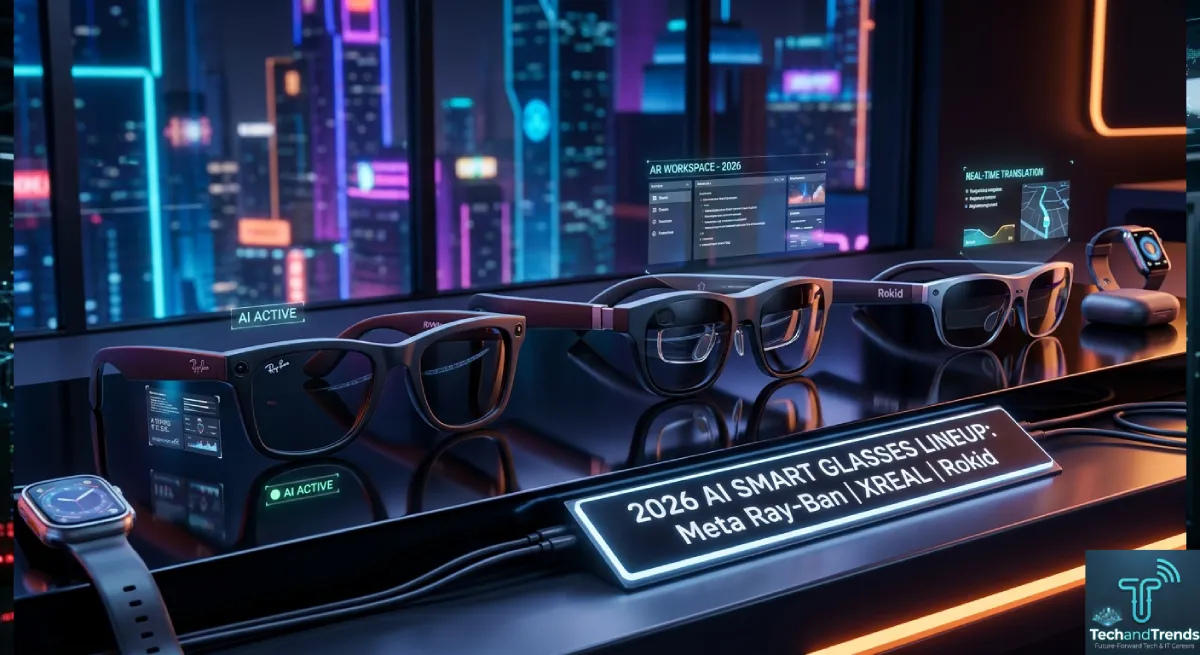
Smart glasses spent years as a gimmick. Nobody wore them outside. Nobody talked about them at dinner. Nobody cared. That era is officially over.
Table Of Content
- What Are AI Smart Glasses and Why 2026 Is Different
- Best AI Smart Glasses 2026: Full Comparison Table
- 1. Ray-Ban Meta Gen 2: Best Overall AI Smart Glasses in 2026
- 2. Ray-Ban Meta Optics (Gen 2): Best for Prescription Wearers
- 3. XREAL One Pro: Best AR Display Smart Glasses
- 4. Rokid AI Glasses Style: Best Budget Option
- 5. XREAL 1S: Best for Gamers and Commuters
- Audio-First vs Display-First: Which Type Is Right for You?
- What Is Coming Next: Apple, Google, and Samsung Smart Glasses
- Privacy and What You Should Know Before Buying
- Quick Comparison: AI Smart Glasses by Use Case
- Frequently Asked Questions
- Final Verdict: Which AI Smart Glasses Should You Buy in 2026?
In 2026, the best AI smart glasses have crossed a very important line. They no longer look strange. They no longer feel like a tech demo. Meta tripled Ray-Ban smart glasses sales to over 7 million pairs in 2025, Google finally delivered a real answer to Meta, and XREAL knocked its AR glasses down to $449, making a giant private screen feel ordinary. The category moved from novelty to necessity in less than five months.
Whether you want an always-on AI assistant on your face, a portable cinema screen, or real-time language translation while traveling, there is now a pair of AI smart glasses built for exactly that. This guide breaks down every major contender, compares specs honestly, and tells you which one to actually buy.
What Are AI Smart Glasses and Why 2026 Is Different
AI smart glasses are eyewear that combines artificial intelligence with everyday frames. What makes them “smart” is that these functions are often displayed directly in the lenses themselves. They can understand where you are, respond to natural language, and identify objects around you to proactively assist you throughout the day.

What changed in 2026 is not just the technology. It is the form factor. On-device AI chips have shrunk dramatically. Battery technology has improved. And most importantly, brands finally figured out that people want glasses that look like glasses, not wearable computers.
The market has clearly split into two camps: display-first glasses that offer visual overlays and virtual screens, and audio-first AI glasses with no display but powerful voice and open-ear audio. Audio-first designs tend to be more comfortable for long wear and dramatically easier on the battery because they do not power a display.
Understanding this split before buying is everything.
Best AI Smart Glasses 2026: Full Comparison Table
| Model | Type | AI Assistant | Price | Battery | Best For |
|---|---|---|---|---|---|
| Ray-Ban Meta Gen 2 | Audio-first | Meta AI (Llama 4) | $299 | 8 hrs | Daily use, content creation |
| Ray-Ban Meta Optics | Audio-first | Meta AI (Llama 4) | $499 | 8 hrs | Prescription wearers |
| XREAL One Pro | Display-first | App-based AI | $649 | 3 hrs active | Portable monitor, cinema |
| Rokid AI Glasses | Audio-first | ChatGPT-5 | $299 | 12 hrs | Budget, travel, translation |
| XREAL 1S | Display-first | App-based AI | $449 | 3 hrs active | Gaming, commuters |
| Oakley Meta HSTN | Audio-first | Meta AI | $349 | 8 hrs | Athletes, sports |
| RayNeo Air 4 Pro | Display-first | Minimal | $399 | 3 hrs active | Budget AR display |
1. Ray-Ban Meta Gen 2: Best Overall AI Smart Glasses in 2026
If you only have time to read about one pair, read this.
The Ray-Ban Meta Gen 2 integrates the Llama 4 AI model and has been optimized to offer a seamless conversation experience with Meta AI. You simply say “Hey Meta” and the glasses respond with no need to unlock your phone or press any button.
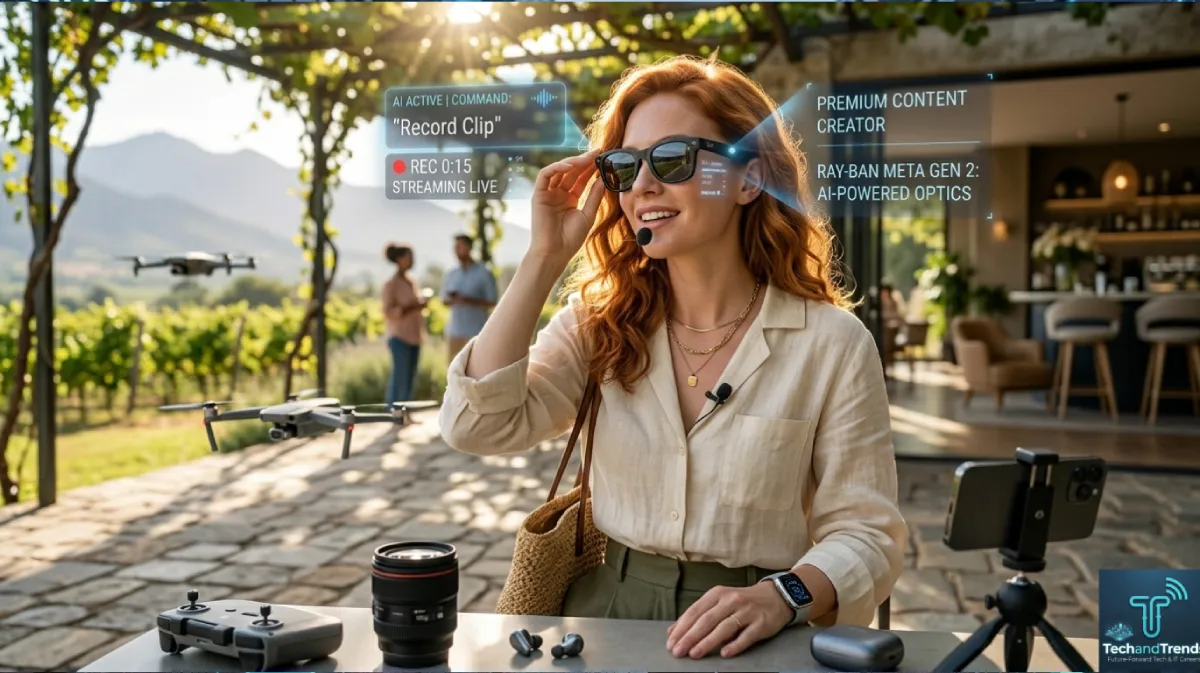
The design is what actually sets these apart. They look exactly like normal Ray-Bans. Wayfarer, Headliner, Skyler, and more frames are available. Most people will never know you are wearing smart glasses at all.
The Gen 2 camera records up to 3K video at 30fps, offers 60fps at 1080p, and captures 12-megapixel portraits at 3024 x 4032 resolution. The charging case provides up to 48 additional hours of power on top of the glasses’ own 8-hour battery life.
New in 2026, Meta added hands-free nutrition tracking through a simple voice prompt or photo, WhatsApp message summaries processed on-device with end-to-end encryption, and Neural Handwriting that lets you write replies on any surface with your finger across Instagram, WhatsApp, Messenger, and native messaging apps.
Who should buy this: Anyone who wants a daily-use AI assistant that looks completely normal, takes great photos, and fits into their existing social media workflow.
2. Ray-Ban Meta Optics (Gen 2): Best for Prescription Wearers
For the billions of people worldwide who wear prescription glasses, smart glasses have always forced an uncomfortable choice: tech features or clear vision. Meta ended that debate in early 2026.
The new Ray-Ban Meta Optics styles support nearly all prescriptions and include overextension hinges, interchangeable nose pads, and optician-adjustable temple tips for a tailored fit. They are the most comfortable glasses Meta has ever designed, built for all-day wear.
The glasses support silent messaging through gesture-based input, navigation, and media recording, positioning the eyewear as a wearable assistant that reduces reliance on smartphones. Pricing starts at $499 with pre-orders open on Meta.com and Ray-Ban.com.
Who should buy this: Prescription glasses wearers who want full AI capabilities without buying contact lenses just to use smart glasses.
3. XREAL One Pro: Best AR Display Smart Glasses
XREAL plays a completely different game from Meta. These are not glasses you wear to talk to an AI. These are glasses you wear when you want a 310-inch virtual cinema screen floating in front of your face.
The XREAL One Pro offers excellent spatial anchoring and 3D conversion that turns your glasses into a 310-inch wide screen. There is also a Side View mode that lets you shrink and pin the screen to the side for better real-world visibility while staying connected.

The X1 chip delivers ultra-low 3ms latency for uninterrupted gaming sessions, improved stabilization for smoother visuals, and precise distortion control. The One Pro also features a thinner and more lightweight front frame compared to its predecessor, giving it a less conspicuous appearance.
The tradeoff is honest. Battery life is around 3 hours of active display use. These are not daily-wear glasses. They are a premium portable display for commuters, travelers, and power users who want a private screen anywhere.
Who should buy this: Mobile workers, frequent travelers, and gamers who want a portable monitor experience without carrying a laptop screen.
4. Rokid AI Glasses Style: Best Budget Option
The Rokid AI Glasses Style feature AI voice commands, a 12MP camera that shoots in up to 4K, a 12-hour battery life, and cost $299, which is $80 less than Meta’s comparable option. That battery life is genuinely impressive compared to nearly every other option on this list.
Rokid AI Glasses Style weigh only 38.5 grams and feature an AI assistant that can translate into 12 languages using ChatGPT-5. They allow recording up to 10-minute videos compared to the industry-standard 3 minutes, and support prescription lenses.
For travelers in particular, the 12-language real-time translation is a game-changer. Point at a menu in Japan, ask Rokid to translate it, and you have an instant answer without pulling out your phone.
Who should buy this: Budget-conscious buyers, travelers, and anyone who wants a capable AI glasses experience without paying Meta pricing.
5. XREAL 1S: Best for Gamers and Commuters
For $449, XREAL gave buyers AR glasses that turn into a giant private screen for your phone, laptop, or Steam Deck. This is the moment AR glasses stopped being a luxury and started being a productivity tool.
The XREAL 1S offers great picture quality, Bose sound, and an easy-to-use feature set. Whether you are reclaiming TV time for gaming, keeping a confidential project under wraps in a coffee shop, or building a high-productivity multi-monitor setup at the airport, these glasses deliver a massive screen experience.
At $449, the 1S sits $200 below the One Pro while offering most of the same core screen experience. For most buyers who want AR display glasses, this is the smarter financial choice in 2026.
Who should buy this: Gamers using Steam Deck or Nintendo Switch, remote workers who want a private screen on the go, and anyone who commutes regularly.
Audio-First vs Display-First: Which Type Is Right for You?
This is the most important question to answer before spending any money.
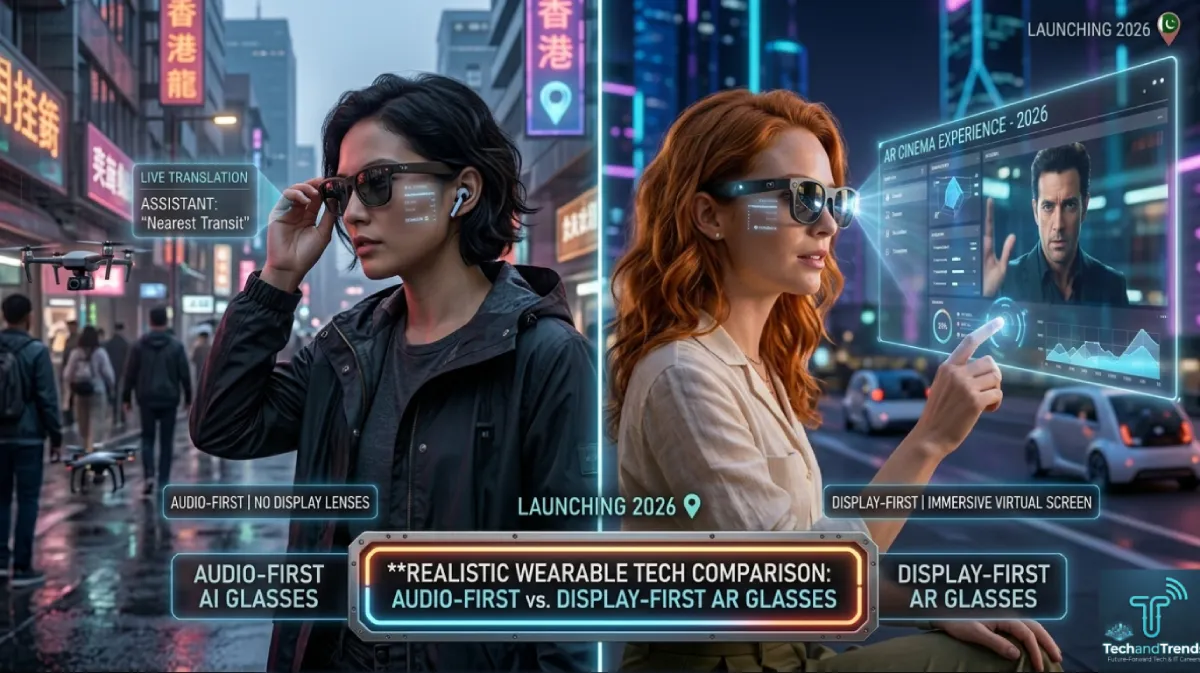
Choose audio-first glasses (Meta, Rokid) if you want to:
- Have an AI assistant with you throughout the day without looking different
- Make hands-free calls, send messages, and take photos
- Use real-time translation while traveling abroad
- Create content for social media from a first-person perspective
- Wear glasses comfortably for 8 hours or more
Choose display-first glasses (XREAL, RayNeo) if you want to:
- Watch movies or play games on a private virtual screen
- Replace a second monitor while working remotely
- Experience spatial computing and AR overlays
- Use the glasses with a laptop, phone, or game console as a display
The better question is not which is best overall. It is whether you want your AI to be heard or seen. If you want a subtle assistant you will forget you are wearing, audio-first options are compelling. If you want a screen replacement or AR-style visuals, display-first glasses are in an entirely different category.
What Is Coming Next: Apple, Google, and Samsung Smart Glasses
The smart glasses race in 2026 is far from over. Three giants are still entering.
Samsung confirmed a smart glasses launch in 2026 built on Android XR with Qualcomm silicon and deep Gemini AI integration. Apple is targeting a smart glasses release by 2027 with Project N50 as part of its broader AI push, with a camera and microphone feature set matching the Ray-Ban Meta platform.
Google AI Glasses arrived in May 2026 built around an in-lens display and Gemini, so users see their AI as much as they hear it, with live translation captions and navigation arrows floating in the corner of their view.
The arrival of Apple will recalibrate the entire market. Every frame will get redesigned. Every price will shift. If you are planning to wait for Apple, a 2027 release window is the most realistic expectation right now.
Privacy and What You Should Know Before Buying
Smart glasses with cameras raise real questions worth addressing directly.
Privacy considerations remain important. LED indicators show when recording is active, though their visibility depends on lighting conditions and viewing angles. Some environments and social situations may restrict camera-equipped glasses regardless of intended use.
Many AI glasses use third-party large language models like Gemini, ChatGPT, Claude, and Llama. Buyers who care about privacy should verify whether their chosen model stores data locally or uploads it to the cloud, and review the privacy policies of the AI assistant being used.
Meta’s WhatsApp summaries and neural handwriting features are processed on-device, which is a meaningful step toward privacy-first wearable AI. XREAL display glasses handle most processing locally as well. For the most privacy-sensitive users, audio-only glasses without cameras remain an option.
Quick Comparison: AI Smart Glasses by Use Case
| Use Case | Best Pick | Why |
|---|---|---|
| Daily lifestyle + AI assistant | Ray-Ban Meta Gen 2 | Best balance of design and intelligence |
| Prescription users | Ray-Ban Meta Optics | Full support for all prescriptions |
| Portable cinema and gaming | XREAL One Pro | 310-inch virtual screen, Bose audio |
| Budget buyers | Rokid AI Glasses Style | $299, 12-hour battery, ChatGPT-5 |
| Travel and translation | Rokid AI Glasses | 89-language support, 12-hour battery |
| Sports and outdoor use | Oakley Meta HSTN | Prizm lenses, rugged build |
| Commuters and remote workers | XREAL 1S | $449, works with all major devices |
Frequently Asked Questions
What are the best AI smart glasses in 2026?
The Ray-Ban Meta Gen 2 is the best overall option for most buyers in 2026. It combines Llama 4 AI, a 12MP camera, 8-hour battery, and a design that looks like normal eyewear. For prescription users, the Ray-Ban Meta Optics starts at $499.
What is the difference between AI glasses and AR glasses?
AI glasses enhance your real-world experience through voice commands, camera, and audio with no visual overlay. AR glasses create a virtual screen visible only to the wearer. Ray-Ban Meta is an AI glasses product. XREAL One Pro is an AR glasses product.
Are AI smart glasses worth buying in 2026?
Yes, for most people. The technology crossed a practical threshold in 2026. Audio-first glasses like Ray-Ban Meta offer genuine daily utility for calls, messaging, translation, and content creation. Display-first glasses like XREAL are worth it for remote workers and commuters who want a portable screen.
How long do AI smart glasses’ batteries last?
Battery life varies by type. Audio-first glasses like Ray-Ban Meta Gen 2 deliver up to 8 hours of use. Display-first glasses like XREAL One Pro offer around 3 hours of active screen time. Rokid AI Glasses lead the category with a 12-hour battery.
Are AI smart glasses safe for privacy?
Most models include recording indicator lights. Many AI functions on newer models are processed on-device rather than in the cloud. Buyers should review the specific privacy policy of whichever AI assistant powers their glasses before purchasing.
Will Apple release smart glasses in 2026?
Apple is reportedly targeting a 2027 release for its smart glasses under Project N50. Samsung and Google have both confirmed 2026 launches on Android XR with Gemini AI integration.
Final Verdict: Which AI Smart Glasses Should You Buy in 2026?
For most people, the Ray-Ban Meta Gen 2 at $299 is the right answer. It works all day, looks like normal glasses, handles calls and messages hands-free, and improves constantly with software updates.
If you wear prescription lenses, step up to the Ray-Ban Meta Optics at $499 for comfort built around your vision needs.
If you want a private portable screen, the XREAL 1S at $449 is the most practical choice right now. Save the $200 on the One Pro unless you are a serious pixel-quality enthusiast.
If you are on a budget and travel frequently, Rokid AI Glasses at $299 with their 12-hour battery and 89-language translation make a strong case that deserves far more attention than they currently get.
The smart glasses era arrived quietly in 2026. You do not have to wait anymore.






No Comment! Be the first one.