



Retrieval Augmented Generation or Model Tuning: How to Pick the Right Way to Customize Your LLM
Not sure whether to add a search layer or retrain your model? This guide compares both paths, shows where each one wins, and gives you a simple checklist to decide.
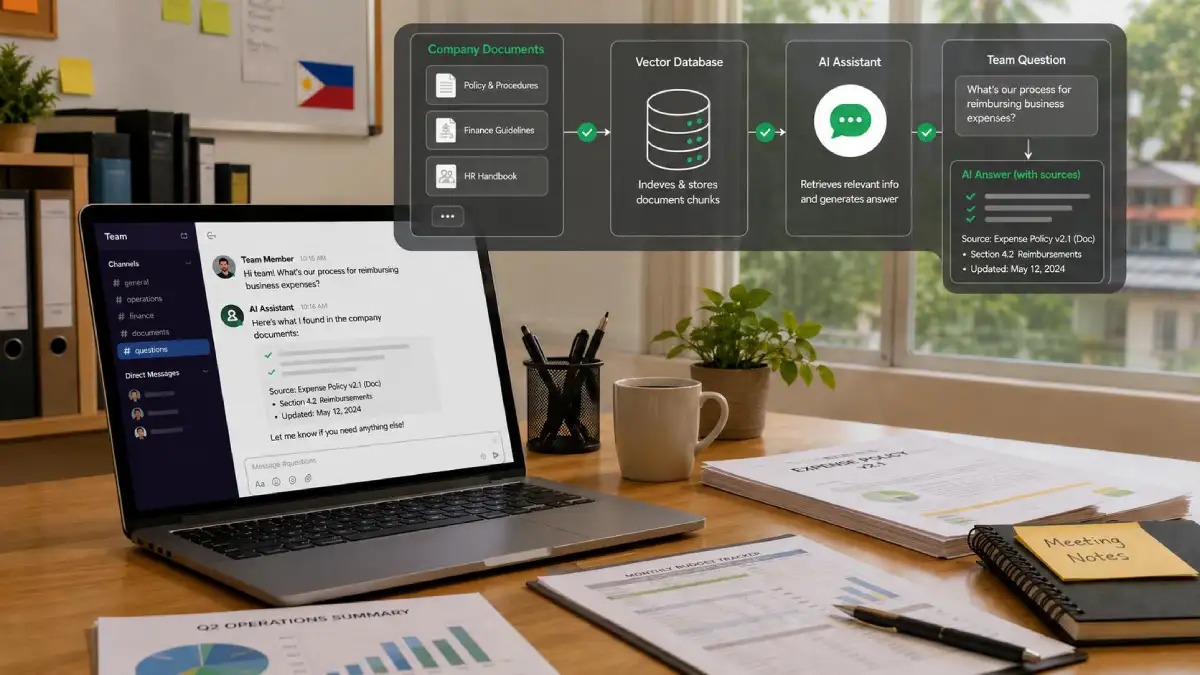
Your language model sounds smart, but it keeps missing facts about your business. Now you must decide how to fix it. Two popular paths exist, and each solves a different problem. This guide explains RAG vs. fine-tuning so you can pick the right one with confidence.
Table Of Content
- What RAG Actually Does
- What Fine-Tuning Does Differently
- RAG vs Fine-Tuning at a Glance
- Cost and Speed in RAG vs Fine-Tuning
- Accuracy and Hallucinations
- Fresh Data and Privacy
- A Simple Example: The Support Bot
- When to Choose RAG
- When to Choose Fine-Tuning
- Using Both Together
- Tools Teams Use Today
- How to Test Your Choice
- Common Mistakes to Avoid
- Quick Decision Checklist
- FAQs
- Final Thoughts
What RAG Actually Does
Retrieval-augmented generation, or RAG, gives a model a reference library at question time. The system searches your documents and finds the most relevant passages. It then adds those passages to the prompt before the model answers. The model itself never changes.
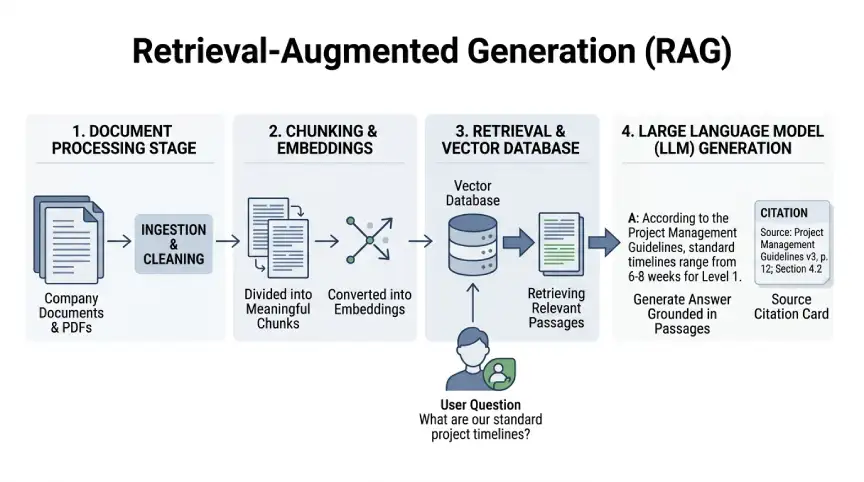
Think of an open book exam. The student does not memorize every page. They look up the right page and then write the answer. That is the core idea behind RAG.
A basic setup has four parts. Your files are split into small chunks. Each chunk becomes a vector, which is a list of numbers that captures meaning. A vector database stores them and returns the closest matches to each question.
Because the answer comes from your own text, you can show sources. Users can click through and check the claim. That builds trust faster than any promise about accuracy.
What Fine-Tuning Does Differently
Fine-tuning changes the model itself. You train it further on examples of the behavior you want. The weights inside the network shift, so the new habits become part of the model.
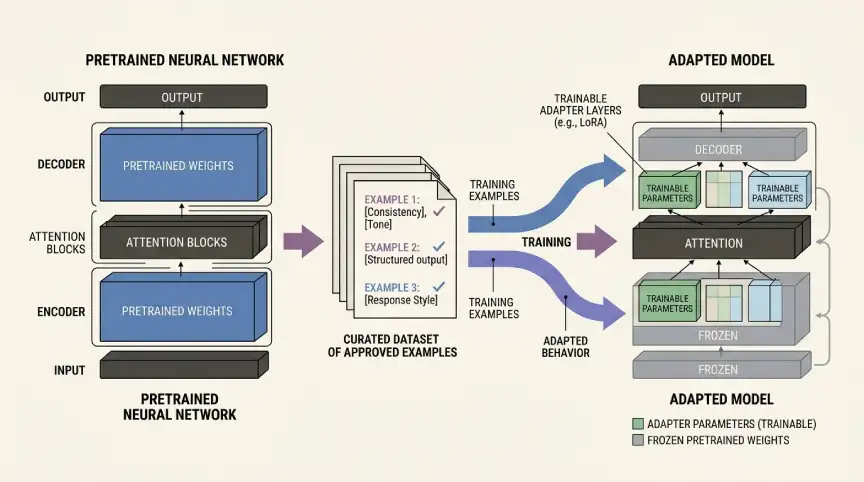
Think of a student who studies for months before the exam. They absorb the style, the format, and the vocabulary. Nothing is looked up later, because the skill is already inside.
Modern teams often use light methods such as LoRA. These train a small set of extra weights instead of the whole model. That cuts cost and keeps the original model safe. Many hosted platforms also offer simple tuning tools through an API.
RAG vs Fine-Tuning at a Glance
The table below shows the main split between the two methods. Read it first, then use the later sections for detail. Each row maps to a choice you will face in a real project.
| Factor | RAG | Fine Tuning |
|---|---|---|
| What changes | The prompt | The model weights |
| Best for | Facts and documents | Style, format, and behavior |
| Data updates | Instant, add a file | Needs a new training run |
| Setup cost | Low to medium | Medium to high |
| Source citations | Easy | Hard |
| Skills needed | Search and data pipelines | Training and evaluation |
RAG teaches the model what to say. Fine-tuning teaches it how to say it. Keep that line in mind as we go deeper. It prevents the most common planning mistakes in any RAG vs fine-tuning project.
Cost and Speed in RAG vs Fine-Tuning
RAG costs less to start. You need a document store, an embedding step, and a search layer. Many teams ship a working demo in a week.
Fine-tuning costs more up front. You must collect clean examples, often hundreds or thousands. Someone also has to label them and test the results. A bad dataset teaches bad habits, and you pay to learn that lesson.
Running costs differ too. RAG adds longer prompts, so each call uses more tokens. Fine-tuned models can use shorter prompts, which saves money at high volume. Teams with millions of calls often see this benefit.
Speed follows a similar pattern. RAG adds a search step, which adds a small delay. A tuned model answers directly. For most chat tools, the gap is a fraction of a second.
Accuracy and Hallucinations
On accuracy, RAG vs. fine-tuning is not a close fight for facts. A hallucination happens when a model states false facts with confidence. RAG reduces this by grounding answers in real text. If the passage is missing, you can tell the model to admit it does not know.
Fine-tuning does not store facts well. It can teach a model a style, but facts end up stored in a fuzzy way. The model may still invent details that sound right. In practice, teams often find that retrieval works better for new knowledge.
Fine-tuning shines when the task is about form. Examples include a strict JSON output, a brand voice, or a fixed support tone. It also helps with narrow skills such as labeling tickets or pulling fields from forms. Here the model needs habits, not facts.
Fresh Data and Privacy
Data changes, and that matters. With RAG, you update one file, and the next answer reflects it. Prices, policies, and product specs stay current without any training run.
With fine-tuning, old facts stay baked in. You must retrain to update them. That is slow, and it can cause the model to lose other skills.
Privacy deserves care in both cases. RAG keeps sensitive records in your own store, and you control who can see each chunk. Access rules can follow the user.
Fine-tuning copies patterns from your data into the weights, which is harder to undo later. Never train on private records unless your legal team approves. Review this point early in any RAG vs fine-tuning discussion.
A Simple Example: The Support Bot
Imagine a software company with a help center and a busy support team. Customers ask about billing, setup, and bugs. The team wants a bot that answers fast and sounds like the brand.
The first problem is knowledge. Product guides change every month, and old answers cause tickets. A RAG layer pulls the newest article for each question. The bot quotes it and links to the source.
The second problem is tone. Replies must be warm, short, and free of jargon. Fine-tuning on a few hundred approved replies teaches that voice. The bot stops sounding like a manual.
Notice how each method solved a different problem. Neither one could do both jobs alone. That is why this choice is rarely about which method is better. It is about which gap you are trying to close.
When to Choose RAG
Pick RAG when your main need is accurate answers from your own content. Good fits include:
- Help center and support bots
- Internal policy and HR search
- Legal and compliance lookup
- Product catalogs with changing prices
- Research tools that must cite sources
If your data changes weekly, RAG is almost always the safer start. It is also easier to debug. When an answer is wrong, you can inspect the retrieved passages and see why. That clear trail is a big win for small teams.
When to Choose Fine-Tuning
Pick fine-tuning when the model must behave in a specific way every time. Good fits include:
- A fixed brand voice across thousands of replies
- Strict output formats for code or data
- Classification tasks with clear labels
- Small models that must match a larger model on one task
- Short prompts at very high volume
The last two items matter for cost. A small tuned model can replace a large one for a narrow job. That can cut your bill sharply. It also lowers delay, which helps real-time apps.
Using Both Together
You do not have to choose only one. Many strong systems use both. Tuning sets the voice and format, while RAG supplies the facts.
Picture a bank assistant. Fine-tuning teaches it to reply in a calm, formal tone with a set layout. RAG pulls the latest fee rules from the policy library. The customer gets a correct answer that sounds right.
A smart order helps here. Start with prompting, then add RAG, and tune only if gaps remain. This path is cheaper and easier to debug at each step. You also learn what your users really need before you spend on training.
Tools Teams Use Today
You do not need to build everything from scratch. Frameworks such as LangChain and LlamaIndex handle chunking, search, and prompt assembly. They connect to many model providers with little code.
For storage, teams pick from vector databases such as Pinecone, Weaviate, or Qdrant. Others add the pgvector extension to Postgres and keep everything in one place. Small projects can even start with a local index.
For tuning, Hugging Face libraries support LoRA and related methods. Several model providers also offer hosted tuning through an API. Tool names change fast, so check each vendor page for current limits and prices.
How to Test Your Choice
Build a test set before you change anything. Collect fifty to a hundred real questions from your users. Write the ideal answer for each one. This set becomes your scoreboard.
Score every version on accuracy, tone, and source use. Run the same questions after each change. If a score drops, undo the change and try again. Keep notes so your team can learn from each test.
Also watch for edge cases. Test questions with no answer in your documents. A good system should admit it does not know. That one habit protects your brand more than any clever prompt.
Common Mistakes to Avoid
Teams make the same errors again and again. The first is tuning a model to teach it facts. It feels logical, but the results are weak and costly.
The second is weak chunking in RAG, where documents are cut at random points. Context gets lost, and answers suffer. Split text by headings or ideas, and keep a little overlap between chunks.
Many teams also ignore retrieval quality. If search returns the wrong passage, the model answers from the wrong text. Improve search with better chunking, a mix of keyword and vector search, and a reranking step. These fixes often beat any tuning.
Quick Decision Checklist
Use these questions to decide in a few minutes:
- Does the answer depend on facts that change often? Choose RAG.
- Do users need sources they can check? Choose RAG.
- Is the problem tone, format, or a narrow skill? Consider fine-tuning.
- Do you have hundreds of clean, labeled examples? Fine-tuning becomes possible.
- Do you need both facts and style? Combine the two.
If you answered yes to the first two, start with RAG today. Add tuning later only when tests show a clear gap. This keeps your first release simple and your costs low.
FAQs
Is RAG cheaper than fine-tuning?
Usually yes at the start. You avoid training runs and large labeled datasets. At very high volume, a tuned model may cost less per call.
Can fine-tuning replace RAG?
Not for changing facts. Tuning cannot keep knowledge fresh or show sources. It works best for style and structure.
How much data does fine-tuning need?
Some tasks work with a few hundred quality examples. Complex tasks may need thousands. Quality matters more than size.
Does RAG stop hallucinations completely?
No. It lowers the risk, but poor retrieval can still cause errors. Clear prompts and steady testing help.
Final Thoughts
The choice is simpler than it looks. Use RAG when the model needs knowledge. Use fine-tuning when the model needs better habits. Many teams end up combining both.
So the answer to RAG vs. fine-tuning is rarely one or the other. Your data and goals decide the best mix. Start small, test with real questions, and let the results guide your next step.




No Comment! Be the first one.