





The Biggest Technology Challenges in Business That Leaders Must Solve in 2026
Technology challenges in business are growing faster than ever. From AI adoption to cybersecurity threats, discover what's stopping companies and how smart leaders are pushing through in 2026.

Every business leader woke up in 2026 knowing one hard truth. The technology they built their operations on is no longer enough.
Table Of Content
- Why Technology Challenges in Business Are Worse Than Ever Before
- The AI Adoption Gap Is Splitting Businesses Apart
- The Cybersecurity Crisis Is Getting Bigger and Faster
- The Tech Skills Shortage Is a Global Emergency
- Legacy Systems Are Quietly Strangling Business Growth
- Data Quality Problems Are Costing Billions Silently
- How Smart Business Leaders Are Responding in 2026
- The Hidden Cost of Doing Nothing
- FAQ: Technology Challenges in Business
The world is moving at a speed that feels impossible to match. A leading generative AI tool reached 800 million weekly users in just a few months. That is roughly 10 percent of the entire planet. Businesses that are still running on old playbooks are getting left behind every single day. Understanding the real technology challenges in business today is not optional. It is the only way to survive.
Why Technology Challenges in Business Are Worse Than Ever Before
The scale of pressure facing business leaders has changed completely. It is not just about buying new software or upgrading servers anymore. The entire foundation of how businesses operate is being questioned.
According to a survey by Warwick Business School, technology shifts ranked as the number one challenge for business leaders in 2026 for the second year running. Two thirds of all surveyed executives picked either AI adoption or political disruption as their biggest worry. Middle managers specifically pointed to technology as their greatest daily obstacle.
The gap between companies that manage technology well and those that do not is growing wider. Organizations with strong digital capabilities are pulling ahead in revenue, profit margins, and market value. Those falling behind are not just losing market share. They risk becoming completely irrelevant to their customers.
The AI Adoption Gap Is Splitting Businesses Apart
AI is no longer an experiment that businesses can delay. It has moved from pilot projects into full operational scale. Yet most companies are far from ready.
Research shows that while 78 percent of companies now use AI in at least one business function, only 1 percent describe themselves as truly advanced in using it. That gap is enormous. Businesses are touching AI but not harnessing it. Meanwhile, AI startups are scaling from one million to thirty million dollars in revenue five times faster than traditional SaaS companies ever did.
The core problem is not a lack of AI tools. It is a lack of strategy. As Broadcom’s CIO put it clearly, investing in AI without focusing on a specific business problem is a fast path to zero return. Companies that chase AI trends without aligning them to real outcomes burn budgets and confuse their teams.
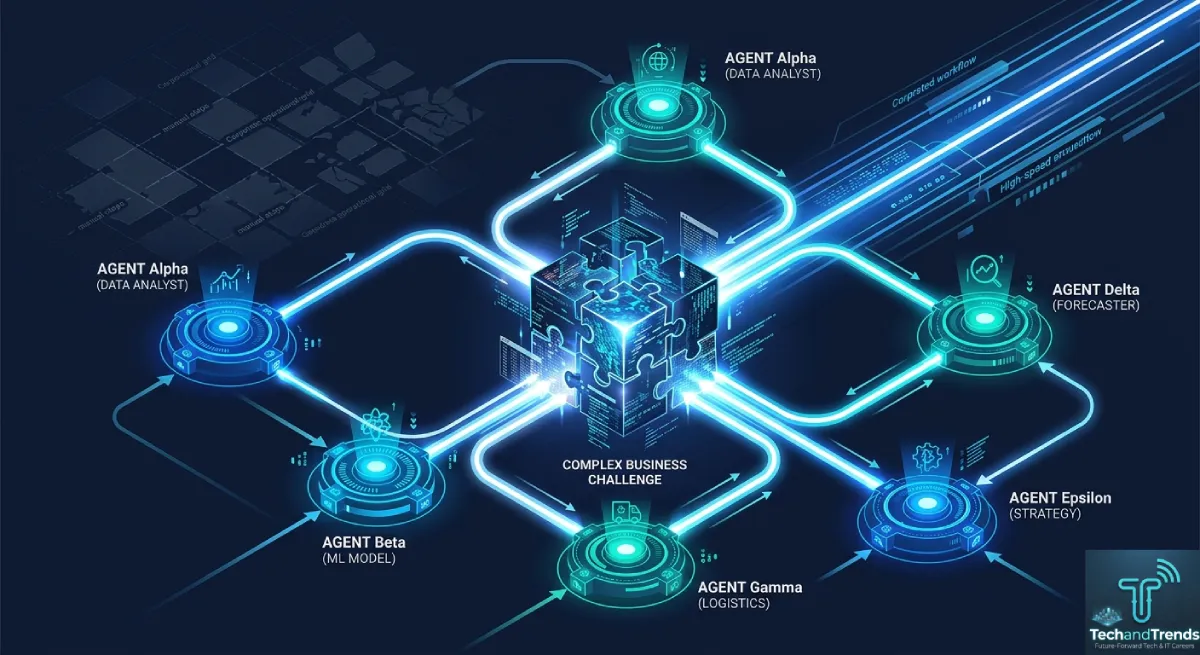
Agentic AI is now the next wave hitting businesses. These are AI systems where multiple agents collaborate on complex tasks automatically. IBM research shows that businesses embracing agentic workflows expect dramatic gains in efficiency and profit. But agentic AI is also exposing how fragmented most business operations truly are. Processes designed for human workers simply do not work for AI agents running at machine speed.
The Cybersecurity Crisis Is Getting Bigger and Faster
One of the most dangerous technology challenges in business today is cybersecurity. And the threat is evolving at a pace most organizations cannot match.
AT&T’s chief information security officer described it precisely. The fundamental challenge is not new. The difference today is speed and impact. AI-powered cyberattacks now operate at machine speed. They can probe, test, and breach systems faster than any human security team can respond.

Businesses must now secure AI across four different domains at once. Data, models, applications, and infrastructure all carry separate risks. Traditional perimeter-based security models are no longer effective. They were built for a world that no longer exists.
Gartner’s 2026 strategic technology trends confirmed that cybersecurity is no longer just a technical function. It is a core business survival strategy. Companies that treat it as an afterthought are creating open doors for disruption. The organizations succeeding today are using AI-powered defenses to fight threats that operate at the same speed they are created.
The Tech Skills Shortage Is a Global Emergency
No challenge is hitting businesses harder and more consistently than the technology skills gap. The numbers are alarming.
According to IDC research, 90 percent of organizations worldwide will face IT skills shortages by 2026. This is projected to cost businesses five point five trillion dollars globally in delays, lost productivity, and missed opportunities. AI and machine learning expertise shows a shortage of 250,000 data scientists alone. Business-technology hybrid roles are taking 60 percent longer to recruit than pure technical roles.
McKinsey research adds another layer. Eighty-seven percent of organizations either already face skill gaps or expect them within the next five years. Companies are offering salary premiums of 28 percent for AI skills and still struggling to fill positions. Technology is advancing faster than the workforce can learn.
This creates a painful cycle. Businesses need skilled people to implement technology properly. Without those people, technology investments fail or underdeliver. And when technology underdelivers, leadership loses confidence and cuts budgets, which makes talent recruitment even harder.
The World Economic Forum’s 2025 Future of Jobs report warns that 39 percent of core job skills will change by 2030. Businesses that are not actively investing in workforce upskilling right now are compounding their talent problems every month.
Legacy Systems Are Quietly Strangling Business Growth
Many businesses are running operations on technology that is decades old. Government agencies average technology that is 20 years old. Sixty-five percent still run critical systems built in COBOL. But this is not just a government problem.
For private businesses, legacy infrastructure creates a specific type of technology challenge. The infrastructure built for cloud-first strategies cannot handle AI economics. The systems designed for one era of computing do not serve the demands of agentic AI, real-time data processing, or modern customer expectations.
One CIO expressed the problem clearly in Deloitte’s 2026 Tech Trends report. The time it takes to study a new technology now exceeds that technology’s relevance window. By the time a company finishes evaluating a solution, the market has already moved on to the next one.
Migrating away from legacy systems is expensive and risky. But staying on them is more expensive in the long run. Technology debt compounds over time. Emergency fixes cost far more than proactive upgrades. And businesses clinging to outdated infrastructure become easy targets for competitors and cybercriminals alike.
Data Quality Problems Are Costing Billions Silently
Behind every failed AI project and every bad business decision sits the same root cause. Poor quality data.
Research from Precisely’s 2025 Data Integrity Trends Report found that 64 percent of organizations name data quality as their top technical challenge. Organizations lose an average of 25 percent of their annual revenue due to quality-related inefficiencies and poor decisions. Seventy-seven percent of businesses rate their own data quality as average or worse. That is actually an eleven-point decline from previous years.
This is getting worse, not better. Data volumes are doubling every two years. That growth is outpacing most companies’ ability to manage data quality effectively. The result is expanding technical debt that undermines AI initiatives, analytics accuracy, and operational efficiency across every business function.
Making things worse, only 29 percent of the applications businesses use are actually integrated with each other. That means most organizations are operating with massive data silos. Teams make decisions based on incomplete pictures. AI models trained on poor data produce unreliable outputs. And the gap between data-rich leaders and data-poor laggards keeps widening.
How Smart Business Leaders Are Responding in 2026
The businesses winning today share a recognizable pattern. They lead with problems, not technology. They connect every investment to a measurable business outcome. And they move fast enough to execute before opportunities close.
Gartner’s 2026 technology trends framework organizes winning strategies into three clear roles. The Architect builds resilient foundations. The Synthesist connects intelligent systems. The Vanguard protects enterprise value. CIOs and technology leaders who act on all three simultaneously are building organizations that can absorb disruption rather than be destroyed by it.
Smart leaders are also prioritizing partnerships over solo development. PwC’s 2025 CEO Survey found that nearly 40 percent of CEOs say their companies entered new sectors in the last five years through strategic collaboration. Corporate startup partnerships now give enterprises access to AI, quantum computing, and semiconductor expertise without bearing full research costs.
Building a clear AI strategy connected to specific business problems is not optional anymore. It is the minimum requirement for staying competitive. Businesses that move from experimentation to measurable AI impact in 2026 are the ones that will define their industries for the next decade.
The Hidden Cost of Doing Nothing
Some business leaders believe waiting is a safe choice. The data disagrees sharply.
Forty-six percent of business leaders describe themselves as frustrated with their company’s current technology limitations. Technology debt compounds. Every delayed upgrade creates more expensive problems. Businesses with visible technology gaps attract more cyberattacks and face higher compliance risks. And customers who expect fast, seamless digital experiences do not wait for slow companies to catch up.
J.P. Morgan’s 2026 Business Leaders Outlook found that 73 percent of midsize business leaders expect to grow revenue this year. But optimism without a technology strategy is wishful thinking. Companies that successfully integrate AI tools are the ones projecting real profit gains. The others are watching their confidence erode.
The gap between technology leaders and technology laggards does not stay stable. It grows exponentially. The organizations that succeed are not always the ones with the most sophisticated tools. They are the ones with the courage to redesign their operations, the discipline to connect investments to outcomes, and the speed to execute before the window closes.
FAQ: Technology Challenges in Business
What are the biggest technology challenges in business in 2026?
The top technology challenges in business right now include AI adoption gaps, cybersecurity threats, IT skills shortages, legacy system limitations, and poor data quality. Each of these problems compounds the others.
How does the IT skills gap affect businesses?
The IT skills gap means companies cannot fill roles fast enough to keep up with technology change. IDC projects this shortage will cost businesses 5.5 trillion dollars globally by 2026. It slows digital transformation and increases the risk of technology failures.
Why is data quality a technology challenge for businesses?
Poor data quality undermines AI tools, analytics, and operational decisions. Companies lose around 25 percent of annual revenue due to data quality issues. Without clean, integrated data, even the best technology delivers unreliable results.
How can small businesses deal with technology challenges?
Small businesses should start by identifying their most urgent problem and finding one technology solution for it. Building a hybrid cloud environment, addressing cybersecurity basics, and investing in staff training are practical first steps for 2026.
What is the connection between AI and cybersecurity challenges?
AI is both a business tool and a cyberattack weapon. Businesses must secure AI systems across data, models, applications, and infrastructure. At the same time, AI-powered defenses are now the most effective way to fight threats operating at machine speed.






No Comment! Be the first one.